



You’re doing the right thing. You’ve read up, bought the supplements, and you’re taking them every day. So why do you still feel like you’re running on empty?
It’s a frustrating place to be, and you’re not alone in it. The truth is, supplements don’t work like a light switch. And for a lot of people, the reason they’re not feeling the benefit comes down to a handful of fixable things that rarely get talked about.
Here’s what might actually be going on…
1. You Haven’t Given Them Enough Time
This one is probably the most common culprit – and the most overlooked.
Supplements aren’t like painkillers. They don’t act within hours. They work gradually, replenishing nutrient levels or supporting biological processes that have been running low for months, sometimes years.
Vitamin D, for example, typically needs 8 to 12 weeks of consistent supplementation before levels meaningfully shift in your bloodstream [1]. Magnesium and B vitamins take a similar kind of patience. If you’ve been taking something for a couple of weeks and felt nothing, that doesn’t mean it isn’t working. It might just mean you haven’t waited long enough to feel the difference.
The key word there is consistent. Sporadic supplementation doesn’t allow nutrients to build up properly. Taking something every day for eight weeks will always outperform taking it most days for six months.
2. Your Supplements Might Not Be As Good As You Think
Not all supplements are created equal. This is the reality of an industry that’s largely self-regulated.
The form a nutrient comes in can dramatically affect how well your body actually absorbs it. Magnesium oxide, for example, is one of the cheapest and most widely used forms of magnesium – but it’s also one of the least bioavailable, meaning very little of it actually makes it into your cells [2]. Magnesium citrate or glycinate, on the other hand, are absorbed far more efficiently.
The same principle applies across the board. Vitamin D3 is better utilised by the body than D2. Active forms of B vitamins are more usable than their synthetic counterparts. If a supplement label doesn’t tell you clearly which form of a nutrient you’re getting, that’s worth paying attention to.
This is why at Supp, every ingredient is chosen deliberately and clearly listed on the label – no proprietary blends, no vague catch-all terms. You can read exactly what’s in every capsule on our ingredient library, and our products are manufactured to GMP standards here in the UK. You can read more about how we make our supplements on our manufacturing page.
3. You Might Be Taking Them Wrong
Timing and context matter more than most people realise.
Vitamins D, K, A and E are all fat-soluble. That means they need dietary fat to be absorbed properly. Taking your Vitamin D3 + K2 capsule first thing in the morning on an empty stomach? You might be absorbing a fraction of what you paid for. Research published in the American Journal of Clinical Nutrition found that vitamin D bioavailability roughly doubled when taken with a meal containing fat versus in a fasted state [3].
There’s also the issue of nutrient competition. Iron and calcium, for instance, compete for the same absorption pathways – taking them together can reduce how much of either you actually absorb. Similarly, coffee and tea can interfere with iron uptake when consumed at the same time.
A few simple adjustments can make a noticeable difference:
- Take fat-soluble vitamins (D, K, E, A) with your main meal
- Space out minerals that compete with each other if you’re taking multiple supplements
- Try to take your supplements at the same time each day to build a consistent habit
Not sure when’s best to take your supplements? Feel free to reach out to us and one of our dedicated team will be happy to give some free tailored advice.
4. You Might Be Missing The Nutrient Your Body Actually Needs
There’s a difference between taking supplements and taking the right supplements for your body’s actual needs.
Vitamin D deficiency is one of the most common in the UK – the NHS estimates that around 1 in 5 people in the UK have low vitamin D levels, largely because sunlight exposure here simply isn’t reliable enough to maintain adequate levels for most of the year [4]. Fatigue is one of the most common signs. If you’re not supplementing with vitamin D, or you’re on a low dose, it might explain a lot. Find out more about what to look out for in our blog on signs of low vitamin D in autumn and winter.
B vitamins are another area where deficiency quietly affects energy levels – particularly B12, which is difficult to get from a plant-based diet and becomes harder to absorb as we age. Our Vegan Multivitamin & Mineral includes a full B-complex alongside 24 other vitamins and minerals, and it’s worth reading our piece on signs you might need a multivitamin if you’re unsure whether your current routine is covering what your body actually needs.
Ideally, a blood test with your GP is the most reliable way to identify specific deficiencies. It takes the guesswork out completely.
5. Your Lifestyle Is Working Against You
This is the conversation the supplement industry doesn’t always want to have – but we will, because it’s important.
Supplements support a healthy routine. They don’t replace one.
If you’re chronically stressed, not sleeping well, relying heavily on processed food, or not moving your body regularly, even the best supplement stack will be fighting an uphill battle. Chronic stress, in particular, actively depletes key nutrients, including B vitamins and magnesium, faster than you’re likely to replace them [5].
Stress also elevates cortisol levels over time, which affects sleep quality, immune function, energy, and mood. It’s a cycle that no capsule can fully interrupt on its own. Alongside a good supplement routine, it’s worth looking at the other levers you can pull. Our piece on fatigue causes and energy support goes deeper on this.
Adaptogens like ashwagandha may be worth considering here too. Used traditionally for centuries and now backed by a growing body of research, ashwagandha has been studied for its ability to support the body’s response to stress and contribute to normal cortisol balance. Read more in our blog on does ashwagandha lower cortisol levels, or explore our Ashwagandha Gummies if you’d like to try incorporating it.
And sleep? If you’re not getting enough quality rest, no supplement will fully compensate. Our blog on magnesium for sleep covers how this mineral may support the nervous system and contribute to a more restful night – which in turn supports everything else.
6. The Problem Might Not Be Nutritional
Sometimes, persistent fatigue isn’t a supplement problem at all.
Conditions like thyroid dysfunction, anaemia, sleep apnoea, and others can all show up as exhaustion – and in those cases, supplements won’t solve the root issue. If you’ve been consistently supplementing with quality products, adjusted your timing, cleaned up your diet and sleep, and still feel rough, it’s worth speaking to your GP to rule out anything underlying.
Think of supplements as a genuine and valuable part of your health toolkit – not the only tool in it.
So What Should You Do?
If you’re still tired despite taking supplements, here’s a practical place to start:
Check your vitamin D.
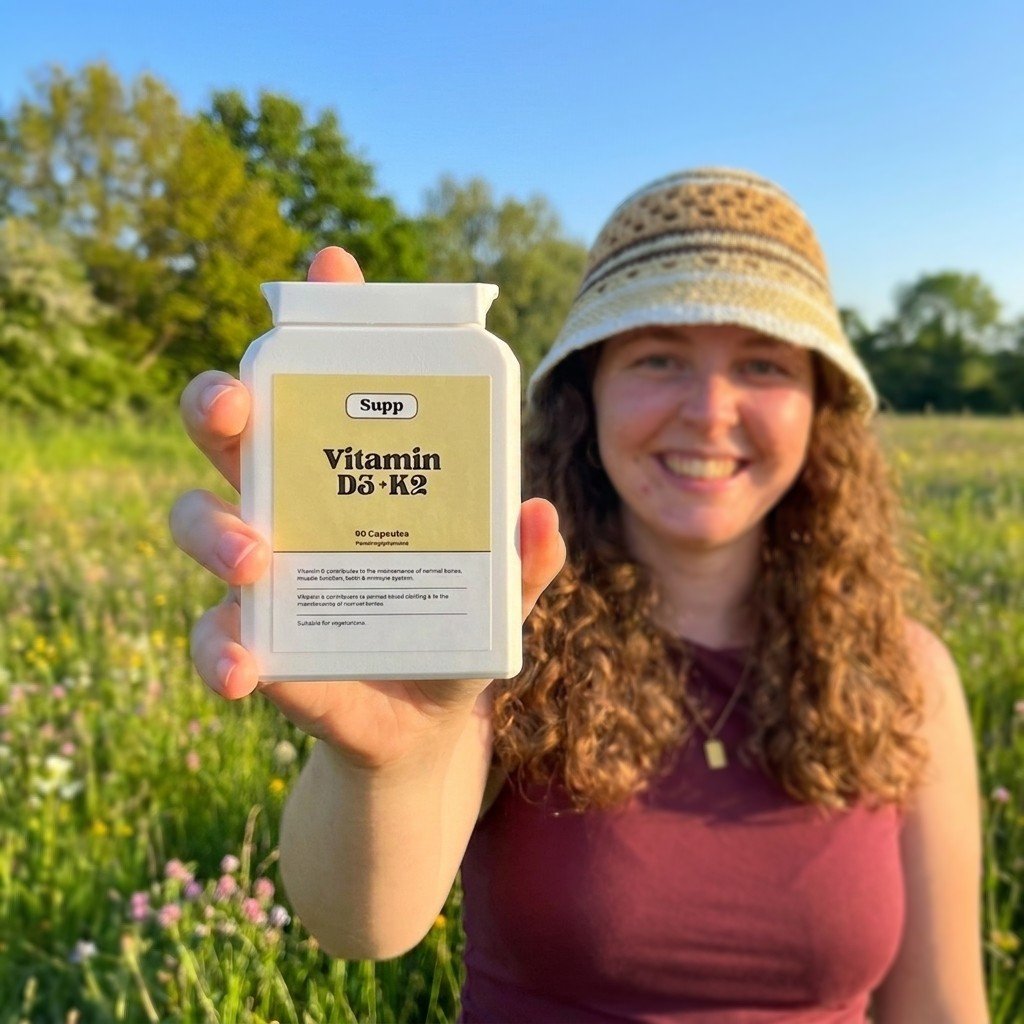
It’s the single most common deficiency in the UK and one of the most overlooked causes of persistent fatigue. Our Vitamin D3 + K2 combines the two in the forms your body actually uses, in a single daily capsule.
Look at your multivitamin.
If you’re taking one, check the forms of the nutrients inside — not just the doses. A well-formulated multivitamin should be comprehensive enough to cover your daily micronutrient foundations without relying on poor-quality ingredient forms.
Adjust your timing.
Move fat-soluble vitamins to mealtimes. Be consistent. Give it at least eight to twelve weeks before judging whether something is working.
Look at the bigger picture.
Sleep, stress, movement, and diet all interact with how well your body absorbs and uses the nutrients you’re giving it. No supplement sits in isolation from the rest of your life.
And if you’re not sure where to start, our Health Hub is full of honest, research-backed guidance to help you figure out what your body actually needs.
References
- Heaney RP, Davies KM, Chen TC, Holick MF, Barger-Lux MJ. 2003. Human serum 25-hydroxycholecalciferol response to extended oral dosing with cholecalciferol. The American Journal of Clinical Nutrition. https://pubmed.ncbi.nlm.nih.gov/12499343/
- Uysal N, Kizildag S, Yuce Z, et al. 2019. Timeline (bioavailability) of magnesium compounds in hours: which magnesium compound works best? Biological Trace Element Research. https://pubmed.ncbi.nlm.nih.gov/29679349/
- Dawson-Hughes B, Harris SS, Lichtenstein AH, Dolnikowski G, Palermo NJ, Rasmussen H. 2015. Dietary fat increases vitamin D-3 absorption. Journal of the Academy of Nutrition and Dietetics. https://pubmed.ncbi.nlm.nih.gov/25441954/
- NHS. 2020. Vitamin D. https://www.nhs.uk/conditions/vitamins-and-minerals/vitamin-d/
- Stough C, Scholey A, Lloyd J, Spong J, Myers S, Downey LA. 2011. The effect of 90 day administration of a high dose vitamin B-complex on work stress. Human Psychopharmacology. https://pubmed.ncbi.nlm.nih.gov/21905094/
Disclaimer
The information in this article is intended to support, not replace, the advice of a qualified health professional. If you’re concerned about your energy levels or think you might have an underlying deficiency, it’s always worth speaking to your GP first. Supplements work best as part of a balanced lifestyle – they’re not a substitute for medical care.