

If you’ve started noticing more hair on your pillow, in the shower drain, or at your temples, you’re far from alone.
Hair thinning affects millions of people in the UK, men and women alike, and it’s one of those things that’s easy to dismiss until it starts to feel very personal.
The supplement market is full of products that promise to turn the tide. Most of them don’t hold up. But saw palmetto is one ingredient that keeps coming up in conversations about hair loss, and not just on wellness forums. It’s being looked at in clinical research too.
So what is it, how might it work, and does the evidence actually support it?
What’s Causing Your Hair To Thin?
Before we get into saw palmetto, it helps to understand what’s behind most cases of hormonal hair loss.
The culprit is usually a hormone called DHT – short for dihydrotestosterone. DHT is made from testosterone by an enzyme called 5-alpha reductase. When DHT binds to receptors in your hair follicles, it can cause them to gradually shrink. Over time, the hairs that grow from these follicles become finer and shorter, until eventually the follicle stops producing hair altogether.
This process is known as androgenetic alopecia – or more commonly, male or female pattern hair loss. It’s largely genetic, but DHT is the mechanism doing the damage.
This is why many pharmaceutical hair loss treatments work by blocking 5-alpha reductase. The thinking: lower DHT, slow (or stop) follicle shrinkage.
How Can Saw Palmetto Help With Hair Loss?
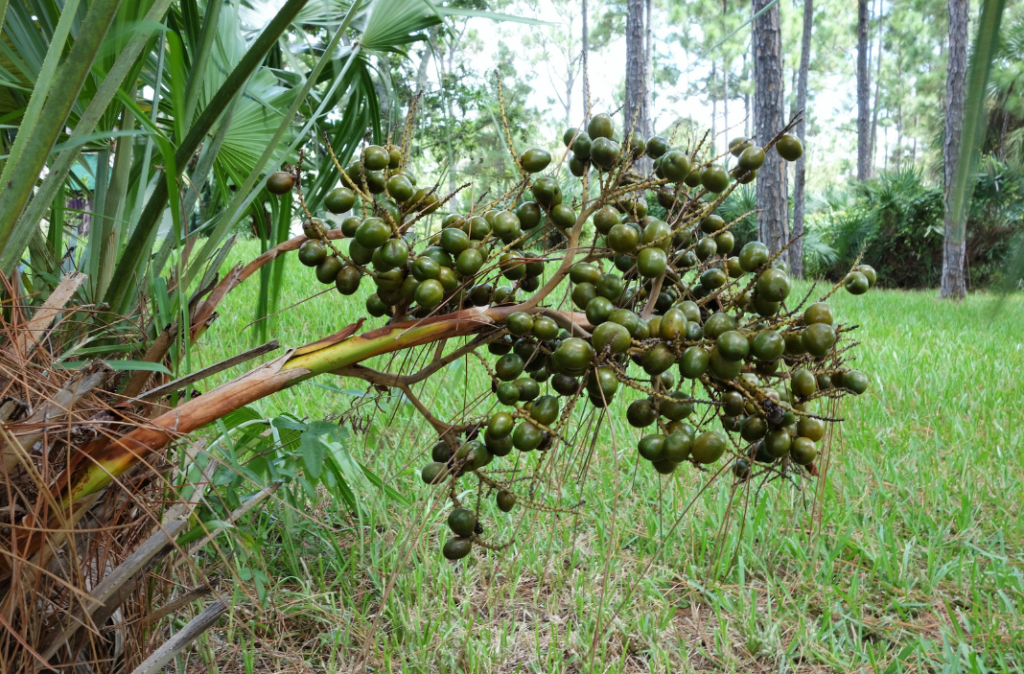
Saw palmetto is a small palm plant native to the southeastern United States. It’s been used for centuries, and its berries contain a group of fatty acids and plant sterols that appear to have a natural inhibitory effect on 5-alpha reductase – the same enzyme that drives DHT production [1].
Saw palmetto can help reduce the conversion of testosterone into DHT, potentially taking some of the pressure off your hair follicles.
It’s a similar mechanism to how pharmaceutical treatments work, just via a plant-based route and generally considered to be milder in its side effects.
What Does The Research Show?
The research is still emerging, but there are some genuinely interesting findings worth looking at.
A randomised, double-blind, placebo-controlled trial published in the Journal of Alternative and Complementary Medicine found that a saw palmetto-based formula was effective in treating androgenetic alopecia, with 60% of participants showing hair improvement compared to 11% in the placebo group [1].
A 2012 study comparing saw palmetto to finasteride (a leading pharmaceutical hair loss treatment) over two years found that while finasteride showed stronger results overall, 38% of those taking saw palmetto still experienced a significant improvement in hair growth – a meaningful result for a plant-based approach [2].
A 2020 systematic review in Skin Appendage Disorders looked at the available evidence and concluded that saw palmetto showed “positive results for improving hair quality and slowing hair loss progression” across multiple studies, particularly for those with mild to moderate androgenetic alopecia [3].
It’s not going to rival a pharmaceutical intervention. But for people looking for a gentler, more natural approach – or those who want to be proactive before hair thinning becomes more advanced – the evidence is very promising.
Does Saw Palmetto Work For Women Too?
Yes, it may – and this is an area that doesn’t get nearly enough attention.
Female pattern hair loss is also driven by DHT, just typically at lower levels than in men. The same mechanism applies: 5-alpha reductase converts testosterone to DHT, which can affect hair follicles over time.
The 2020 systematic review referenced above included data on women and found that saw palmetto showed benefits for female hair loss too, particularly around hair density and reduced shedding [3].
It’s worth noting that the research in women is more limited compared to men, and results tend to be more variable. Hormonal hair loss in women can also have other underlying causes – including thyroid issues, nutritional deficiencies, and stress – so it’s always worth checking in with a GP if you’re noticing significant thinning.
That said, saw palmetto is generally well-tolerated and is one of the more studied natural options available for women dealing with hormone-related hair thinning.
How Much Saw Palmetto Should You Take?
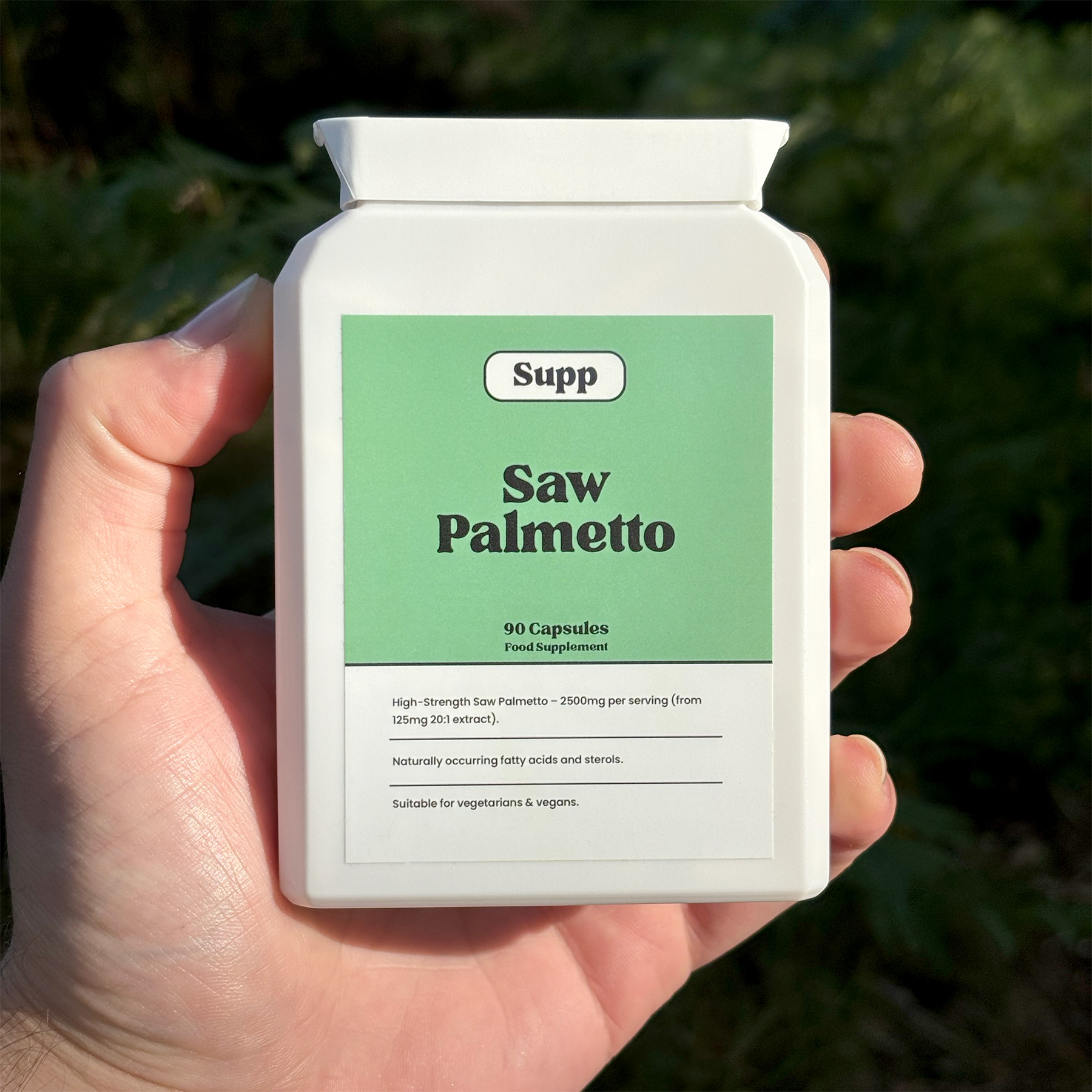
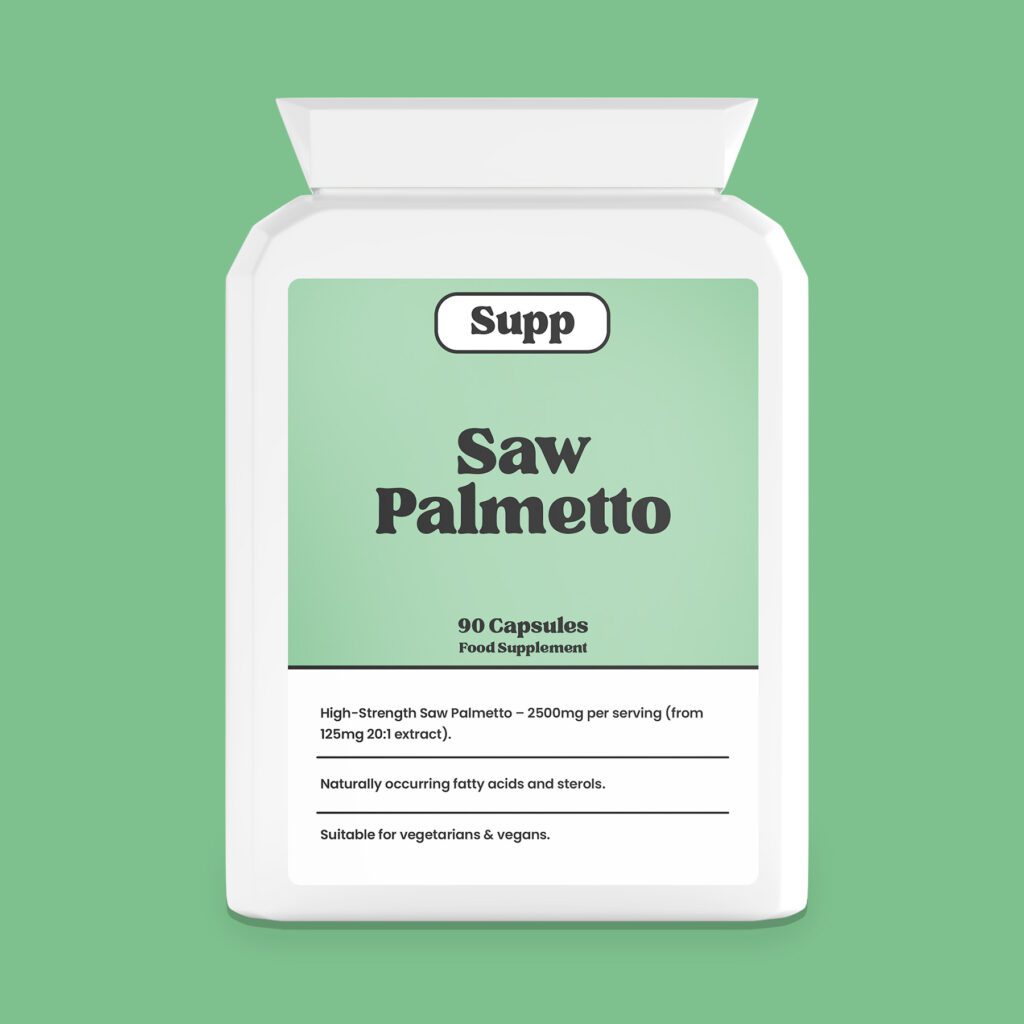
Each capsule of our Saw Palmetto provides 125mg of a high-quality 20:1 standardised extract – equivalent to 2,500mg of whole saw palmetto berry – with 56.25mg of active fatty acids per serving.
Standardisation matters here. A cheap, non-standardised product may contain very little of what actually drives the effect. This is exactly why we don’t use vague blends or mystery extracts – you deserve to know exactly what you’re taking and why.
Our formula is GMP-manufactured in the UK and designed for consistent daily use, which is key. Saw palmetto isn’t something you take occasionally and expect results from – consistency over months is where it counts.
How Long Does It Take To See Results?
This is the question most people ask – and it deserves an honest answer.
Hair growth is slow. The research that shows positive results typically runs for 6 to 24 months, not 6 to 8 weeks. Hair follicles go through growth cycles, and any intervention that works by slowing DHT-related damage needs time to show results you can actually see.
The realistic expectation with saw palmetto is:
- Reduced shedding may be noticeable within a few months
- Improvements in hair density or thickness are more likely to become visible after 6 months or more
- Results will be more pronounced in earlier stages of hair thinning, before follicles have been dormant for a long time
It’s also worth being consistent. Taking it sporadically won’t give you anywhere near the same results as a steady daily habit.
Is Saw Palmetto Worth Trying?
If your hair loss is hormone-related and you’re looking for a plant-based option with genuine research behind it, saw palmetto is worth serious consideration.
It’s not a miracle fix – and we’d never frame it as one. But in a category full of overpromised, underdelivered products, saw palmetto stands out as an ingredient with a plausible mechanism and a growing body of evidence to support it.
It’s also worth knowing that saw palmetto has research history beyond just hair loss. It’s most widely studied for prostate health in men, and if you want to understand more about how it works across those different areas, our blogs on saw palmetto benefits and the research and saw palmetto vs pumpkin seed oil for prostate health go into a lot more detail.
As with any supplement, it works best as part of a broader approach to health – good nutrition, managing stress, and getting enough sleep all play a role in how your hair holds up over time. Supplements support the picture; they don’t replace the foundations.
If you’re considering saw palmetto and you’re on any medication or have an existing health condition, it’s always worth checking with your GP first.
References:
- Prager N, Bickett K, French N, Marcovici G. 2002. A randomized, double-blind, placebo-controlled trial to determine the effectiveness of botanically derived inhibitors of 5-alpha-reductase in the treatment of androgenetic alopecia. Journal of Alternative and Complementary Medicine. https://pubmed.ncbi.nlm.nih.gov/12006122/
- Rossi A, Mari E, Scarnò M, et al. 2012. Comparitive effectiveness of finasteride vs Serenoa repens in male androgenetic alopecia: a two-year study. International Journal of Immunopathology and Pharmacology. https://journals.sagepub.com/doi/10.1177
- Evron E, Juhasz M, Babadjouni A, Mesinkovska NA. 2020. Natural hair supplement: Friend or foe? Saw palmetto, a systematic review in alopecia. Skin Appendage Disorders. https://pubmed.ncbi.nlm.nih.gov/33313047/
Disclaimer
If you are pregnant, breastfeeding, taking medication, or have any concerns, please consult your GP before starting any new supplement.