

Last week we explored how tendons and ligaments can become overloaded and progress towards injury. This week, we take a closer look at what happens after injury occurs, specifically, how these tissues heal at a cellular level and why rehabilitation is so important in guiding recovery.
Although tendons and ligaments are both connective tissues, they heal relatively slowly compared to muscle due to their lower blood supply. Recovery is not solely about waiting for pain to settle. Instead, healing occurs through a highly coordinated biological process involving inflammation, tissue repair, and remodelling.
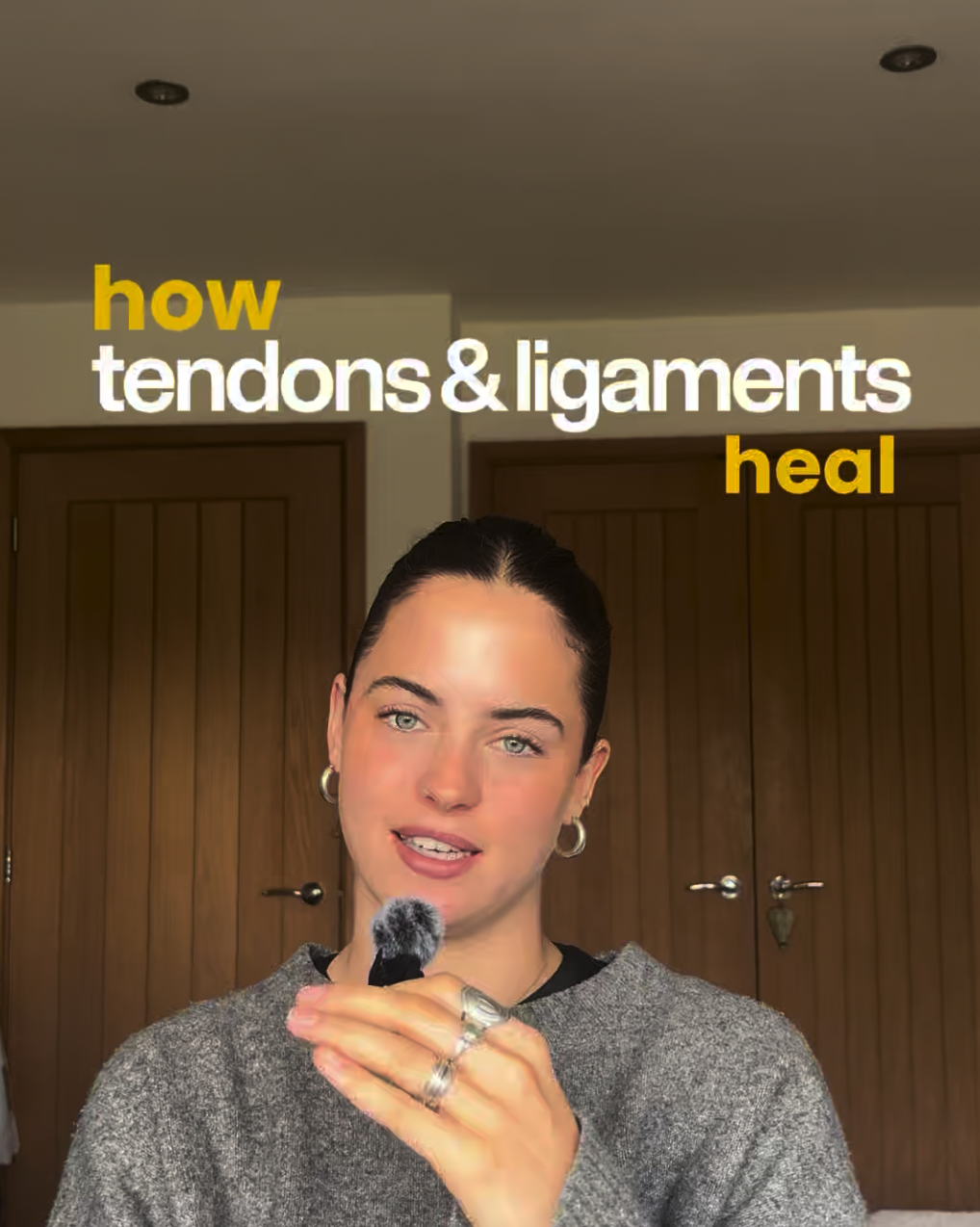
Prefer to watch? Maddie talks through each stage of tendon and ligament healing in the video below:
Three Phases Of Tendon Healing
Here’s a visual overview of the three overlapping phases of tendon healing, the cells involved at each stage, and the typical timeline for recovery:
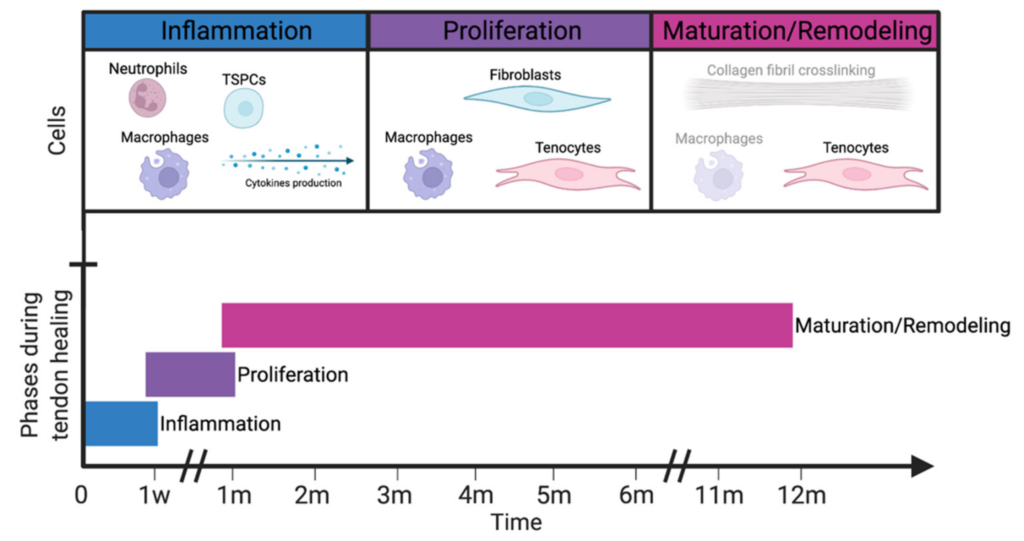
Figure 1: The three phases of tendon healing. Image from Brebels & Mignon (2022), Polymers.
1. The Inflammatory Phase
The first stage of healing is inflammation, which begins almost immediately after injury. Inflammation often gets a bad reputation, but it’s actually a vital part of the healing process.
Following tissue damage, small blood vessels become more permeable, allowing immune cells such as macrophages and neutrophils to enter the injured area. These cells help remove damaged tissue while releasing signalling molecules that initiate repair.
During this phase, symptoms such as pain, swelling, heat and stiffness are common. The tissue is highly sensitive, and its ability to tolerate load is temporarily reduced.
At this stage, rehabilitation focuses on protecting the tissue from excessive stress while still maintaining some level of safe movement and circulation where appropriate. If you’re dealing with delayed onset soreness rather than a fresh injury, our guide on how to reduce DOMS covers that side of recovery in more detail.
2. The Proliferative Phase
Once the initial inflammatory response begins to settle, the body enters the proliferative phase.
Here, specialised cells called fibroblasts begin producing collagen, which forms the structural framework for healing tissue. Initially, this collagen is laid down rapidly and in a relatively disorganised manner. While this helps bridge and repair the injured area, the tissue is still mechanically weak.
This is where progressive rehabilitation becomes particularly important. Controlled loading helps stimulate the alignment of collagen fibres in the direction of stress, encouraging stronger tissue development over time.
Without appropriate loading, collagen organisation may remain poor, reducing the tissue’s long-term capacity and resilience.
3. The Remodelling Phase
The final stage is remodelling, where the tissue gradually matures and adapts to the demands placed upon it.
Collagen fibres become more organised, tendon and ligament stiffness gradually improves, and the tissue becomes better able to tolerate tensile load. This phase can continue for weeks to months depending on the severity of injury and the demands of the individual.
Importantly, healing tissue responds to the type of stress it experiences. Progressive strengthening, movement retraining and a gradual return to activity all help shape how the tissue adapts during this stage.
This is why rehabilitation isn’t simply about reducing symptoms, it’s about restoring tissue capacity and preparing the body for real-world movement demands again. Our article on why rehab isn’t just for injury explores this idea in more detail.
Why Rehabilitation Matters
Pain often settles before a tendon or ligament has fully regained its strength and load tolerance. Returning to high levels of activity too quickly can overload healing tissue before it’s properly prepared.
Effective rehabilitation provides the right amount of stress at the right time, allowing the tissue to adapt progressively without becoming overloaded again.
Understanding the healing process helps explain why recovery is rarely linear, and why gradual progression is essential for long-term outcomes.
Healing isn’t just about time passing, it’s about how the tissue responds and adapts to load throughout the rehabilitation process. Building in daily habits that support movement and recovery alongside structured rehab can make a meaningful difference. If you want to zoom out on the bigger picture, our take on getting recovery right brings it all together.
Supporting Your Routine Alongside Rehab
Rehabilitation does the heavy lifting when it comes to tissue recovery. That said, many people choose to add specific ingredients to their broader movement and joint care routine.
- Green Lipped Mussel, a source of omega-3 fatty acids, which are valued for their role in supporting joint health and mobility
- Turmeric Extract with Black Pepper, a long-used botanical pairing where piperine helps support the absorption of curcuminoids
- Montmorency Cherry Extract, a popular addition to routines focused on training, sleep and recovery
These sit alongside rehab as part of a wider approach to looking after your body. They aren’t a shortcut, but they can be part of how you choose to support your everyday movement and joint care.
Final Thoughts
Recovery from a tendon or ligament injury is rarely a straight line, and that’s normal. The body follows a clear biological process, and rehab is what shapes how well the tissue rebuilds at each stage. Trust the process, respect the timeline, and give the tissue the right load at the right time.
If you’re working through an injury, a qualified physiotherapist can guide you on what’s appropriate for your specific situation.
References:
- Brebels, J., & Mignon, A. (2022). Polymer-Based Constructs for Flexor Tendon Repair: A Review. Polymers, 14(5), 867. https://doi.org/10.3390/polym14050867
Disclaimer:
This article is intended for general educational purposes and reflects current understanding of how tendons and ligaments heal. It isn’t a substitute for personalised medical advice, diagnosis or treatment. If you’re recovering from an injury or have ongoing pain, please consult a qualified physiotherapist, GP or healthcare professional who can assess your individual situation.