

Lion’s mane is one of the most genuinely interesting functional mushrooms in the supplement space right now. The research behind it is growing, the interest is real, and unlike a lot of wellness trends, it’s not just noise.
But here’s the problem.
Search “best lion’s mane supplement UK” and you’ll find dozens of products all making broadly similar claims. Some are excellent. A lot are not. And unless you know what to look for, it’s almost impossible to tell the difference from the outside.
This guide is here to fix that.
We’re not going to cover what lion’s mane does for focus or cognitive support in depth here. We’ve already written about how lion’s mane may support NGF, how long it takes to work, and what the science says about focus and productivity. Those are worth a read if you’re earlier in the decision-making process.
What this article covers is simpler: once you’ve decided lion’s mane is something you want to try, what should you actually be looking for in the product itself?
Here are the five things that separate a quality lion’s mane supplement from one that looks good on the shelf but doesn’t hold up.
1. Fruiting Body vs Mycelium: The Most Important Label Check
This is the single biggest quality indicator on any lion’s mane product, and a lot of brands either skip over it or bury it in the small print.
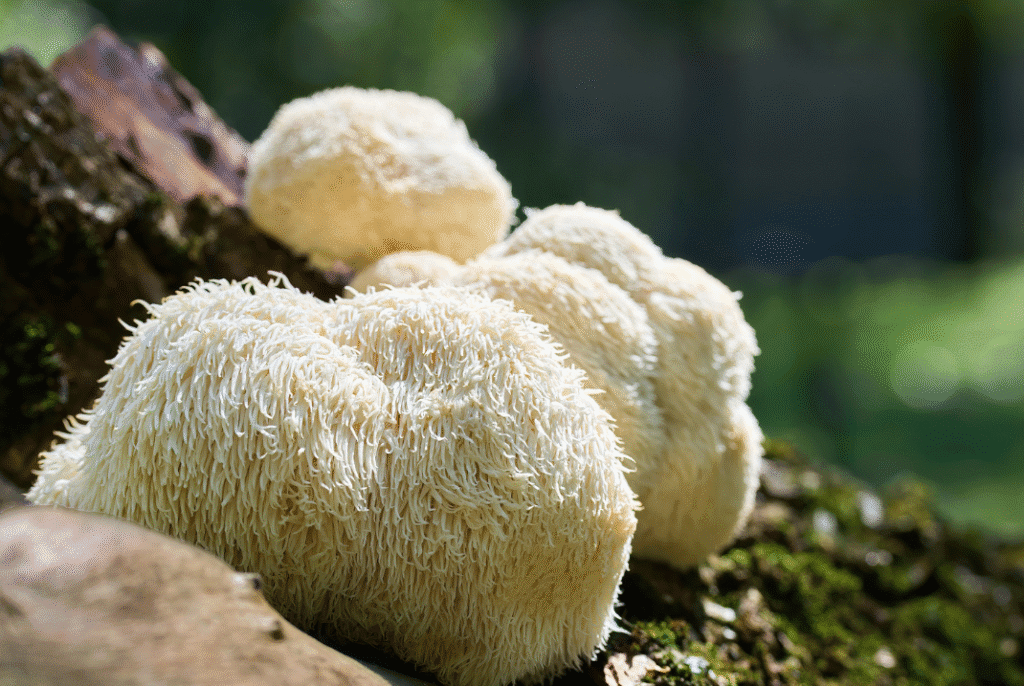
A mushroom has two main components. The fruiting body is the visible part you’d recognise as a mushroom. The mycelium is the root-like network that grows below the surface.
The majority of research into lion’s mane has been conducted using the fruiting body. It’s where the key active compounds, particularly beta-glucans and hericenones, are found in the most concentrated form [1].
Many budget lion’s mane products use mycelium grown on grain substrate. The issue with this is significant: the final product can contain a high proportion of starch from the grain it was grown on, rather than meaningful amounts of fungal material. You could end up paying for something that’s more grain than mushroom [2].
Look for a product that clearly states “fruiting body” or “fruiting body extract” on the label. If it only says “mycelium,” or doesn’t specify at all, that’s a red flag worth paying attention to.
2. Extraction Ratio: A Better Guide to Potency Than Weight Alone
A headline milligram number tells you very little about what’s actually in a lion’s mane supplement.
What matters more is whether the product uses an extract, and what that extraction ratio is.
Raw lion’s mane mushroom powder contains a structural compound called chitin in its cell walls. The human digestive system struggles to break chitin down efficiently, which means a lot of the active compounds in unextracted powder may pass through without being properly absorbed.
Extraction is the process that changes this. It concentrates the bioactive compounds into a form the body can actually use, and the extraction ratio tells you how much raw material was used to produce the extract.
A 10:1 extract, for example, means it took 10 parts of whole mushroom to produce 1 part of concentrated extract. This is why a product showing 200mg of a 10:1 fruiting body extract is actually delivering the equivalent of 2,000mg of dried mushroom. That’s a very different product from one offering 200mg of raw mushroom powder, even though the label weight looks identical at first glance.
When you’re comparing products, look past the headline number. Check whether the product uses an extract or raw powder, what the extraction ratio is, and what the dried mushroom equivalent works out to. A brand that’s confident in its formula will make that information easy to find.
You may also see some products declare a beta-glucan percentage on the label. Beta-glucans are the key polysaccharides found in lion’s mane cell walls, widely considered central to its bioactive properties [3]. A declared percentage can be a useful additional signal, but a clearly stated extraction ratio from a fruiting body source is a meaningful quality indicator even without one.
3. Dose: Enough to Actually Do Something
Research into lion’s mane tends to use daily doses ranging from 500mg up to 3,000mg of dried mushroom equivalent, with a number of studies using doses at the higher end of that range [4].
It’s worth checking what a product delivers per full serving, not just per capsule or gummy, particularly if the instructions say to take multiple pieces per day. Some products make themselves look competitive on the front of the pack but deliver far less once you account for the actual serving size.
This is also where extraction ratio becomes important again. 200mg of a 10:1 extract delivers 2,000mg of dried mushroom equivalent. A product offering 500mg of raw powder delivers exactly that: 500mg. These are not the same thing, even though the raw powder product might look like the larger dose on paper.
Always check the label, the full serving size, and whether the dose is stated as raw powder or a mushroom equivalent.
4. Form: Capsules, Powder, or Gummies?
This is more of a personal decision than a quality one, but it matters for one important reason: consistency.
Lion’s mane is a supplement that works best when taken regularly over time. The research doesn’t suggest a one-off effect. So the best form for you is whichever one you’ll actually remember to take every day.
Capsules offer precise dosing and work well if you already have a supplement routine they can slot into.
Powders are versatile and can be mixed into drinks or food, but lion’s mane has an earthy, sometimes bitter flavour that doesn’t suit everyone. Consistency can be harder to maintain.
Gummies have grown in popularity for good reason. They’re easy, convenient, and feel less like a chore. For a supplement where daily consistency is everything, this tends to be the preferred method.
Whatever format you choose, the other quality markers on this list apply equally. Don’t trade fruiting body extract for a format that suits your lifestyle. You want both.
5. Manufacturing Standards: UK-Made and GMP-Certified
This applies to any supplement, but it’s worth stating clearly here.
GMP stands for Good Manufacturing Practice. It’s an internationally recognised quality standard that covers ingredient sourcing, manufacturing conditions, hygiene, labelling accuracy, and quality control processes. A GMP-certified facility has been independently audited against those requirements.
In the UK, the MHRA (Medicines and Healthcare products Regulatory Agency) oversees supplement manufacturing. Products made in GMP-certified UK facilities come with a level of accountability and traceability that isn’t always guaranteed from products manufactured overseas.
If a product doesn’t tell you where it’s made, or what manufacturing standards it meets, that’s worth noting before you commit to it. Transparency about sourcing and manufacturing is a basic mark of a brand you can trust.
Quick Checklist: What to Look For
Before you buy any lion’s mane supplement in the UK, run through this:
- Does it use fruiting body, clearly stated on the label?
- Does it use a concentrated extract with a declared ratio (e.g. 10:1) rather than just raw powder?
- Does the daily dose deliver a meaningful mushroom equivalent, in line with research amounts?
- Is it made in a GMP-certified facility?
- Is the full ingredient list transparent, with no proprietary blends hiding what’s actually in it?
Tick all of those, and you’ve found something worth trying.
Why We Made Lion’s Mane Gummies the Way We Did
At Supp, we’re not fans of supplements that look impressive until you read the label properly.
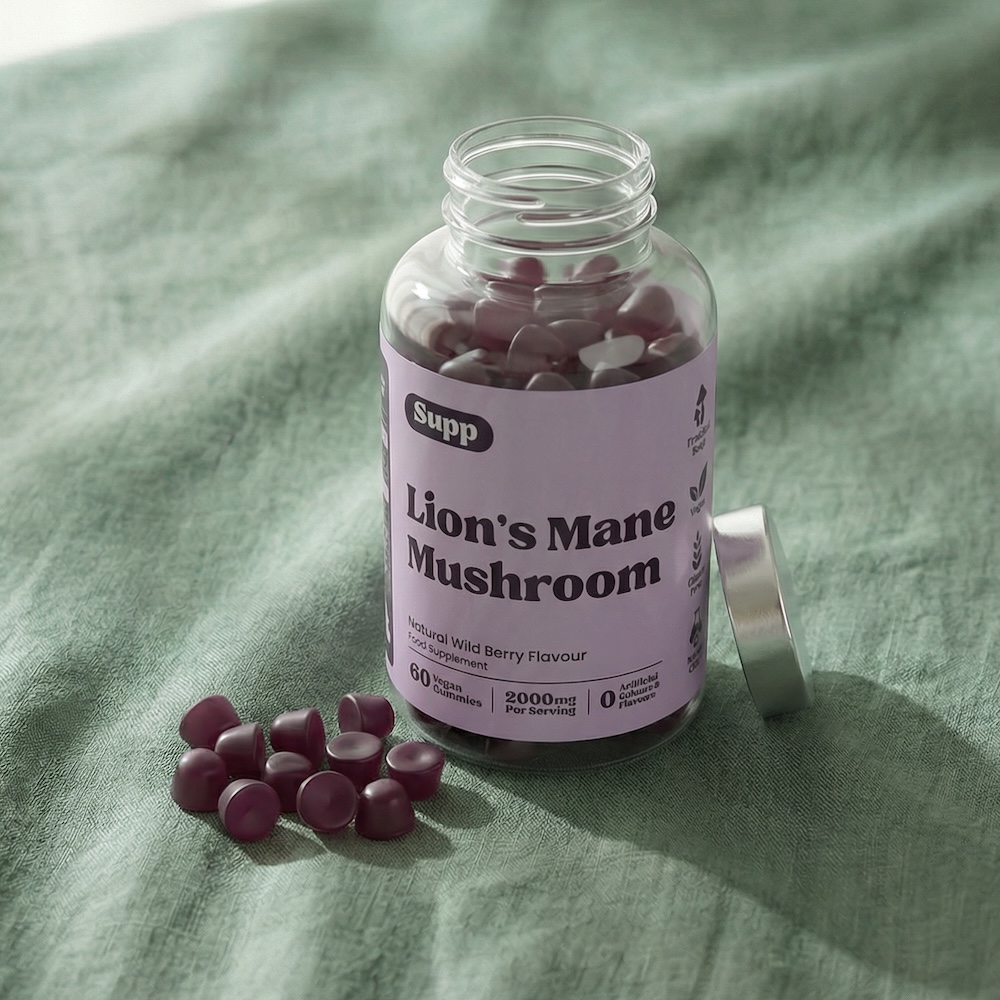
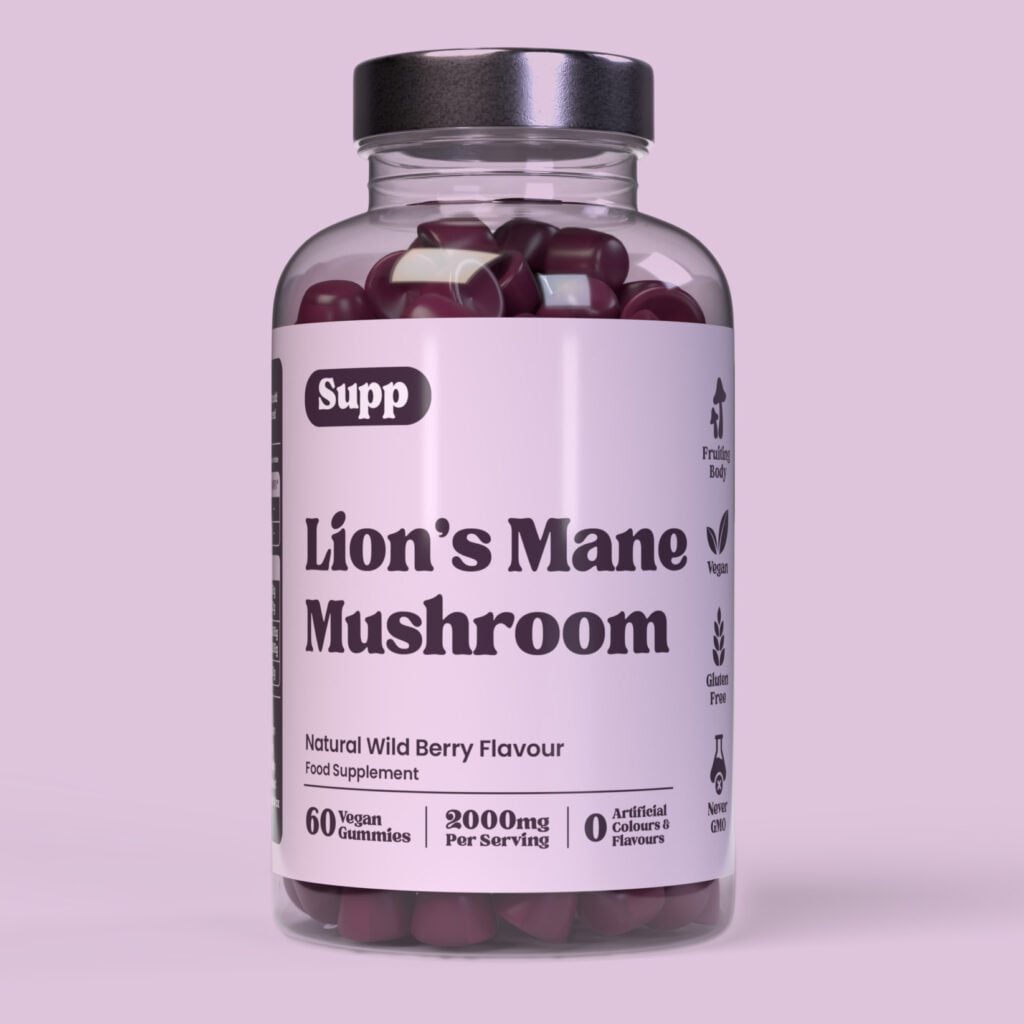
Our Lion’s Mane Mushroom Gummies contain 200mg of lion’s mane fruiting body 10:1 extract per serving, equivalent to 2,000mg of dried mushroom. The extraction ratio is on the label because we think you should know exactly what you’re getting, not just the weight of what’s in the gummy.
They’re manufactured in the UK in a GMP-certified facility, suitable for vegans, and made without unnecessary fillers or additives. We designed them as gummies because, in our experience, people actually take them. A supplement you take every day works. A supplement you take three times and forget about doesn’t.
If you’ve done the research, know what you’re looking for, and want a lion’s mane supplement you can trust, this is ours:
Always consult your healthcare practitioner before starting a new supplement, particularly if you are pregnant, breastfeeding, or taking medication.
References
- Friedman M. 2015. Chemistry, nutrition, and health-promoting properties of Hericium erinaceus (lion’s mane) mushroom fruiting bodies and mycelia and their bioactive compounds. Journal of Agricultural and Food Chemistry. https://pubmed.ncbi.nlm.nih.gov/26244378/
- Stamets P, Zwickey H. 2014. Medicinal mushrooms: ancient remedies meet modern science. Integrative Medicine. https://pmc.ncbi.nlm.nih.gov/articles/PMC4684114/
- Wasser SP. 2002. Medicinal mushrooms as a source of antitumor and immunomodulating polysaccharides. Applied Microbiology and Biotechnology. https://pubmed.ncbi.nlm.nih.gov/12436306/
- Saitsu Y, Nishide A, Kikushima K, Shimizu K, Ohnuki K. 2019. Improvement of cognitive functions by oral intake of Hericium erinaceus. Biomedical Research. https://pubmed.ncbi.nlm.nih.gov/31413233/