



Let’s be honest, life can feel pretty full-on sometimes. Between work, family, screens, and just trying to get enough sleep, stress has a sneaky way of creeping in. But the good news? Small, consistent habits can make a real difference, you don’t have to overhaul your whole life to feel calmer.
Today, we’re sharing five simple things that have helped us (and many others) feel more grounded, even on busy days. They’re easy, backed by science, and easy to start right now.
1. Get Outside
You don’t need a full-on countryside hike to feel the benefits of nature. Just a 10-minute walk in daylight, whether it’s around the block or to your local park, can shift your mood. It’s not just about movement. It’s light, fresh air, and a change of scene. A small reset for the mind and body.
A Stanford University study found that a 90-minute walk in nature significantly reduced rumination (negative overthinking) and lowered activity in the part of the brain linked to mental distress (1). That means being in green spaces can literally quieten the stress circuits in your mind.
Supp tip: Step outside and put your phone away. Let your eyes wander. Notice the trees, the sounds, the sky.

2. Put on Your Favourite Song and Move
Music is a shortcut to mood change. Especially the kind that makes you want to sing or dance. Research shows that listening to music you enjoy can reduce levels of cortisol, the main stress hormone, and when you move or dance to it, you get an extra mood-boosting shot of endorphins.
One study published in PLOS ONE found that people who listened to relaxing music before a stressful task had lower cortisol levels and recovered faster than those who sat in silence (2). Proof that your playlist is more powerful than you might think.
Supp tip: Make a 3-song playlist that always lifts your mood. That’s about 10 minutes of feel-good energy.

3. Breathe (Yes, Really)
Deep breathing might sound too simple, but there’s a reason it works. Slow, controlled breaths tell your nervous system it’s safe to relax. Even two minutes of breathing in for 4 seconds and out for 6 can drop your heart rate, relax your muscles, and restore a sense of control.
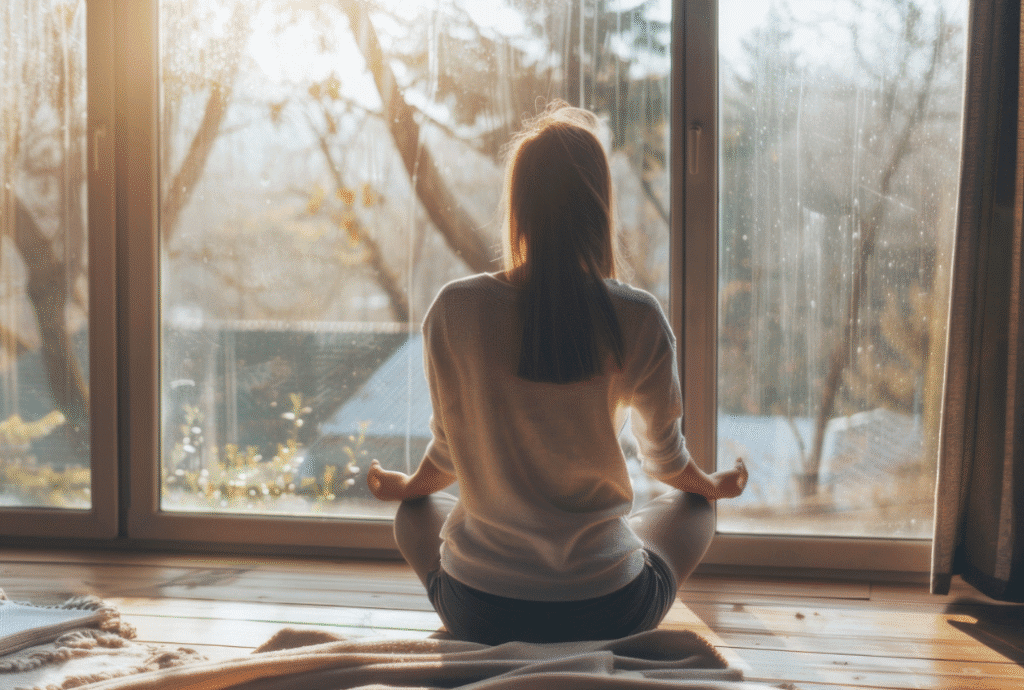
Supp tip: Sit somewhere comfortable, close your eyes, and breathe deeply. Two minutes. No devices, no expectations.
4. Build a Better Bedtime
Sleep shouldn’t be a luxury. It’s the body’s number one recovery tool. Poor sleep makes stress feel 10 times worse, and stress makes sleep harder. It’s a cycle worth breaking.
A calming bedtime routine that starts 30 to 60 minutes before bed is one of the best ways to reset your stress response. Lower the lights, put your phone away, and choose a wind-down activity like reading, stretching, or journalling.
For some, a natural source of melatonin like Montmorency Cherry can be helpful. A study by Northumbria University found that tart cherry increased melatonin levels and improved sleep duration and quality, suggesting it can support more restful sleep in a gentle, natural way (3).
Supp tip: Choose one screen-free activity before bed such as reading, stretching, or journalling, and keep it consistent.

5. Talk to someone
Stress thrives in silence. Talking, whether it’s a heart-to-heart with a mate or a quick message to someone who gets it, is one of the most powerful ways to break the overwhelm.
When you share what’s on your mind, your nervous system relaxes. It literally helps your brain shift from “fight or flight” into “rest and digest”, reducing the weight of whatever you’re carrying.
Supp tip: Swap one scroll session for connection. Send a voice note, pick up the phone for a 5-minute call, or text a friend and suggest grabbing a coffee this week. Hearing someone’s voice sparks a real connection in seconds, you’ll feel lighter almost immediately.

Small Habits, Big Difference
You don’t need a reset or a retreat, just a few small moments each day that look after your mind and body. A walk outside, some good music, a quick chat, or a little extra support at bedtime… it all adds up.
At Supp, we believe in simple, science-backed habits that help you feel better, naturally. Start small, stick with what works, and watch how even the tiniest choices can bring more calm into your life. If you want a natural way to support your journey, check out our Ashwagandha Gummies here.
References
- Bratman, G. N., et al. (2015). Nature experience reduces rumination and subgenual prefrontal cortex activation. Proceedings of the National Academy of Sciences. https://pubmed.ncbi.nlm.nih.gov/26124129/
- Thoma, M. V., et al. (2013). The effect of music on the human stress response. PLOS ONE. https://pubmed.ncbi.nlm.nih.gov/23940541
- Howatson, G., et al. (2011). Effect of tart cherry juice on melatonin levels and sleep quality. European Journal of Nutrition. https://pubmed.ncbi.nlm.nih.gov/22038497
Related Articles
Supp Urban Wellness Map: Which is the most stressed city in the UK?
Montmorency Cherry Capsules: The Smart Alternative to Cherry Juice
Always Tired? Here’s What Might Be Going On (And What Can Help)
Montmorency Tart Cherries: What They Are & What They’re Good For
Disclaimer
This article is intended for informational purposes only and should not replace personalised medical guidance.