



Have you ever started a new running programme, increased your training volume, or returned to sport after some time off, only to develop an aching pain along your shin?
Shin splints are one of the most common overuse injuries seen in runners and field-based athletes. Despite being a widely used term, many people are unsure what shin splints actually are, why they occur, and what can be done to manage them.
Here’s what the research and clinical understanding tell us about shin splints and why they develop.
Prefer to watch? Maddie explains what shin splints are in this video:
What Are Shin Splints?
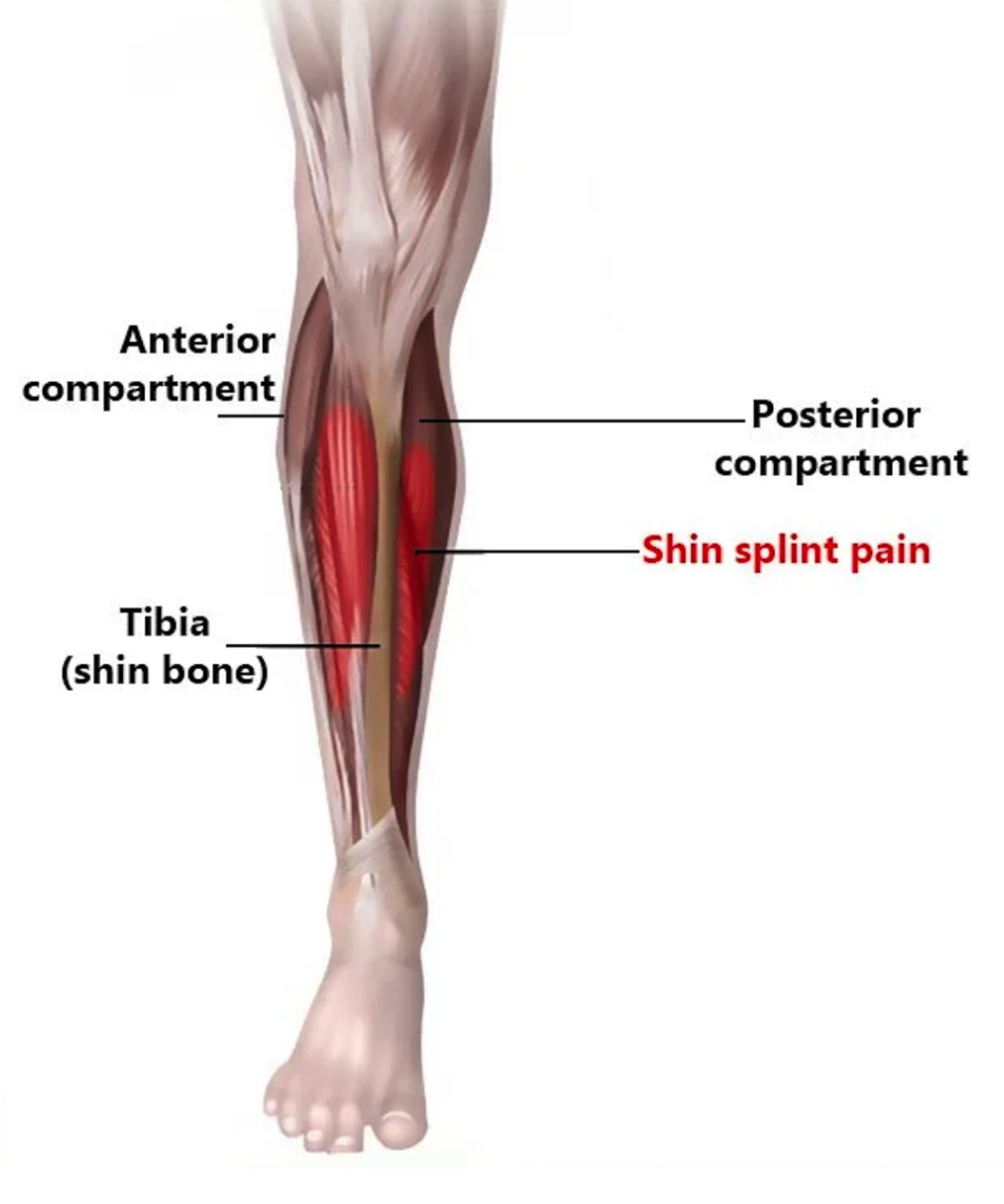
Shin splints, more formally known as medial tibial stress syndrome (MTSS), refer to pain experienced along the tibia, commonly known as the shin bone.
The condition is most frequently seen in activities involving repetitive running and jumping, where the lower limbs are repeatedly exposed to impact forces. The pain is typically felt along the inside border of the tibia, although discomfort can also be experienced elsewhere around the shin depending on the structures involved.
MTSS is considered an overuse injury, meaning it develops gradually over time rather than resulting from a single traumatic event.
Why Do Shin Splints Occur?
The lower leg muscles play an important role in controlling movement and absorbing force during running.
On the front of the shin, the tibialis anterior helps control the foot as it contacts the ground. On the inside and back of the lower leg, muscles such as the soleus and tibialis posterior help manage load and provide stability during running and jumping activities.
When training loads increase faster than the body can adapt, these tissues can become overloaded. Repeated traction and stress around the tibia can irritate the surrounding tissues, leading to the shin pain associated with shin splints.
This is why shin splints in runners are often linked to sudden increases in running distance, training intensity, frequency, or changes in activity levels. Inadequate recovery between sessions can add to the problem, so it’s worth checking whether you’re getting your recovery right.
Is It Just Tight Calves?
One of the most common misconceptions is that shin splints are simply caused by tight calf muscles.
While calf flexibility may contribute to symptoms in some individuals, the condition is usually more complex than this. Shin splints are primarily considered a load management issue, where the demands being placed on the tissues exceed their current capacity to tolerate them.
Factors such as training errors, rapid increases in activity, inadequate recovery, previous injury history, and lower limb biomechanics may all contribute to the development of symptoms.
How Are Shin Splints Managed?
Management typically focuses on reducing the loads that are provoking symptoms while maintaining as much activity as possible.
This does not necessarily mean complete rest. Instead, temporary modifications to training volume, intensity, or frequency are often used to allow symptoms to settle.
Alongside this, progressive strengthening exercises are introduced to improve the capacity of the muscles and tissues surrounding the lower leg. This is a good example of why rehab isn’t just for injury, building strength before there’s a problem helps your tissues cope with the demands of running. Particular attention is often given to strengthening the calf complex, the muscles around the lower leg and ankle, and improving overall lower limb mobility and strength.
Once symptoms begin to improve, running loads can be gradually reintroduced and progressed over time. Easing back in with a proper running warm-up before each session can help your body prepare for impact. You can find more guidance on how to prevent shin splints before they start.
If your shin pain keeps returning, it’s always worth chatting to a physio so you can find the cause and build a plan that’s right for you.
References
- https://www.researchgate.net/profile/Michal-Azierski/publication/393433870_Shin_Splints_-_a_hidden_epidemic_among_runners_and_athletes_a_review_of_the_current_state_of_knowledge/links/686924f5e9b6c13c89e6e224/Shin-Splints-a-hidden-epidemic-among-runners-and-athletes-a-review-of-the-current-state-of-knowledge.pdf
- https://assets.cureus.com/uploads/review_article/pdf/121305/20240724-319105-lonjz1.pdf
- https://ijhp.giu.edu.pk/index.php/ijhp/article/view/79
Disclaimer:
This article is for informational purposes only. If you are suffering with shin splint pain please consult your physio or GP for tailored advice.