

What is Psyllium Husk?
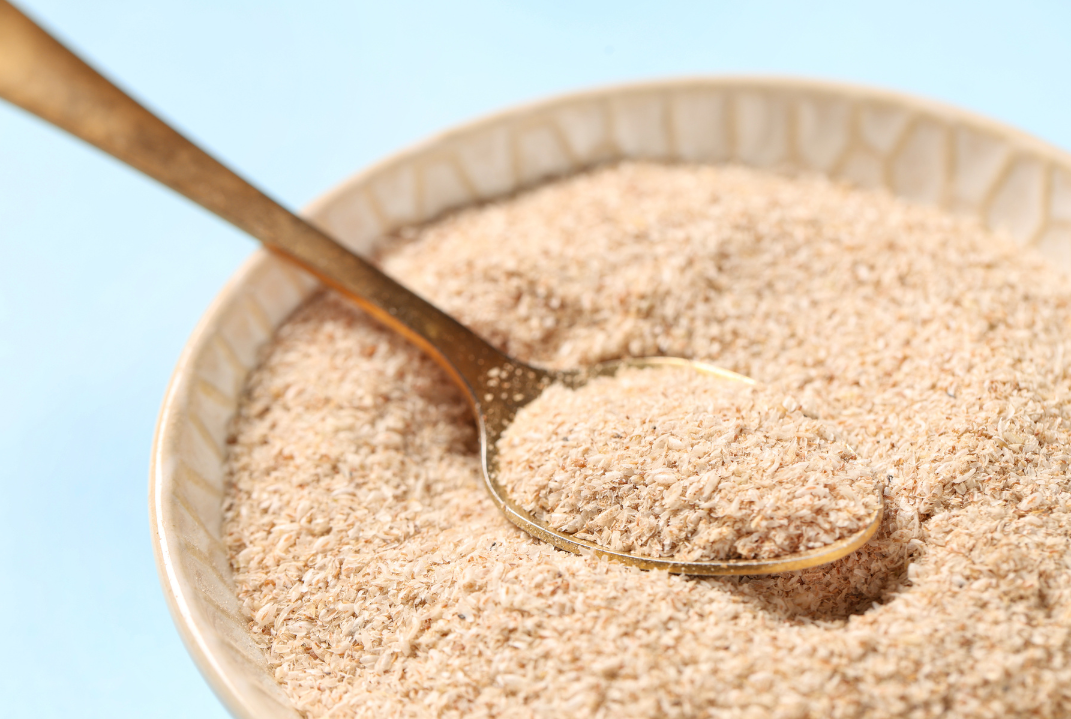
Psyllium husk is a soluble fibre that comes from the seeds of the Plantago Ovata, a plant native to India. The husk is made from the outer shell of the Plantago Ovata seeds.
It is often used as a fibre supplement and can support those with irritable bowel syndrome (IBS), helping to both soften and harden stools and regulate bowel movements.
It’s recommended to consume 30g fibre a day in the UK, and psyllium husk can count towards this. Most people can consume psyllium husk, making it a great way to include fibre into your diet.
How does Psyllium Husk work?
Psyllium husk expands and forms a thick, bulky gel when it comes into contact with water in the digestive system.
It can help to reduce constipation by drawing in water – it can soften hard stools and bulk up loose stools, and has been shown to help general symptoms of IBS too (1,2, 3).
How to take Psyllium Husk?
Psyllium husk can be consumed in many different forms; mixed with a liquid to form a jelly-like substance, mixed into smoothies, porridge, or sprinkled over cereals, used in baking or simply consumed as a capsule.
Psyllium husk is most effective when water is present, and at least 240ml water should be consumed when supplementing with it (4). However, it’s important to consume an adequate amount of water throughout the day in general when supplementing with psyllium husk – in extreme cases, not drinking enough water may increase risk of choking when supplementing with it.
The most common dose to show positive effects in clinical trials for digestive issues such as IBS is 10-15g/day, taken in three divided doses of around ~3.4-5g per day (5).
It’s recommended to start with a low dose – roughly 3g/ 1tsp mixed with water once per day for a week, and increase the amount consumed to two or three times a day over a period of a few weeks. This approach will help to reduce likelihood and increased intensity of symptoms whilst adjusting to an increased fibre intake.
Potential side effects
It is possible to experience some side effects, especially if you are new to taking Psyllium Husk. Common side effects include:
- Bloating
- Abdominal pain or cramps
- Change in bowel habits (if not enough water is consumed)
Psyllium husk can slow down or delay the absorption of some medications. It’s best to consume psyllium husk two hours before or after taking medications.
If you are trying psyllium husk for the first time, consult your GP if you are taking any medications, or if you have pre-existing conditions including bowel obstructions or difficulty swallowing.
What are the benefits of Psyllium Husk?
Heart Health
Other than its digestive benefits, psyllium husk has been shown to support heart health by lowering bad cholesterol (LDL) in those with high cholesterol levels (6, 7).
Studies have shown that consuming psyllium husk daily can significantly lower cholesterol levels, due to its ability to trap and eliminate bile acids (which are mainly made up of cholesterol) (8, 9).
Blood Sugar Control
Due to its ability to form a thick, viscous gel, psyllium husk can slow down gastric emptying when taken with a meal, contributing to the feeling of satiety and supporting healthy blood sugar levels (10, 11).
A 2023 study found that taking three doses of psyllium husk before meals, totalling an average of 10.8g psyllium husk, led to an average weight loss of 2.1kg and decreased waist circumference by 2.2cm in participants with overweight and obesity after five months (12).
Can anyone take Psyllium Husk?
In short, yes.
Psyllium husk is safe for most adults and is widely used to support digestion, bowel regularity, heart health, and blood sugar control.
However, some people should be cautious:
- Anyone with difficulty swallowing or a history of bowel obstruction should avoid it unless advised by a doctor.
- Those taking medications should take psyllium at least two hours before or after their medicines, as fibre can affect absorption.
- People with ongoing gut symptoms should introduce it slowly to avoid bloating or discomfort.
Adding psyllium husk to some meals throughout the day is a great way to increase fibre intake, however, supplementing with psyllium husk should not be solely relied upon to reach your fibre intake. It’s recommended to consume a healthy and diverse diet, which should lead you to reaching your recommended 30g fibre a day.
Best practice:
Start with a small dose, increase gradually, and drink plenty of water. If you have a medical condition or take regular medication, speak to your GP or a qualified health professional first.
References
- Erdogan A, Rao S S C, Thiruvaiyaru D, et al. (2016). Randomised clinical trial: mixed soluble/insoluble fibre vs. psyllium for chronic constipation. Alimentary Pharmacology & Therapeutics. https://pubmed.ncbi.nlm.nih.gov/27125883/
- Jalanka J, Major G, Murray K, et al. (2019). The Effect of Psyllium Husk on Intestinal Microbiota in Constipated Patients and Healthy Controls. International Journal of Molecular Sciences. https://pubmed.ncbi.nlm.nih.gov/30669509/
- Bijerk C J, Wit N J, Muris J W M, et al. (2009). Soluble or insoluble fibre in irritable bowel syndrome in primary care? Randomised placebo controlled trial. BMJ. https://pmc.ncbi.nlm.nih.gov/articles/PMC3272664/
- (2024). Psyllium. Medline Plus. https://medlineplus.gov/druginfo/meds/a601104.html
- Przybyszewska J, Kuźmiński A, Przybyszewski M, Popławski C. (2024). The role and therapeutic effectiveness of Plantago ovata seed husk (psyllium husk) in the prevention and non-pharmacological treatment of gastrointestinal diseases. https://pubmed.ncbi.nlm.nih.gov/38939069/
- Anderson J W, Allgood L D, Lawrence A, et al. (2000). Cholesterol-lowering effects of psyllium intake adjunctive to diet therapy in men and women with hypercholesterolemia: meta-analysis of 8 controlled trials. The American Journal of Clinical Nutrition. https://pubmed.ncbi.nlm.nih.gov/10648260/
- Anderson J W, Davidson M H, Blonde L, et al. (2000). The American Journal of Clinical Nutrition. https://pubmed.ncbi.nlm.nih.gov/10837282/
- Lambeau K V, McRorie Jr J W. (2017). Fiber supplements and clinically proven health benefits: How to recognise and recommend an effective fiber therapy. Journal of the American Association of Nurse Practitioners. https://pubmed.ncbi.nlm.nih.gov/28252255/
- Jovanovski E, Yashpal S, Komishon A, et al. (2018). Effect of psyllium (Plantago ovata) fiber on LDL cholesterol and alternative lipid targets, non-HDL cholesterol and apolipoprotein B: a systematic review and meta-analysis of randomized controlled trials. American Journal of Clinical Nutrition. https://pubmed.ncbi.nlm.nih.gov/30239559/
- Brum J M, Gibb R D, Peters J C, Mattes R D. (2016). Satiety effects of psyllium in healthy volunteers. Appetite. https://pubmed.ncbi.nlm.nih.gov/27166077/
- Müller M, Canfora E E, Blaak E E. (2018). Gastrointestinal Transit Time, Glucose Homeostasis and Metabolic Health: Modulation by Dietary Fibers. Nutrients. https://pmc.ncbi.nlm.nih.gov/articles/PMC5872693/
- Gibb R D, Sloan K J, McRorie Jr J W. (2023). Psyllium is a natural nonfermented gel-forming fiber that is effective for weight loss: A comprehensive review and meta-analysis. Journal of the American Association of Nurse Practitioners. https://pmc.ncbi.nlm.nih.gov/articles/PMC10389520/
Disclaimer
This article is for general information only and is not a substitute for medical advice. Always speak to your GP or a qualified health professional before making changes to your diet, or taking new supplements if you have any existing health conditions or take medication.