


This is one of those questions that quietly holds people back.
You’ve read about the benefits. Skin, joints, nails, recovery. You’re curious. But somewhere in the back of your mind, there’s a nagging thought: is taking collagen going to make me put on weight?
It’s a completely reasonable thing to want to know. The supplement industry has spent years making grand claims with very little transparency, so wanting the real answer before you commit to anything is exactly the right approach.
So here it is: Does collagen make you gain weight?
The short answer is no. Collagen is not going to make you gain weight. But the longer answer is worth understanding, because it’ll help you take collagen with confidence rather than just taking our word for it.
What Is Collagen, and Why Do People Take It?
Collagen is the most abundant protein in the human body. It’s found in your skin, joints, tendons, bones and gut lining. Think of it as the structural scaffolding that holds everything together.
From around your mid-twenties, the body’s natural collagen production begins to slow down [1]. That’s when people tend to notice things like skin that feels less firm, joints that take longer to recover, or nails that break more easily.
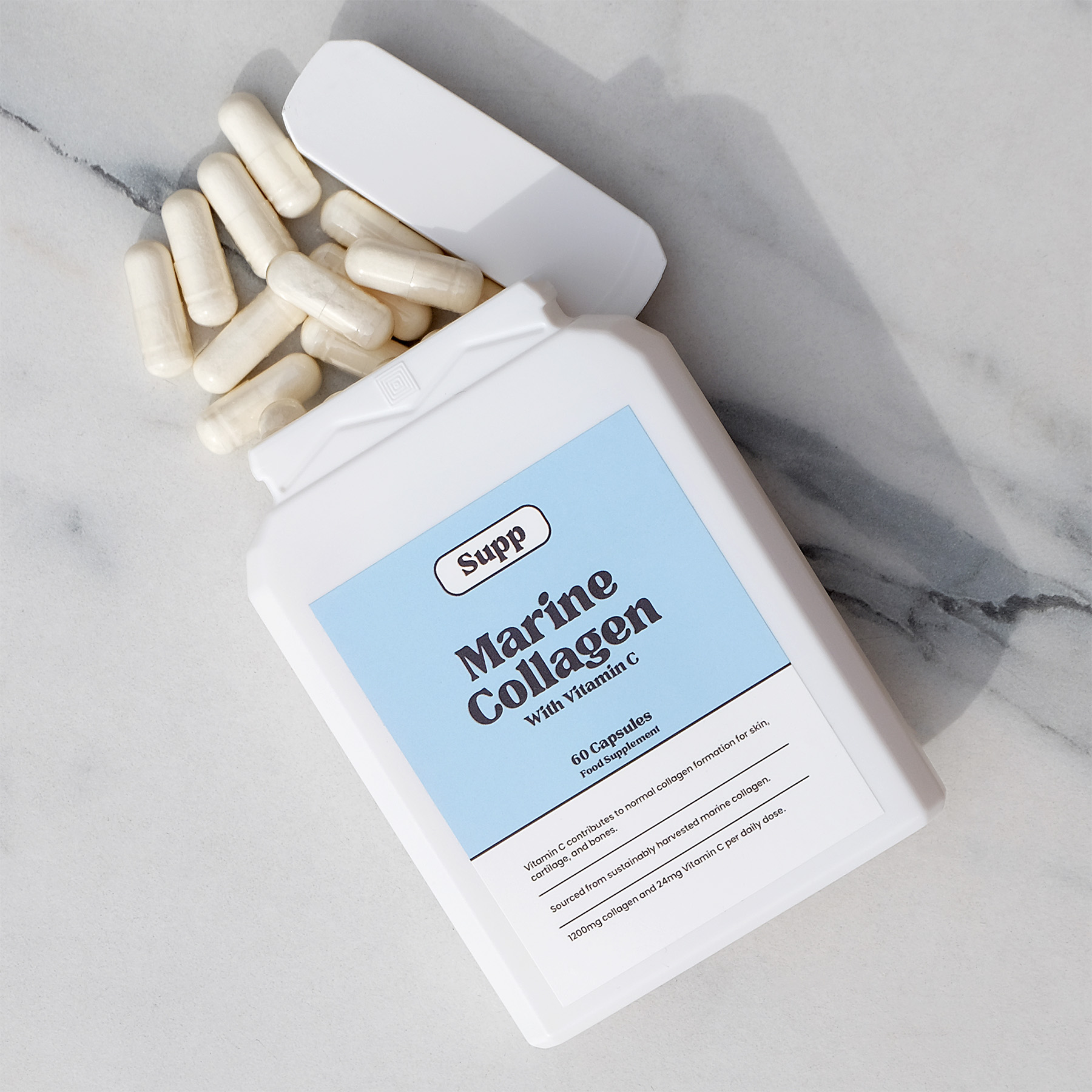
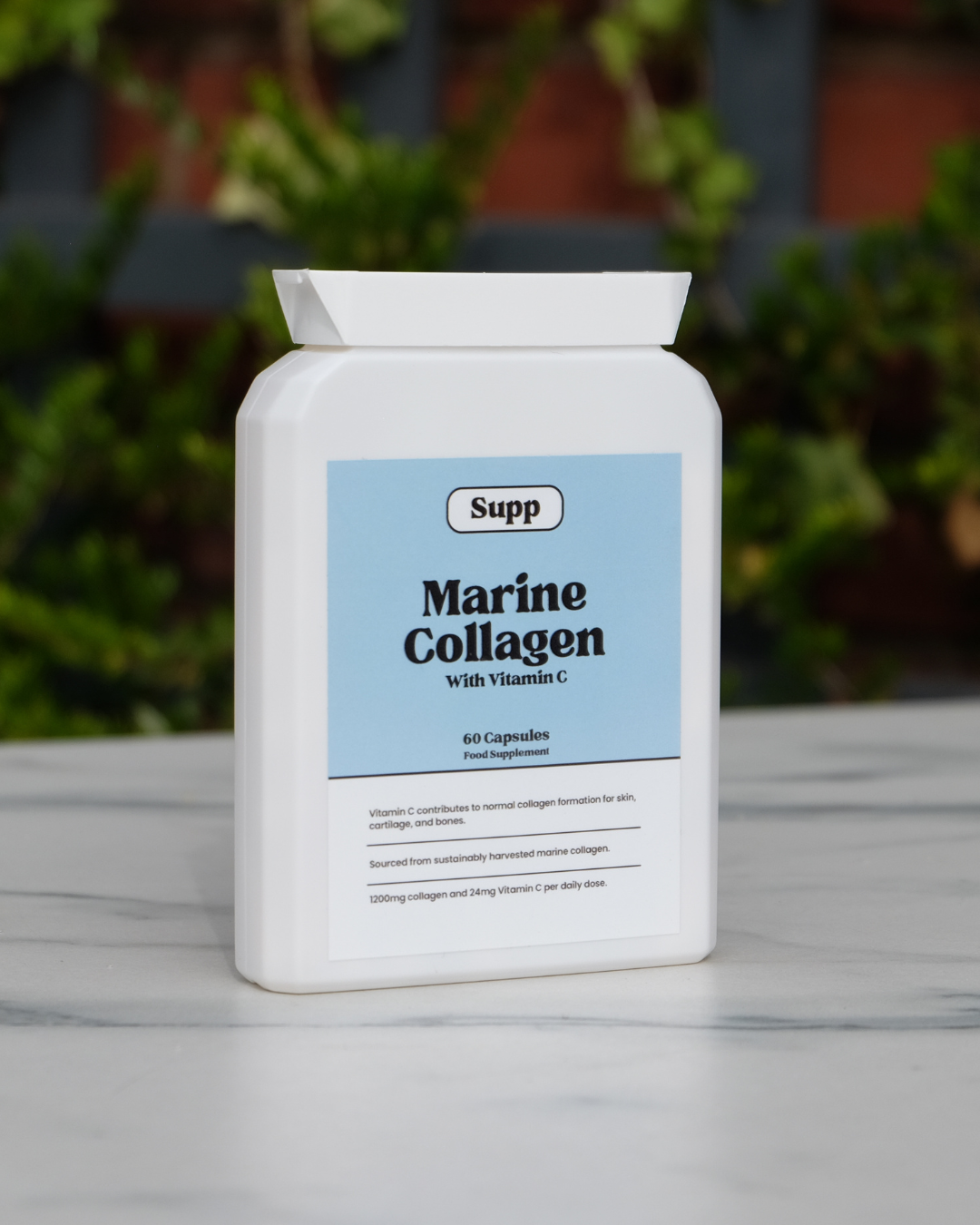
Collagen supplements like our Marine Collagen are designed to support that natural production. Marine collagen is derived from fish and made up primarily of Type I collagen, which is the most abundant type found in human skin and connective tissue.
How Many Calories Are In Collagen?
Let’s start here, because this is where most of the anxiety originates.
Collagen is a protein. Like all proteins, it contains calories. But the amount in a typical daily supplement serving is very minimal.
A small amount of protein contributes very few calories to your day. We’re talking about a number that wouldn’t register meaningfully in your overall intake.
For context, gaining body fat requires a sustained caloric surplus over time. A trace amount of protein from a daily supplement doesn’t move that needle.
If you’re specifically concerned about calorie intake, just check the label of whatever you’re taking. A clean collagen supplement in capsule form should have very little else in it beyond the collagen itself.
Why Do Some People Think Collagen Causes Weight Gain?

This is where it gets more interesting. A small number of people report that the scales tick upward slightly after they start taking collagen. There are a few explanations for this, and none of them are cause for concern.
Improved skin hydration
Collagen peptides support the skin’s ability to hold onto moisture [2]. In some people, particularly when first starting supplementation, this can lead to a minor and temporary increase in water retention. It’s not fat. It’s your skin doing exactly what you want it to do.
Changes in appetite
Protein is the most satiating macronutrient. Some people find that adding a protein source to their routine, even a small one, shifts their appetite patterns slightly while the body adjusts. This usually settles within a week or two.
Bloating versus weight gain
These two things feel similar but they’re not the same. If a new supplement causes any initial digestive adjustment, it can create a sensation of feeling heavier. This is common with most new supplements and typically resolves quickly.
None of these are signs that collagen is causing fat gain. They’re normal, short-lived physiological responses.
What Does The Science Say About Collagen And Weight Gain?
The evidence around this is genuinely reassuring.
A 2015 study published in the British Journal of Nutrition looked at the effects of collagen peptide supplementation on body composition. Participants who supplemented with collagen alongside resistance training saw greater improvements in fat-free mass and a greater reduction in fat mass compared to those taking a placebo [3].
The research doesn’t just suggest collagen doesn’t cause weight gain. It suggests collagen peptides can actually support healthy body composition, particularly when combined with regular physical activity.
This makes biological sense. Collagen is a key structural protein in connective tissue and muscle fascia. Supporting collagen synthesis may contribute to better muscle integrity over time, which in turn supports a healthier metabolic rate.
A further study published in Nutrients found that specific collagen peptides contributed to positive outcomes in bone mineral density and musculoskeletal health in postmenopausal women [4]. Again, none of these mechanisms point towards fat accumulation.
If you’re interested in how your joints and overall recovery fit into this picture, our piece on daily habits for better movement and faster recovery covers the wider context well.
Does The Type Of Collagen You Take Matter?
Yes, and it’s worth knowing why.
Not all collagen supplements are formulated the same way. Some products, particularly gummy formats, contain added sugars, glucose syrup, or other ingredients that do contribute meaningful calories to your day. If weight is something you’re mindful of, those extras are what’s worth scrutinising, not the collagen itself.
Marine collagen peptides are considered highly bioavailable, meaning the body can absorb and use them effectively [5]. If you’re taking collagen for a genuine health reason, choosing a clean, transparent formula without unnecessary fillers matters.
Our Marine Collagen contains no proprietary blends, no unnecessary additives, and nothing you don’t need. It’s made here in the UK to GMP standards, so you know exactly what’s in it and why.
If you’re weighing up the differences between collagen types, our blog on Marine vs Bovine Collagen breaks it all down clearly.
Can Collagen Support Weight Management?
Collagen isn’t a weight loss supplement. We’d never market it as one, because that’s not what the evidence supports.
However, there are a few indirect ways it can contribute to a healthy body composition as part of a balanced routine.
As a protein source, it contributes to satiety. Protein is filling, and feeling fuller for longer can naturally support healthier eating patterns throughout the day.
Collagen also supports joint and connective tissue health [6]. When movement feels more comfortable, it’s easier to stay consistently active. And consistent activity is one of the most evidence-backed contributors to a healthy weight over time.
Finally, as the research above suggests, collagen peptides can support lean muscle mass when combined with regular exercise. Muscle tissue is metabolically active, which means more of it supports a healthier resting metabolic rate.
None of this makes collagen a shortcut to anything. It’s a supplement that supports real needs, used as part of a real, everyday routine.
Is Collagen Well Tolerated?
Collagen is well-tolerated by most people and fits comfortably into a wide range of health routines.
That said, if you’re managing a specific health condition or taking medication, it’s always worth speaking to your GP or a qualified healthcare practitioner before adding any new supplement. That’s standard advice for anything, not something specific to collagen.
And if you’re choosing a collagen supplement, read the label. Look at what else is in the formula. A clean product has nothing to hide.
To Conclude
A collagen supplement itself is not going to make you gain weight.
The calories in a quality collagen supplement are negligible. The research points in the other direction, suggesting that collagen peptides may support lean body composition over time. And the minor physiological changes some people notice early on, like improved skin hydration, are signs of the supplement working as it should.
Take a look at our Marine Collagen and see what it’s designed to support. If you’re also navigating low energy alongside your wellness goals, our article on fatigue causes and energy support is worth a read alongside it.
As always, if you have specific health concerns, speak to a qualified healthcare practitioner before starting any new supplement.
References:
- Varani J, Dame MK, Rittie L, et al. 2006. Decreased collagen production in chronologically aged skin. The American Journal of Pathology. https://pubmed.ncbi.nlm.nih.gov/16723701/
- Asserin J, Lati E, Shioya T, Prawitt J. 2015. The effect of oral collagen peptide supplementation on skin moisture and the dermal collagen network. Journal of Cosmetic Dermatology. https://pubmed.ncbi.nlm.nih.gov/26362110/
- Zdzieblik D, Oesser S, Baumstark MW, Gollhofer A, König D. 2015. Collagen peptide supplementation in combination with resistance training improves body composition and increases muscle strength in elderly sarcopenic men. British Journal of Nutrition. https://pubmed.ncbi.nlm.nih.gov/26353786/
- König D, Oesser S, Scharla S, Zdzieblik D, Gollhofer A. 2018. Specific collagen peptides improve bone mineral density and bone markers in postmenopausal women. Nutrients. https://pubmed.ncbi.nlm.nih.gov/29337906/
- Proksch E, Segger D, Degwert J, Schunck M, Zague V, Oesser S. 2014. Oral supplementation of specific collagen peptides has beneficial effects on human skin physiology. Skin Pharmacology and Physiology. https://pubmed.ncbi.nlm.nih.gov/23949208/
- Clark KL, Sebastianelli W, Flechsenhar KR, et al. 2008. 24-week study on the use of collagen hydrolysate as a dietary supplement in athletes with activity-related joint pain. Current Medical Research and Opinion. https://pubmed.ncbi.nlm.nih.gov/18416885/