

What is Cortisol?
Cortisol is your body’s primary stress hormone, released by the adrenal glands in response to physical or psychological stress (1). It plays a vital role in regulating energy by increasing blood sugar, suppressing inflammation, and helping the immune system respond effectively. In short bursts, cortisol is essential – it helps you react to danger, focus your attention, and maintain balance. But when cortisol levels stay elevated over time, it can cause serious problems like insomnia, anxiety, weight gain, and even weaken your immune function (2,3).
Chronic stress and high cortisol levels are linked to a range of health issues including hypertension, metabolic syndrome, and mood disorders. This makes managing cortisol critical for long-term health and well-being.
What is Ashwagandha?
Ashwagandha (Withania somnifera) is a powerful adaptogenic herb that has been used in Ayurvedic medicine for thousands of years. Adaptogens help your body adapt to stress by regulating key physiological processes, and ashwagandha is one of the most well-researched adaptogens available (4–6).
The herb contains active compounds called withanolides, which have anti-inflammatory and antioxidant properties. These compounds support the body’s ability to regulate the stress response, improve resilience, and reduce the negative effects of chronic stress on the brain and body.
Can Ashwagandha Lower Cortisol?
Scientific studies back up ashwagandha’s ability to lower cortisol. In one clinical trial, adults experiencing chronic stress took 300 mg of ashwagandha extract twice daily for 60 days. The result? A significant 27.9% reduction in serum cortisol levels and improved stress-related symptoms (7).
Another study tested 240 mg daily for eight weeks and found reductions in cortisol levels alongside better sleep quality and mood enhancements (8). Lower doses, ranging from 125 mg to 600 mg daily, also showed consistent cortisol reductions and improved stress resilience in various populations (9).
These studies consistently show that regular intake of ashwagandha over 6–8 weeks is key to achieving measurable cortisol reduction. The herb appears to normalise cortisol production rather than suppress it completely, which helps maintain healthy stress responses without the negative effects of excessive cortisol.
How Does Ashwagandha Work?

Helps calm your body’s main stress control system
This system is called the hypothalamic-pituitary-adrenal (HPA) axis. When you’re stressed, this system signals your body to release cortisol. Over time, it can become overactive. Ashwagandha may help gently calm this system, so cortisol doesn’t spiral out of control (4,5).
Boosts mood-regulating neurotransmitters
It supports brain chemicals like serotonin and GABA, which promote relaxation and improve mood (10).
Reduces inflammation and oxidative stress
Chronic inflammation can increase cortisol. Ashwagandha’s antioxidant properties help reduce this inflammation, further lowering cortisol levels (11).
Together, these effects create a powerful, natural way to balance the body’s stress response.
How Long Until You Feel the Benefits?
Many people start to feel calmer, sleep better, or have more energy within 4–6 weeks of daily use. However, the biggest changes in cortisol levels tend to show up after 6–8 weeks of consistent use (7-9).
Results can vary depending on:
- The quality and dose of the supplement
- Your stress levels and lifestyle
- Sleep, diet, and activity habits
Forms, Dosages & Safety
Common forms:
- Capsules or tablets (most common): Usually standardised to contain a set level of withanolides
- Powders: Traditional form, but strength can vary
Typical dosage in studies:
- 300–600 mg per day of standardised root extract, taken in one or two doses. This range is consistently linked to reduced cortisol and better stress management (7–9).
Is it safe?
Ashwagandha is generally well tolerated. Mild side effects such as stomach upset, drowsiness, or headaches are rare and usually temporary.
Who should check with a doctor first?
- Pregnant or breastfeeding women
- People with autoimmune conditions (e.g. rheumatoid arthritis, lupus)
- Anyone taking medication for the thyroid, immune system, or mental health
It’s always best to speak with your healthcare provider before starting any new supplement.
Lifestyle Tips to Manage Cortisol

Supplements like ashwagandha work best when combined with healthy daily habits. Here are four simple, science-supported ways to help keep your stress response in balance:
1. Prioritise regular, restful sleep
Cortisol follows a natural rhythm – high in the morning, low at night. Irregular sleep or screen use before bed can disrupt this. Try to:
- Go to bed and wake up at similar times each day
- Avoid screens for at least an hour before bed
- Keep your bedroom dark, cool, and quiet
2. Move your body – but don’t overdo it
Exercise helps manage stress, but too much intense training can raise cortisol. Aim for:
- Daily moderate activity like walking, cycling, or swimming
- Rest days and recovery
- Gentle practices like yoga or stretching
3. Practice mindfulness or breathing
Just 5–10 minutes a day can help calm your nervous system. Try:
- Deep breathing (e.g. 4 seconds in, 6 seconds out)
- Meditation apps or guided sessions
- Mindful walking or journaling
4. Eat a balanced, nourishing diet
What you eat affects your stress levels. Support your body with:
- Plenty of vegetables, fruits, and whole grains
- Healthy fats (avocado, nuts, olive oil)
- Protein at each meal
- Limited caffeine, sugar, and processed foods
Small, consistent changes make a big difference over time.
Together with ashwagandha, these lifestyle habits create a holistic foundation for managing cortisol and supporting long-term wellbeing.
Who Should Try Ashwagandha?
Ashwagandha may be helpful for people who:
- Feel constantly stressed or overwhelmed
- Struggle with sleep or low energy
- Experience mood swings or low mood
- Want extra support during busy or demanding times
It’s also used by athletes for recovery and mental focus.
Remember, it’s not a quick fix – it’s a tool to help build long-term resilience.
Final Thoughts
Ashwagandha is a natural, effective adaptogen that supports healthy cortisol levels and boosts your ability to handle stress. Used consistently at recommended doses, it complements lifestyle strategies for managing stress and improving overall well-being.
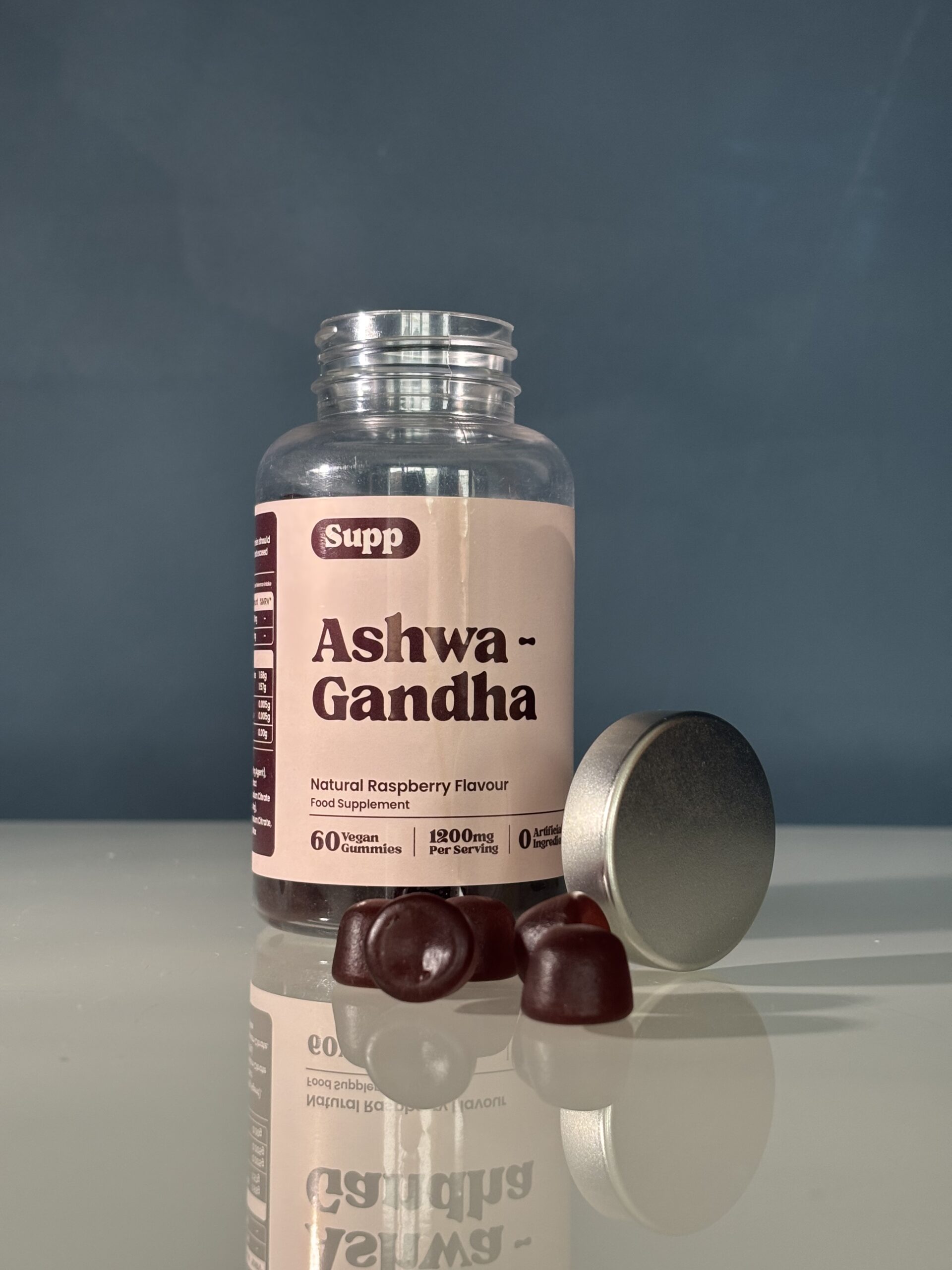
Ready to try it? Discover our high-strength Ashwagandha gummy and experience the difference for yourself.
References
- Sapolsky RM, Romero LM, Munck AU. How do glucocorticoids influence stress responses? Integrating permissive, suppressive, stimulatory, and preparative actions Endocr Rev (2000).
- McEwen BS. Physiology and neurobiology of stress and adaptation: central role of the brain Physiol Rev (2007).
- Rosmond R. Role of stress in the pathogenesis of the metabolic syndrome Psychoneuroendocrinology (2005).
- Singh N et al. An overview on ashwagandha: a Rasayana (rejuvenator) of Ayurveda Afr J Tradit Complement Altern Med (2011).
- Panossian A et al. Effects of Adaptogens on the Central Nervous System and the Molecular Mechanisms Associated with Their Stress-Protective Activity Pharmaceuticals (2010).
- Mirjalili MH et al. Steroidal lactones from Withania somnifera, an ancient plant for novel medicine Molecules (2009).
- Chandrasekhar K et al. A prospective, randomized double-blind, placebo-controlled study of safety and efficacy of a high-concentration full-spectrum extract of ashwagandha root in reducing stress and anxiety in adults Indian J Psychol Med (2012).
- Lopresti AL et al. An investigation into the stress-relieving and pharmacological actions of an ashwagandha (Withania somnifera) extract: A randomized, double-blind, placebo-controlled study Medicine (Baltimore) (2019.
- Salve J et al. Adaptogenic and Anxiolytic Effects of Ashwagandha Root Extract in Healthy Adults: A Double-blind, Randomized, Placebo-controlled Clinical Study Cureus (2019).
- Andrade C et al. A double-blind, placebo-controlled evaluation of the anxiolytic efficacy ff an ethanolic extract of withania somnifera J Clin Psychiatry (2000).
- Panda S et al. Evidence for free radical scavenging activity of Ashwagandha root powder in mice Indian J Physiol Pharmacol (1997).
- Tandon N et al. Safety and clinical effectiveness of Withania Somnifera (Linn.) Dunal root in human ailments Phytother Res (2020).
- Wankhede S, et al. Examining the effect of Withania somnifera supplementation on muscle strength and recovery: a randomized controlled trial J Int Soc Sports Nutr (2015).
Acknowledgement
Special thanks to Adeliz Zhu (MSc Human Nutrition, University of Sheffield) for her research and writing on this article during her work experience with Supp.
Disclaimer
This article is intended for informational purposes only and should not replace personalised medical guidance.