




Finding calm in the evening can be difficult. Busy days, constant stimulation and rising stress levels all influence how easily we switch off. That is why many people look to natural ways to support better sleep and a more relaxed night-time routine.
Ashwagandha is one of the most researched adaptogenic herbs, and studies suggest it can support sleep quality, stress regulation and overall evening relaxation. In this guide, we break down what the research shows, how it may work and how people typically use it as part of a calmer evening routine.
What Is Ashwagandha?
Ashwagandha (Withania somnifera) is a traditional herb used for centuries in Ayurvedic practice. It is classed as an adaptogen, meaning it helps the body respond to stress in a more balanced way. Modern research has focused heavily on its potential effects on stress, sleep quality and general feelings of calm.

The plant itself grows as a small shrub with green leaves, light flowers and distinctive red berries. The long, branching roots are the part used in supplements, as they contain the highest levels of withanolides – the active compounds linked with ashwagandha’s adaptogenic effects.
Although the plant produces berries, these are not used in supplements and are not considered suitable for consumption. The plant is harvested for its roots which are cleaned, dried and processed to create the extracts used in modern research and formulations.
Most clinical studies use standardised extracts such as KSM-66 or Sensoril, although whole root extracts are also popular.
How Ashwagandha Can Support Better Sleep and Evening Calm
1. Support lower stress levels
Stress is one of the most common reasons people struggle to fall asleep. Elevated stress hormones make it harder for the nervous system to settle, which can delay sleep onset and reduce sleep depth.
Several studies suggest that ashwagandha may help support healthy stress responses, including reductions in self-reported stress and anxiety scores (1, 2). For many people, this is the primary reason it becomes part of an evening routine.
If you want to explore this mechanism further, see our article: Does Ashwagandha Lower Cortisol Levels?
2. Support relaxation
Ashwagandha is often used to help the body cope with day to day pressure. In real life, that can simply feel like a clearer, more settled headspace as the evening winds down. Research into adaptogens suggests that ashwagandha can support this grounded, calmer state in those experiencing stress (3).
3. Support sleep quality
Several trials show improvements in sleep onset, sleep efficiency and overall restfulness when ashwagandha is taken consistently (1,2).
These findings do not mean instant effects, and results do vary between people, but there is growing evidence that points towards the sleep benefits ashwagandha can provide.
What The Research Says
Recent trials have explored ashwagandha in relation to stress, sleep and overall wellbeing. Across studies:
- Participants taking ashwagandha often report improved sleep quality
- Some trial results show reduced sleep latency (the time it takes to fall asleep)
- Many studies note improvements in perceived stress and mood
- Most benefits appear after consistent use over several weeks
A 2021 review concluded that ashwagandha supplementation was associated with notable improvements in sleep quality and stress scores, especially in individuals reporting higher stress levels at baseline (4)
When to Take Ashwagandha for Sleep & Relaxation
Different approaches work for different people, but common habits include:
- Evening use for those specifically targeting calm and sleep support
- Split dosing (morning and evening) to support all day balance
- Consistent timing rather than switching day to day
It is not designed as a sedative. The focus is on helping you feel more settled and giving your mind room to breathe. Most people find it works best when taking it consistently as part of their evening routine.
How Long Ashwagandha May Take To Work
Most clinical studies run for 6 to 12 weeks. Some individuals feel benefits sooner, while others may need longer. Herbal supplements are not instant, so consistent use matters.
Safety and Who Should Seek Advice First
Ashwagandha is generally well tolerated, but it is not suitable for everyone.
Speak to a GP or qualified practitioner before using ashwagandha if you:
- Are pregnant or breastfeeding
- Take prescription medication
- Have thyroid conditions
- Have any medical concerns
Natural Evening Habits That Complement Ashwagandha
Ashwagandha tends to work best as part of a wider evening routine. Supportive habits include:
- Gentle stretching or slow movement
- Warm, soft lighting rather than bright screens
- Reducing stimulants later in the day
- Balanced evening meals
- Calming activities such as reading or journalling
For more ideas, explore our guide on: 5 simple habits to reduce stress and feel calmer.
What you should look for when choosing Ashwagandha Gummies
When choosing ashwagandha gummies, the most important factor to check is the strength and standardisation of the extract. Look for products that clearly state their withanolide content.
Withanolides are the key active compounds believed to underpin ashwagandha’s adaptogenic effects, and emerging research continues to highlight their role in supporting stress balance and calm.
A 2024 study using an extract standardised to 2.5% withanolides found notable improvements in stress scores, morning cortisol levels and markers linked with overall wellbeing (5).
Why Our Ashwagandha Gummies Stand Out
Quality gummies should also be transparent about ingredients and dosage. At Supp, all products are GMP certified, which means every batch is produced to recognised manufacturing standards for safety, consistency, and purity. We make it easy to understand exactly what you are taking, with every ingredient clearly listed on each product page and fully detailed in our ingredients library.
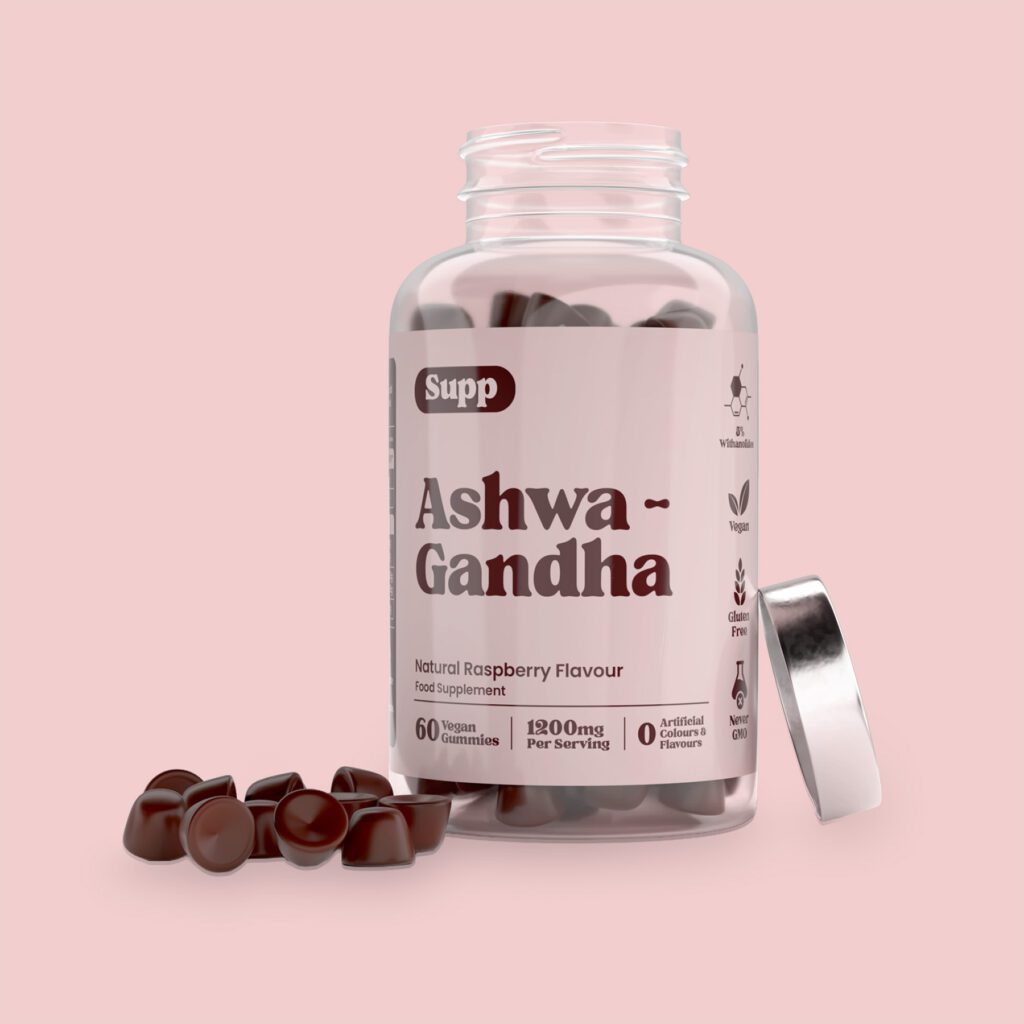
Our Ashwagandha Gummies use a root extract standardised to 5 % withanolides. Each daily serving delivers 1200 mg of extract in a vegan friendly, easy to take raspberry flavoured gummy.
If you’re looking for a simple, natural way to unwind in the evening, stay calm during busy days, or support better sleep and overall emotional balance, you can discover our Ashwagandha Gummies here.
Key Takeaway
Ashwagandha is one of the most researched adaptogens for sleep and relaxation. While it is not a quick fix, studies suggest it may support sleep quality, evening calm and a more balanced stress response when used consistently.
References
- Langade D, Kanchi S, Salve J, Debnath K, Ambegaokar D. (2019) Efficacy and Safety of Ashwagandha Root Extract in Insomnia and Anxiety. Cureus. https://pmc.ncbi.nlm.nih.gov/articles/PMC6827862/
- Lopresti A, Smith S, Drummond P. (2019) An Investigation into the Stress Relieving and Sleep Enhancing Effects of Ashwagandha. J Clin Med. https://pmc.ncbi.nlm.nih.gov/articles/PMC6750292/
- Pratte M, Nanavati K, Young V, Morley C. (2014) An alternative treatment for anxiety: a systematic review of human trial results reported for the Ayurvedic herb ashwagandha (Withania somnifera). J Altern Complement Med. https://pubmed.ncbi.nlm.nih.gov/25405876/
- Lopresti A L., Smith S J., Drummond P. (2021) Ashwagandha (Withania somnifera) for the treatment and enhancement of mental and physical conditions: a systematic review of human trials. J Herbal Med. https://www.sciencedirect.com/science/article/abs/pii/S2210803321000142
- Majeed M, Nagabhushanam K, Mundkur L. (2024) A standardized Ashwagandha root extract alleviates stress, anxiety, and improves quality of life in healthy adults by modulating stress hormones. Randomized, double blind, placebo controlled study. Medicine (Baltimore). https://pubmed.ncbi.nlm.nih.gov/37832082/
Disclaimer
This information is for general guidance only and is not a substitute for personalised medical advice. If you have underlying health conditions, are pregnant or breastfeeding, or are taking medication, please speak to a healthcare professional before using ashwagandha or any new supplement.