



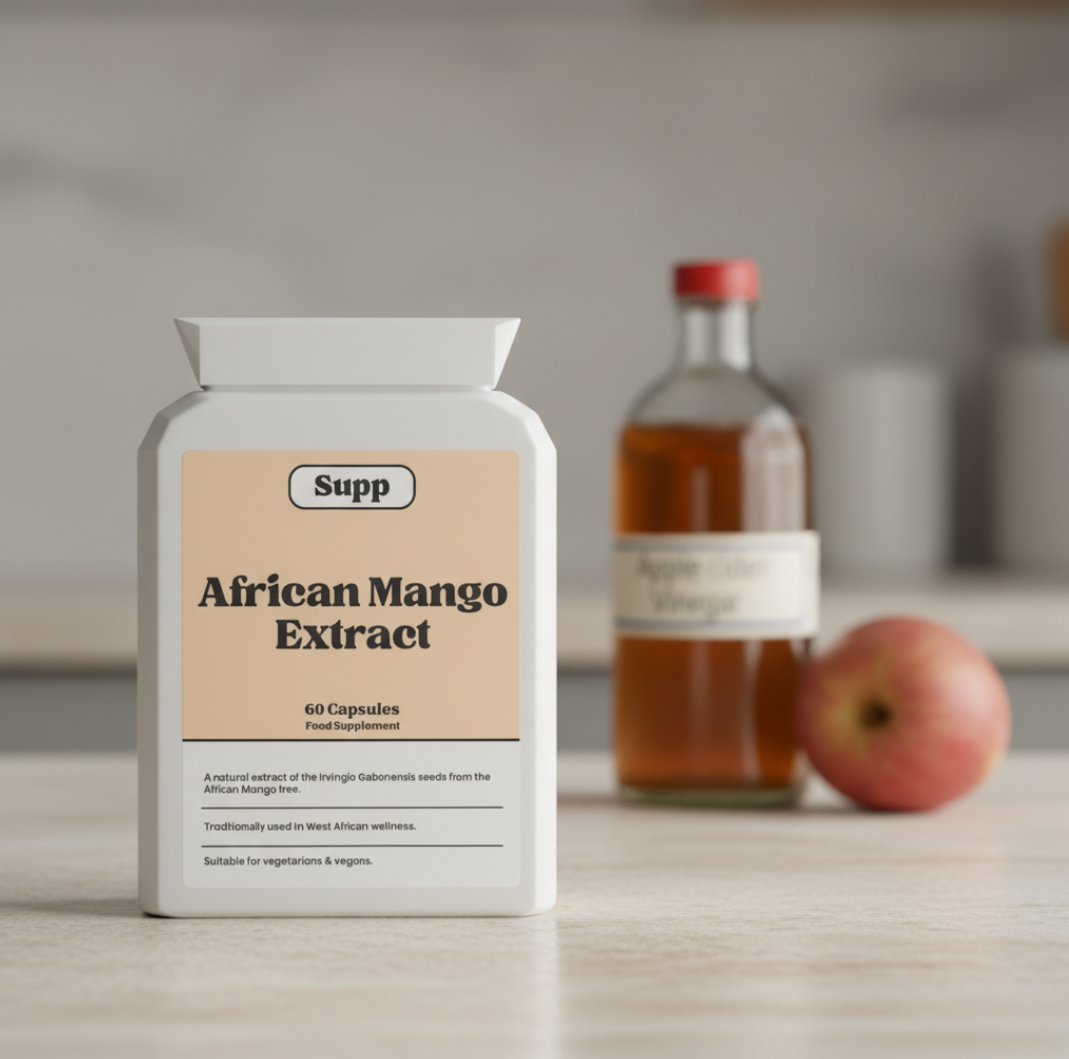
When people search for weight loss supplements, they’re usually looking for something that helps control appetite, support healthier habits, or make calorie management easier. Neither African mango nor apple cider vinegar causes dramatic weight loss on its own. Approaches that promise rapid or extreme results often come with trade-offs, and aren’t designed to support long-term health or sustainable habits. Instead, both are commonly used as part of a broader weight management approach that includes nutrition, movement, and consistency.
This article looks at how each works, what the research actually shows, and which may make more sense depending on your goals and lifestyle.
Why People Compare African Mango and Apple Cider Vinegar for Weight Loss
Both African mango and apple cider vinegar are often described online as natural options for weight loss. They appear frequently on Amazon, social media, and wellness blogs, usually framed as easier alternatives to strict dieting.
In reality, people compare them because they’re looking for help with:
- Appetite control
- Feeling fuller between meals
- Blood sugar stability
- Something simple they can stick to daily
The key question isn’t which one “burns fat” (neither does), but which fits better into a sustainable routine to help you towards your weight goals.
What is African Mango and How Is It Used
African mango comes from the seeds of the fruit Irvingia gabonensis, a tree native to West and Central Africa. While the fruit itself is eaten locally, it’s the seed extract that’s used in supplements.
Traditional diets in parts of West Africa have included these seeds for generations. Modern research has focused on whether African mango extract can support aspects of weight management, particularly appetite regulation and metabolic markers.
In supplement form, African mango is typically taken as a capsule using a concentrated extract, making it easy to use consistently.

What the Research Suggests
Small human studies have explored African mango in relation to:
- Appetite regulation
- Waist circumference
- Blood lipid markers
These studies do not prove weight loss on their own, but they suggest African mango can help support the conditions that make weight management easier when combined with healthy habits (1)(2).
What Is Apple Cider Vinegar and Why Do People Use It for Weight Loss
Apple cider vinegar (ACV) is made by fermenting apple juice into vinegar. Its main active component is acetic acid, which has been studied for its effects on blood sugar response and appetite perception.
ACV became popular because it’s cheap, widely available, and easy to add to food or drinks. It’s commonly taken as:
- Liquid vinegar diluted in water
- Gummies
- Capsules
What the Research Suggests
Some studies indicate apple cider vinegar may:
- Slightly reduce post-meal blood sugar spikes
- Increase feelings of fullness after meals
However, effects are generally modest and short-term. Practical downsides include:
- Tooth enamel erosion
- Digestive discomfort
- Difficulty sticking with the taste long-term (3)(4)
How African Mango and Apple Cider Vinegar Work Differently
Although they’re often grouped together, African mango and apple cider vinegar work in very different ways.
- African mango is thought to act more like a fibre-rich, metabolic support ingredient. Research focuses on appetite hormones, fat metabolism markers, and consistency over time.
- Apple cider vinegar works through acidity. It may influence how quickly food leaves the stomach and how blood sugar responds after meals.
Neither approach forces weight loss. Instead, both can:
- Help some people feel fuller
- Support better food choices
- Make calorie control easier
What the Research Says About Weight Loss
It’s important to be clear and realistic. Weight loss is influenced by many factors, including energy intake, movement, sleep, and stress. Supplements are not a substitute for these foundations, and research in this area tends to focus on supportive effects, such as appetite regulation or metabolic markers, rather than dramatic changes in body weight.
African Mango Research
Human studies suggest African mango extract can support:
- Reduced waist circumference when paired with diet
- Improved lipid markers
- Appetite regulation over several weeks (1)(2)
For a more detailed look at the reseach, check out this blog: African Mango for Weight Management: What the Research Shows
Apple Cider Vinegar Research
Research shows potential short-term effects on:
- Blood glucose response after meals
- Satiety signals
However, long-term data is limited, and benefits often depend on consistent use, which many people struggle with due to taste or gut irritation (3)(4). Apple cider vinegar is now available in gummies, and capsules, which makes it more accessible than ever. However, these formats can vary widely in acetic acid content and often include additional ingredients such as sugars or sweeteners. As a result, it can be difficult to know how closely a given product reflects the amounts used in research, or whether it’s easy to use consistently over time.
African mango capsules take a simpler approach, using a single standardised seed extract without added sugars or flavourings, which appeals to those looking for clarity and consistency.
Which Fits Your Routine?
Rather than asking which is “best”, it’s more helpful to ask which fits your routine.
- If appetite control is your main challenge: African mango has been studied for its role in regulating appetite and satiety-related hormones, making it a more targeted option for ongoing weight management support.
- If you prefer food-based approaches: Apple cider vinegar can suit some people when used with meals or in gummy form, particularly those who enjoy a food-led or flavour-based routine.
- If digestive comfort matters: African mango capsules avoid acidity and are often better tolerated than vinegar-based products, especially for those with sensitive stomachs or enamel concerns.
- If fibre intake is a priority: African mango is naturally rich in soluble fibre, which supports fullness and digestive health. Apple cider vinegar products, including gummies, typically contain little to no fibre.
Why Nutrition and Movement Still Matter Most
Supplements only support weight management when the foundations are in place.
Nutrition should be your priority
Meals that include:
- Adequate protein
- Fibre-rich plants
- Balanced carbohydrates
naturally support appetite regulation and energy levels. Many of the recipes in our Health Hub are designed with this in mind, including nutritious, practical meals developed with input from Georgina, our associate registered nutritionist.

Movement doesn’t need to be extreme
You don’t need intense workouts to support weight management.
Regular movement helps by:
- Improving insulin sensitivity
- Supporting muscle mass
- Regulating appetite hormones
- Making routines easier to maintain
Simple walking, short home workouts, or low-impact routines can be enough when done consistently. Our Workouts Hub focuses on realistic, time-efficient movement that fits real life.
Final Takeaway: African Mango vs Apple Cider Vinegar
Neither African mango nor apple cider vinegar causes weight loss on its own. Both are tools that may support appetite control and healthier habits when used alongside nutrition and movement.
For many people, African mango makes more sense because it’s:
- Easy to take
- Neutral in taste
- Designed for consistent daily use
- Naturally high in soluble fibre for digestive support
- Shown in studies to help regulate appetite and fat-related hormones
- Backed by multiple small clinical trials exploring weight and metabolic health
Supp’s African Mango Capsules
For those exploring non-stimulant weight management support, African mango is often chosen for its simplicity and ease of use.
Supp’s African Mango Extract provides a high-strength, standardised seed extract designed for consistent daily use alongside balanced nutrition and regular movement.

As always, supplements work best as part of a wider routine, not as a shortcut.
References
- Ngondi JL, Oben JE, Minka SR. 2005. The effect of Irvingia gabonensis seeds on body weight and blood lipids of obese subjects. Lipids in Health and Disease. https://pubmed.ncbi.nlm.nih.gov/15916709/
- Onakpoya IJ, Spencer EA, Thompson MJ, Heneghan CJ. 2018. The effect of Irvingia gabonensis on body weight and metabolic parameters: a systematic review and meta-analysis of randomised clinical trials. Journal of Dietary Supplements. https://pubmed.ncbi.nlm.nih.gov/29336718/
- Johnston CS, Kim CM, Buller AJ. 2004. Vinegar improves insulin sensitivity to a high-carbohydrate meal in subjects with insulin resistance. Diabetes Care. https://pubmed.ncbi.nlm.nih.gov/14694010/
- Kondo T, Kishi M, Fushimi T, et al. 2009. Vinegar intake reduces body weight, body fat mass, and serum triglyceride levels in obese Japanese subjects. Bioscience, Biotechnology, and Biochemistry. https://pubmed.ncbi.nlm.nih.gov/19661687/
Disclaimer
This content is for general information only and does not replace medical advice. Always speak to a healthcare professional if you have underlying health conditions or are taking medication before starting any new supplement.