


African mango has become one of the most talked about natural supplements for appetite control and weight management. But what is it, how does it work, and does the research back up the claims?
We’re here to help breakdown the science and help you decide if African Mango is the right supplement for you.
What is African Mango?
African mango comes from the Irvingia gabonensis tree native to West and Central Africa. Locally, the fruit has been eaten for generations, but most modern research focuses on the seeds. These seeds are rich in soluble fibre and bioactive compounds that appear to influence appetite, metabolism, and fat storage. Most scientific studies use a standardised extract called IGOB131 in clinical trials.
How Does African Mango Work?
African Mango is often discussed for two main areas: appetite control and metabolic support. Here is how the research breaks it down:
1. Appetite Regulation and Feeling Fuller for Longer
Early Mechanistic Research
Lab studies first explored African mango’s effects at a cellular level. One study found that Irvingia gabonensis extract influenced genes involved in fat storage, including PPARγ, leptin, and adiponectin pathways (1).
These findings do not show effects in humans but help explain why scientists became interested in researching African mango clinically.
Human Clinical Trials
One of the most interesting effects of African Mango is it’s potential influence on hormones linked to hunger and satiety (feeling of fullness). Human trials have shown (2,3):
- Reduced hunger scores after supplementation
- Changes in leptin levels, a hormone that helps control fullness
- Improvements in adiponectin, a hormone linked with metabolic health
Leptin helps your brain understand when you have had enough to eat. When leptin signalling is disrupted, cravings and overeating can follow. African Mango can support more balanced leptin signalling, which researchers believe could explain the reductions in hunger reported in studies.
Its natural soluble fibre content also plays a role. Soluble fibre forms a gel-like substance in the gut that slows digestion and helps you feel fuller for longer. This simple fibre mechanism often works hand in hand with the hormonal effects.
2. Supporting Healthy Metabolism and Fat Breakdown
Clinical studies have found that African Mango can support changes in:
- Body weight
- Waist circumference
- Body fat percentage
- Total cholesterol, LDL cholesterol, and triglycerides
Researchers believe this is partly linked to how African Mango affects adipokines, the chemical messengers released by fat cells. Balancing these markers can create a more supportive metabolic environment, helping the body handle fats and carbohydrates in a more balanced way.
3. Blood Sugar Control and Energy Levels
Stable blood sugar makes a huge difference to overall appetite and energy. Some studies have shown African Mango can help:
- Improve fasting blood glucose
- Influence markers related to insulin sensitivity
A clinical trial in people with metabolic syndrome found that taking Irvingia gabonensis for 90 days led to lower post-meal glucose levels, reduced triglycerides, and a measurable improvement in overall glucose handling (4). More than half of the participants no longer met the criteria for metabolic syndrome by the end of the study.
Better blood sugar control often means fewer cravings and more consistent daily energy.
4. Natural Soluble Fibre for Better Digestion
African Mango seeds are naturally high in soluble fibre. Fibre is a type of carbohydrate from plant foods that your body cannot break down into sugars. It absorbs water in the gut and forms a gentle gel-like texture, which slows digestion and helps you feel fuller for longer.
In a typical diet, good sources of fibre include oats, legumes, fruits, vegetables, nuts, and wholegrains. If you want an easy, fibre rich breakfast idea, our Apple Cinnamon Overnight Oats recipe is a great place to start. Many people fall short of the recommended intake, which can make appetite swings and blood sugar dips more noticeable.
This soluble fibre found in African Mango seeds supports healthy digestion, improves satiety, slows gastric emptying, and helps stabilise blood glucose spikes.
Many people underestimate how powerful good fibre intake can be for appetite control. African Mango simply concentrates this into an easy daily serving.
What The Research Says
Here is a quick overview of findings from key clinical trials:
- Participants taking African Mango extract for 10 weeks saw significant improvements in weight, waist circumference, and body fat compared with placebo.
- The same study found improvements in leptin, adiponectin, fasting glucose, total cholesterol, and triglycerides.
- Trials also reported positive changes in fasting glucose, total cholesterol, and triglycerides.
While the evidence is promising, African Mango works best alongside balanced nutrition, regular movement, and consistent habits. It is not a quick fix, but it can be a helpful tool as part of a healthy routine.
For a more detailed breakdown of the studies, see our in-depth research article African Mango for Weight Management: What the Research Shows.
Who Might Consider African Mango?
African mango may be worth exploring if you are looking for:
- Support with appetite control or feeling full between meals
- Help managing cravings during a structured weight management phase
- A natural way to support metabolic markers
- A fibre-rich supplement
- Additional support alongside an improved diet and activity plan
Who Should Avoid African Mango?
People who are pregnant, breastfeeding, managing diabetes or lipid-related conditions, or taking glucose or cholesterol-related medication should speak with a healthcare professional before using African Mango.
How to Take African Mango
Most clinical studies use a standardised extract taken once or twice a day, usually 30 minutes before meals to support appetite control. It is generally well tolerated, with minimal side effects reported.
How African Mango Compares to Other Supplements
Compared with common fibre-based supplements such as glucomannan or psyllium, African mango is unique because it combines soluble fibre with bioactive compounds that can also influence appetite-related hormones.
This means it offers a dual approach: the soluble fibre helps slow digestion and supports feelings of fullness, while its naturally occurring plant compounds appear to interact with markers linked to hunger and satiety in clinical studies.
Together, these mechanisms help explain why some research shows broader metabolic benefits with African mango compared with fibre alone.
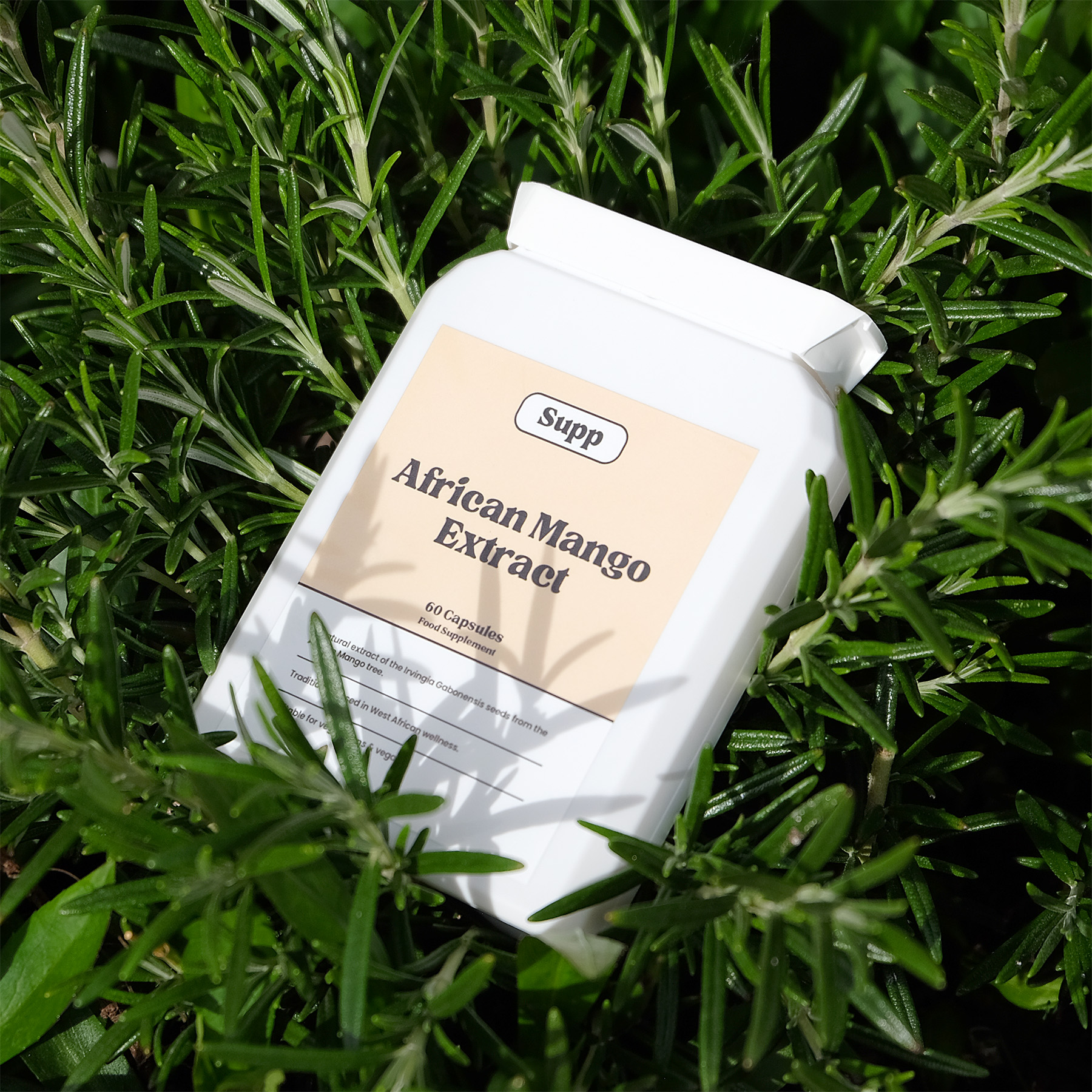
Supp’s African Mango Extract
Our African Mango Capsules use a high quality, standardised seed extract with no unnecessary fillers or additives. We keep the formula simple and transparent so you know exactly what you are taking.
Our Ingredients:
That’s it. No added sugars, no artificial ingredients, and no hidden extras. Just the active seed extract used in clinical research, delivered in a clean, plant based capsule.
If you would like to learn more or add it to your routine, you can find our African Mango Extract here.
References
- Oben JE, Ngondi JL, Blum K. 2008. Inhibition of Irvingia gabonensis seed extract (OB131) on adipogenesis as mediated via down-regulation of the PPARγ and leptin genes and up-regulation of the adiponectin gene. Lipids in Health and Disease. https://pubmed.ncbi.nlm.nih.gov/19014517
- Ngondi JL, Etoundi BC, Nyangono CB, Mbofung CMF, Oben JE. 2009. IGOB131, a novel seed extract of Irvingia gabonensis, significantly reduces body weight and improves metabolic parameters in overweight humans in a randomised double-blind placebo-controlled investigation. Lipids in Health and Disease. https://pubmed.ncbi.nlm.nih.gov/19254366)
- Nonsa-ard R, et al. 2022. Effects of Irvingia gabonensis extract on metabolism, antioxidants, adipocytokines, telomere length, and aerobic capacity in overweight/obese individuals: a 12-week randomised, double-blind, placebo-controlled study. Nutrients. https://pmc.ncbi.nlm.nih.gov/articles/PMC9656030/
- Méndez-Del Villar M, et al. 2018. Effect of Irvingia gabonensis on Metabolic Syndrome, Insulin Sensitivity, and Insulin Secretion. Journal of Medicinal Food. https://pubmed.ncbi.nlm.nih.gov/29336718/
Disclaimer
This information is for general guidance only and is not a substitute for personalised medical advice. If you have underlying health conditions, are pregnant or breastfeeding, or are taking medication, please speak to a healthcare professional before using African Mango or any new supplement.