

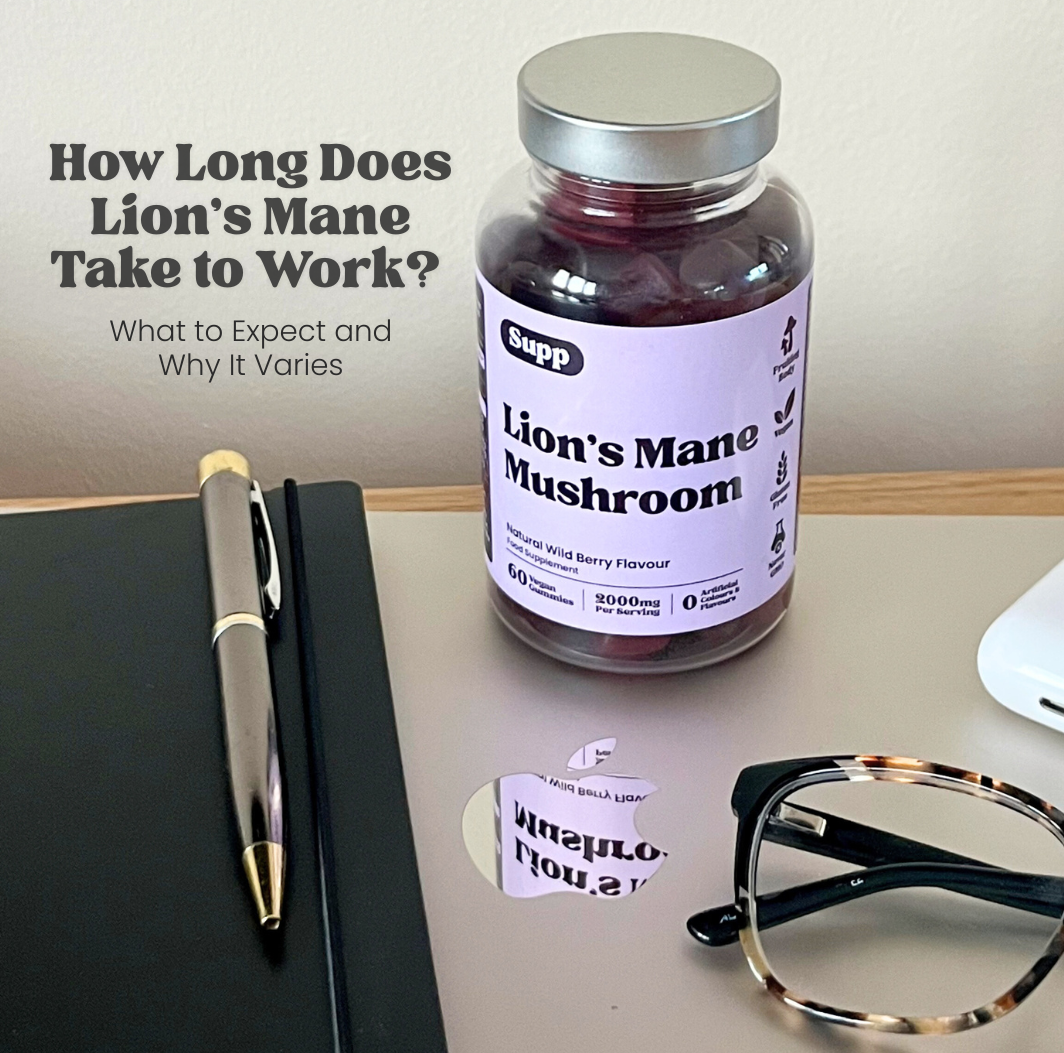
If you’re trying Lion’s Mane for the first time, the most common question is simple.
When will you actually notice anything?
The honest answer is that Lion’s Mane is not usually an “instant effect” supplement. Most human studies look at changes over weeks, not hours. And results can feel subtle at first.
Below is a realistic timeline, what influences it, and how to take Lion’s Mane in a way that gives you the best chance of noticing a difference.
A Realistic Lion’s Mane Timeline
Many people report a gradual shift rather than a sudden “kick”.
Based on how Lion’s Mane is studied in humans, a sensible expectation is:
- 1 to 2 weeks: you might notice small changes (or nothing yet)
- 3 to 4 weeks: changes may feel more consistent for some people
- 6 to 8 weeks: a common point where studies assess outcomes
- 12 to 16 weeks: longer trials often show clearer separation versus placebo in older adults with mild cognitive impairment
In one well-known placebo-controlled study in older adults with mild cognitive impairment, improvements were tracked at 8, 12, and 16 weeks, and tended to build more over time. [1].
A broader review also highlights that effects in some studies appear during the trial period, and may fade after stopping. [2].
That does not mean everyone “needs” 16 weeks. It means Lion’s Mane is typically assessed as a consistent, daily habit.
Think of it like weight training to build muscle: the more consistently you show up week after week, the more progress you notice over time.
What Is Lion’s Mane Usually Taken For?
Lion’s Mane (Hericium erinaceus) is a culinary mushroom that is also used as a supplement, most commonly for:
- Focus and mental clarity
- Cognitive wellbeing (especially in ageing populations)
- General brain and nerve health support
Mechanistically, Lion’s Mane contains compounds (including hericenones and erinacines) that are studied for their potential role in supporting neurotrophic factors involved in nerve and brain function. Most of this mechanistic work is lab-based, so it helps explain “why it might”, not guarantee “that it will”.
If you want the deeper “focus and productivity” angle, check out: Lions Mane Mushroom for Focus & Productivity: What the Science Says
Why Does Lion’s Mane Take Time To Work?
Lion’s Mane is often used to support how you function day to day. That can involve processes that change gradually. So, the experience tends to be about steadier focus, fewer mental dips, or easier “getting into gear”, rather than a stimulant-like buzz.
This lines up with the research on one-off doses.
A 2025 study found that taking Lion’s Mane just once didn’t lead to a clear improvement compared to a placebo. Any benefits seem more likely with regular use over time. [3]
So if you take it once and feel nothing, that’s normal. It’s not coffee, and it’s not trying to be.
Lion’s Mane isn’t about a one-off buzz. It’s steady, long-term support, which is why most people only notice changes after taking it consistently over weeks rather than after a single dose.
A Week-By-Week Guide Of Lion’s Mane Effects
Everyone’s baseline is different. But this is a sensible way to set expectations:
Weeks 1 to 2: “Subtle or nothing yet”
This is the most common phase for first-time users.
You might notice:
- Slightly clearer mornings
- Less “brain fog” on some days
- No change at all (also normal)
If you are stressed, sleeping badly, or inconsistent with doses, it can be hard to notice anything in this window.
Weeks 3 to 4: “More consistency”
If Lion’s Mane suits you, this is where you may start to notice patterns.
For example:
- You get distracted less often
- You feel more mentally steady through the afternoon
- Your focus feels easier to sustain
This is also where routine matters most. Missed days can make the effect feel patchy.
Weeks 6 to 8: “A fair assessment point”
Many people like to review progress around the 6 to 8 week mark.
That lines up with human research, too. In one 8-week double-blind study, the group taking Lion’s Mane each day performed better on simple thinking-speed tests than the placebo group. The researchers also saw changes in a few blood and gut markers linked to brain health.
This does not mean you will definitely feel a difference by 8 weeks. It means it is a reasonable time to evaluate whether it is worth continuing.
Weeks 12 to 16: “Where longer trials show clearer changes”
If you’re taking Lion’s Mane for longer-term cognitive support, this is a useful window to keep in mind.
Some of the best-known human studies track outcomes over 12 to 16 weeks. In a 16-week placebo-controlled trial in older adults with mild cognitive impairment, the Lion’s Mane group scored higher on a cognitive function test than the placebo group.. It was noted they improved consistently during the study period, and the gains faded after they stopped taking it [1].
Again, that doesn’t mean everyone needs 16 weeks. It simply shows why Lion’s Mane is usually treated as a consistent, long-term habit rather than a quick fix.
Why Results Vary
If two people take Lion’s Mane and have different experiences, it is usually down to one of these factors.
1) Strength & format
Lion’s Mane products can be very different.
Some are:
- Whole mushroom powders
- Fruiting body extracts
- Mycelium-based products
- Different extract ratios and active compound profiles
That can change the “effective dose” without changing the label dose much.
2) Dose & variety
Most studies use daily intake patterns.
So the biggest lever you control is consistency.
If you forget doses, it is harder to judge whether it is doing anything. This is one reason gummies can work well for some people. They’re easy to take, they taste good, and they make daily use feel effortless rather than a chore.
3) Your baseline (sleep, stress, workload etc)
Lion’s Mane is not a substitute for sleep.
If you are sleeping 5 hours a night, your focus will swing anyway. Lion’s Mane might still be helpful, but your baseline noise is high.
If you want a clearer “signal”, tighten the basics for the first few weeks:
- Sleep schedule: Aim for a consistent bedtime and wake-up time most days (even weekends). Try to get 7–9 hours, and keep screens/caffeine out of the last hour so your sleep quality isn’t all over the place.
- Hydration: Start the day with a decent drink of water and keep it steady. A simple target is pale yellow urine and regular sips rather than chugging loads at night.
- Protein at breakfast: Aim for 20–30g protein in your first meal to steady energy and focus. Examples: Greek yoghurt + fruit, eggs on toast, protein smoothie, tofu scramble.
- Caffeine timing (if relevant): Keep caffeine consistent while you’re “testing” Lion’s Mane. Try to have it after breakfast, avoid big late-afternoon coffees, and set a cut-off of around 2pm if caffeine affects your sleep.
4) What you’re measuring
If you are looking for a dramatic feeling, you may miss the real shift.
Instead, track simple signals:
- How long it takes to start a focused task
- How often you “tab hop”
- Afternoon energy dips
- How many times you reread the same paragraph
How To Take Lion’s Mane For Best Results
There is no single perfect routine. But these tend to work well:
Take it Daily
Daily use is the pattern most often used in human research.
Choose a time you can stick to
Most people take Lion’s Mane:
- In the morning, or
- With lunch
The best time is the one you will do every day.
Keep the rest of your routine steady
If you change five things at once, you will not know what helped.
If you are testing Lion’s Mane, try to keep:
- Caffeine intake similar
- Sleep schedule similar
- Work schedule broadly comparable (as much as life allows)
When Lion’s Mane Might Not Feel Like It’s Working
These are the common culprits:
You have not given it long enough
If you stop after 3 days, you haven’t really tested it.
A more reasonable test window is 6 to 8 weeks, with daily use.
Your dose is inconsistent
Two days on, three days off will often feel like nothing.
You are expecting a stimulant effect
Lion’s Mane is not caffeine.
If you want an immediate “lift”, this is the wrong expectation. Research on acute effects does not show a strong, immediate boost.
Your baseline is overwhelmed
If stress, anxiety, or sleep issues are the main driver of poor focus right now, fix the foundation first. You may still use Lion’s Mane alongside that, but it will not replace it.
Safety Notes and Side Effects Of Lion’s Mane
Lion’s Mane is widely used as a food and supplement. In the human studies we have, it’s generally been well tolerated. When side effects do happen, they tend to be mild, such as stomach upset or skin reactions in a small number of people.
It’s also worth mentioning the liver because it’s a common worry with supplements in general. A clinical summary from the US National Library of Medicine notes that Lion’s Mane hasn’t been linked to clinically obvious liver injury in the published research so far, and is typically described as well tolerated.
That said, large long-term safety trials are still limited, so it’s sensible to be cautious if you have an underlying health condition or take medication.
Who Should Be Cautious Of Taking Lion’s Mane
As a general safety approach, it is sensible to speak to a healthcare professional before using Lion’s Mane if you:
- Are pregnant or breastfeeding
- Have a known mushroom allergy
- Have a medical condition or take prescribed medication and are unsure about interactions
If you develop side effects, stop and reassess.
Ready To Try Lion’s Mane?
If you want to try Lion’s Mane, the main thing is to treat it like a daily habit and give it enough time to judge it properly. Most people won’t feel a sudden “buzz”, but over a few weeks you may notice steadier focus, clearer thinking, and fewer afternoon dips, especially if you keep the basics like sleep and caffeine consistent.
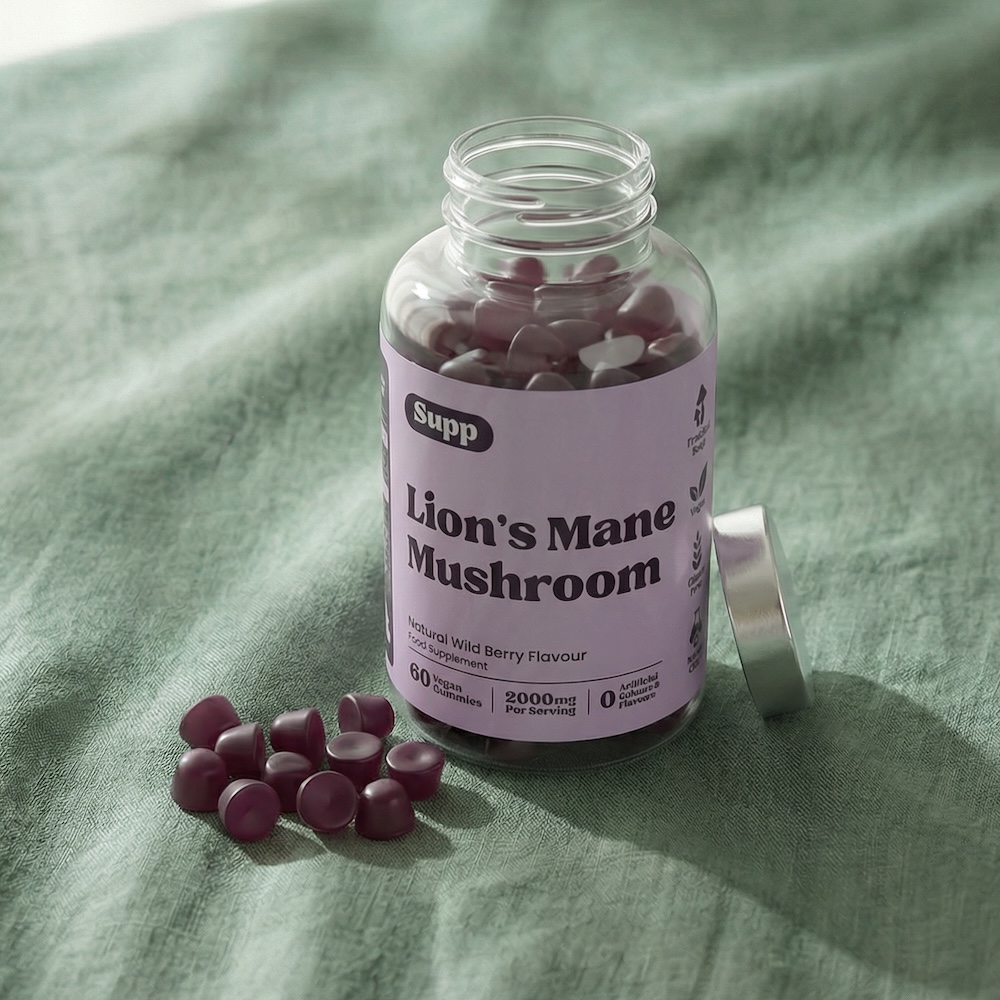
Our Lion’s Mane Gummies are made for everyday use, using a concentrated fruiting body extract in a tasty, easy-to-take format that fits into busy routines.
References:
- Mori K, Inatomi S, Ouchi K, et al. 2009. Improving effects of the mushroom Yamabushitake (Hericium erinaceus) on mild cognitive impairment: a double-blind placebo-controlled clinical trial. Phytotherapy Research. https://pubmed.ncbi.nlm.nih.gov/18844328/
- Docherty S, Doughty FL, Smith EF. 2023. The Acute and Chronic Effects of Lion’s Mane Mushroom Supplementation on Cognitive Function, Stress and Mood in Young Adults. Nutrients. https://pmc.ncbi.nlm.nih.gov/articles/PMC10675414/
- Surendran G, Saye J, Jalil SBM, et al. 2025. Acute effects of a standardised extract of Hericium erinaceus (Lion’s Mane mushroom) on cognition and mood in healthy younger adults. Frontiers. https://www.frontiersin.org/journals/nutrition/articles/10.3389/fnut.2025.1405796/full
- Bizjak MC, Pražnikar ZJ, Kenig S, et al. 2024.Effect of erinacine A-enriched Hericium erinaceus supplementation on cognition. Journal Of Functional Foods. https://www.sciencedirect.com/science/article/pii/S1756464624001221
Disclaimer:
This article is for general information only and is not medical advice. Supplements are not intended to diagnose, treat, cure, or prevent disease. If you are pregnant, breastfeeding, have a medical condition, or take medication, speak to a qualified health professional before use.