

If you’ve ever looked into supplements for hair, skin and nails, biotin probably came up first. It’s often positioned as the key nutrient for stronger nails, healthier hair, and better skin. However, biotin rarely works alone in the body.
Some products focus entirely on biotin. Others add collagen, zinc, or a long list of vitamins without explaining why they’re included.
In this guide, we’ll break down the vitamins and minerals most closely linked to hair, skin and nail health, explain where biotin fits in, and look at why targeted formulas often include more than one ingredient. Our goal is to help you understand what actually supports these systems, so you can make informed choices that fit your routine.

What Nutrients Support Healthy Hair, Skin and Nails?
Hair, skin and nails are made from different tissues, but they share similar nutritional needs. All three rely on regular cell turnover, structural proteins, and protection from everyday stress.
- Hair and nails are primarily made from keratin, a protein that depends on specific vitamins and minerals for normal production.
- Skin relies on collagen, healthy cell renewal, and antioxidant protection to maintain structure and appearance.
These processes don’t depend on one nutrient alone. They rely on several nutrients working together, which is why understanding the wider picture matters more than focusing on a single ingredient.
What Is Biotin and What Does It Do?
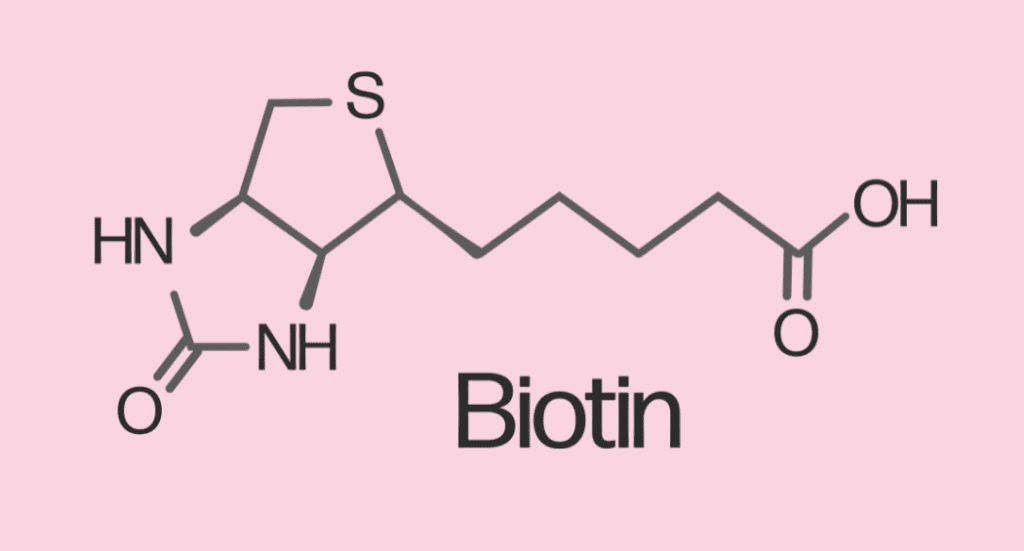
Biotin, also known as vitamin B7, is a water-soluble B vitamin. It contributes to normal energy-yielding metabolism and plays a role in maintaining normal hair and skin. Energy-yielding metabolism refers to how your body turns food into usable energy. Because hair and nails are fast-growing tissues, biotin’s involvement in cellular energy processes is particularly relevant.
When biotin intake is low, people may notice changes in nail strength or hair quality. This is why biotin is commonly included in supplements aimed at supporting hair and nails.
What biotin does well:
- Supports keratin production
- Contributes to the maintenance of normal hair and skin
- Supports energy metabolism at a cellular level
What biotin does not do:
- It does not work overnight
- It does not replace a balanced diet
- It does not act in isolation
Biotin works best when other supporting nutrients are also present.
Biotin vs Collagen: Which Matters More?
Biotin and collagen are often compared, but they serve different roles in the body.
Biotin supports the body’s ability to produce keratin and maintain normal hair and skin through vitamin-driven processes.
Collagen is a structural protein that contributes to skin firmness and elasticity. The body produces its own collagen, but this process depends on nutrients such as vitamin C.
Biotin plays a more direct role in hair and nail maintenance, while collagen is more closely linked to skin structure. Many people choose to support both systems depending on their individual goals.
For people whose main focus is skin firmness and elasticity rather than hair or nails, collagen supplements can be used alongside a balanced diet. Collagen supports skin structure, but it relies on nutrients like vitamin C to be produced and used effectively by the body. This is why some people choose collagen as a separate addition, depending on their individual goals.
Why Biotin Alone Is Rarely Enough
Although biotin is important, it’s only one part of the system. Hair, skin and nails rely on several nutrients that support growth, structure and protection.
- Zinc contributes to the maintenance of normal hair, skin and nails and supports normal cell division.
- Vitamin C contributes to normal collagen formation and helps protect cells from oxidative stress.
- B vitamins support energy metabolism and cell turnover.
- Vitamin D contributes to normal cell division and plays a role in skin health.
Without these supporting nutrients, biotin’s impact is limited. This is why many effective formulas combine biotin with complementary vitamins and minerals rather than relying on a single ingredient.
Can You Get Enough Biotin From Food?
Biotin is found in foods such as eggs, nuts, seeds, wholegrains and certain vegetables. For some people, a balanced diet provides enough biotin to meet recommended daily needs.
However, intake can vary depending on:
- Dietary restrictions
- Cooking methods
- Busy or inconsistent eating patterns
- Periods of increased stress
Recommended intake levels are set to help prevent deficiency, not to support specific goals like improving nail strength or supporting hair and skin during periods of higher demand.
When you’re looking to actively support these tissues, such as during stress, dietary restriction or noticeable changes in hair or nails, intakes above the basic recommended level are often used in supplements to help support these processes consistently.
It’s also important to note that you don’t need to get all of your biotin from supplements. Food always plays a role. Supplements are best viewed as a way to support consistency and help fill gaps when diet alone isn’t reliable.
Why Hair, Skin and Nails Supplements Work Better as a Combination
Biotin supports hair and skin, but hair growth, skin structure and nail strength rely on multiple biological processes happening together. This is why combination formulas are often more practical for daily use.
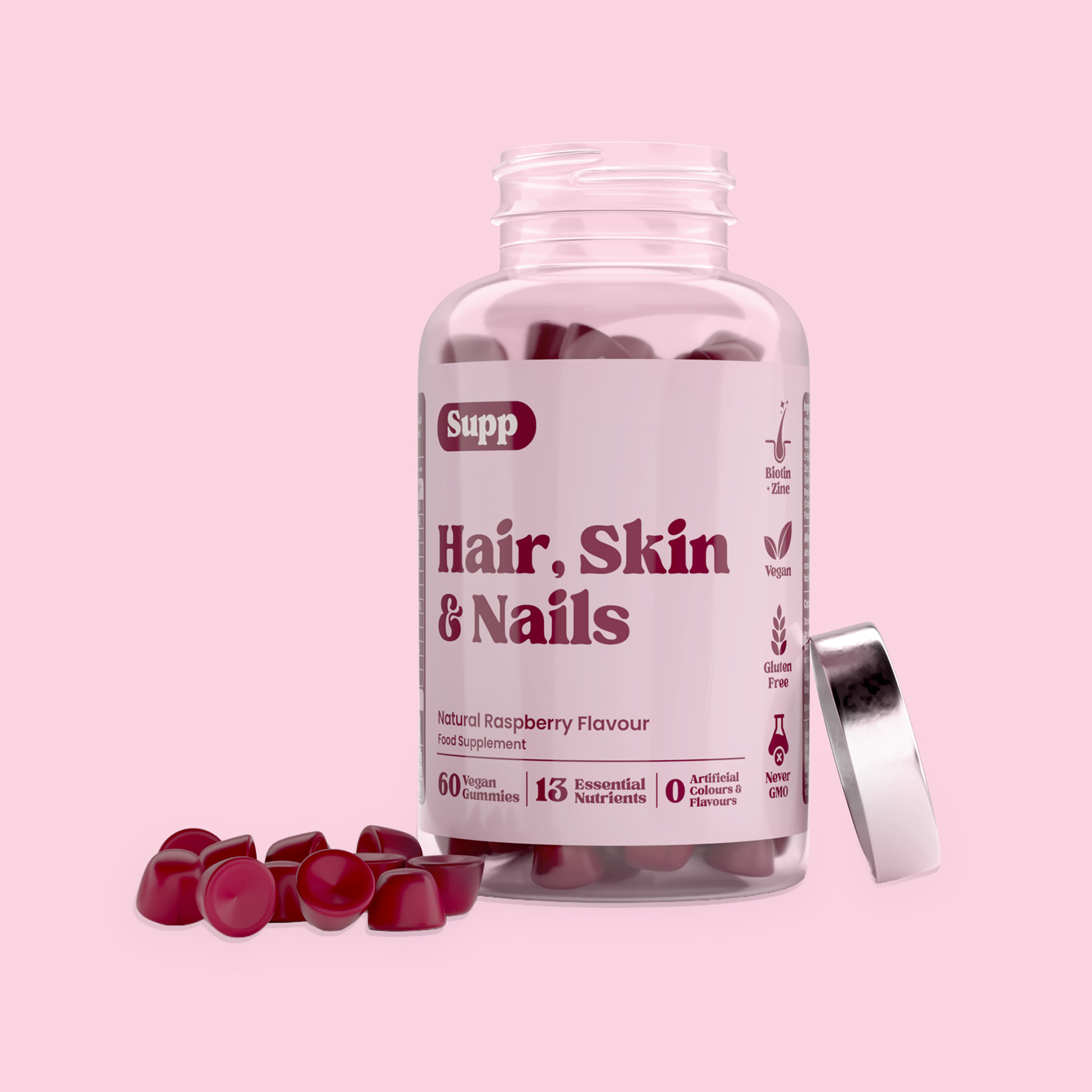
Our Hair, Skin & Nails Gummies are designed around this principle. Each ingredient is included for a specific reason, based on how it contributes to normal bodily function.
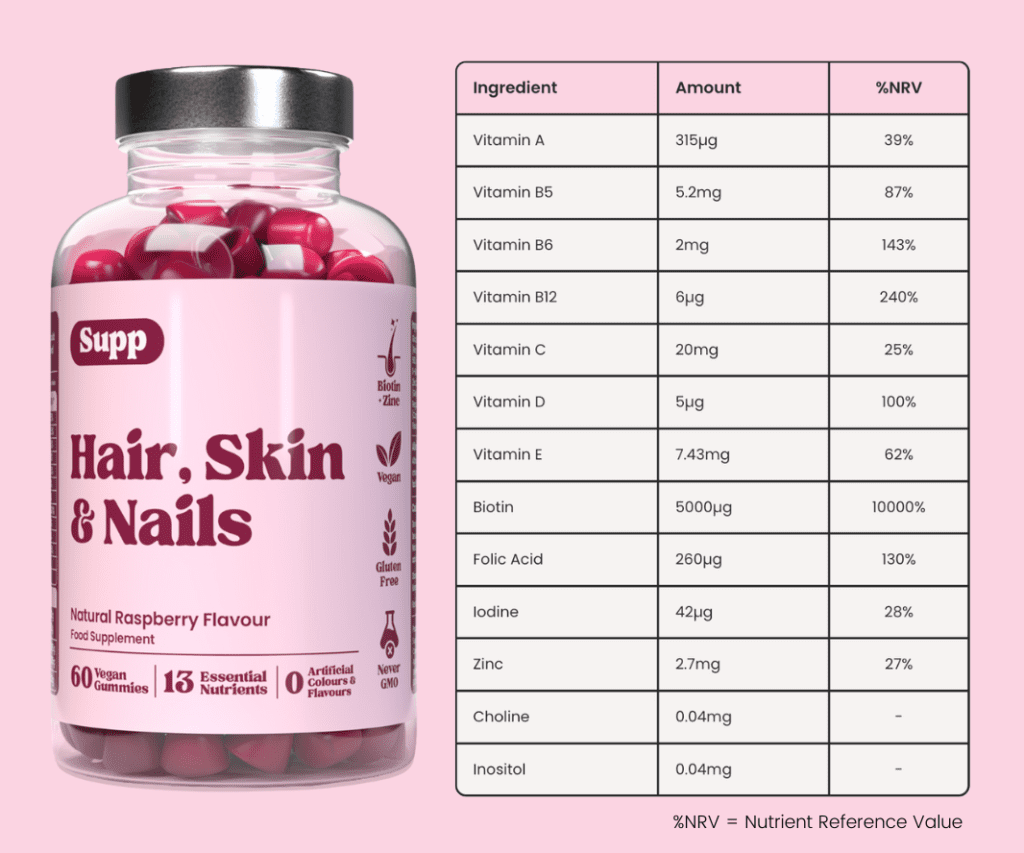
Biotin (Vitamin B7)
Biotin contributes to the maintenance of normal hair and skin and supports keratin production. It forms the foundation of the formula, supporting the structures that hair and nails are made from.
Zinc
Zinc contributes to the maintenance of normal hair, skin and nails and supports normal cell division. This is important for tissues that grow and renew regularly, such as hair follicles and nails.
Vitamin C
Vitamin C contributes to normal collagen formation for the normal function of skin. It also helps protect cells from oxidative stress, supporting skin structure over time.
B Vitamins
B vitamins support energy-yielding metabolism and help reduce tiredness and fatigue. Active tissues like hair and skin rely on efficient energy use to support normal growth and renewal.
Vitamin D
Vitamin D contributes to normal cell division and supports skin health. While it’s often associated with bones and immunity, it also plays a role in maintaining healthy skin.
Why This Matters
Rather than focusing on a single nutrient at a high dose, a combination approach reflects how the body actually works. Hair, skin and nails depend on keratin production, collagen formation, cell turnover and cellular protection. Supporting these processes together is more effective than isolating one ingredient.
Gummies also make daily consistency easier for many people. Regular intake over time matters far more than short-term supplementation.
Gummies vs Multivitamins: Which Should You Choose?
The right option depends on your goals.
A multivitamin provides broad nutritional coverage and supports overall health, particularly for people following plant-based diets or dealing with dietary gaps.
A hair, skin and nails gummy is more targeted, focusing on nutrients linked to keratin production, skin structure and nail strength.
Some people choose one. Others use both at different stages, depending on their priorities. Neither replaces a balanced diet. The best choice is the one that fits your needs and routine.
Needs can also change over time, which is why some people switch between targeted and broader support depending on their circumstances.
Who Might Benefit From Biotin-Containing Supplements?
Biotin-containing supplements may be useful for people who:
- Have brittle or weak nails
- Notice hair shedding during periods of stress
- Follow restrictive or plant-based diets
- Want targeted nutritional support for hair and skin maintenance
If you’re unsure what’s right for you, it’s always sensible to speak with a healthcare professional.
Final Thoughts
Biotin plays an important role in maintaining normal hair and skin, but it’s rarely enough on its own. Hair, skin and nails rely on several nutrients working together to support structure, growth and renewal. A balanced formula, taken consistently and supported by a varied diet, helps support your body’s natural systems over time.
Understanding what each ingredient does, and why it’s included, makes it easier to choose supplements that genuinely fit your needs. For further explanations, we break down each ingredient and its purpose clearly in our ingredients library.
Need More Help or Have Questions?
If you’re still unsure what’s right for you, we’re always happy to help where we can. If you can’t find the information you’re looking for on our site, or you’d like a bit more clarity around ingredients or products, you’re welcome to email us at [email protected]
Disclaimer:
This article is for general information only and does not replace professional medical advice.