


Prostate health is something many men only start thinking about when changes appear. Needing to urinate more often, getting up at night, or noticing a weaker stream are all common as men age. While these changes are often part of the natural ageing process, they can still be frustrating and disruptive to daily life.
For this reason, many men look for natural ways to support prostate and urinary health as part of a long-term routine. Two of the most commonly discussed options are saw palmetto and pumpkin seed oil. Both are plant-derived ingredients with a history of use, but the level and quality of scientific evidence behind them is not the same.
In this article, we take a clear, evidence-led look at saw palmetto vs pumpkin seed oil, focusing on what the research shows and which option is better supported by science.
Understanding Prostate Health and Urinary Changes
The prostate is a small gland located below the bladder that plays a role in male reproductive health. As men get older, the prostate commonly increases in size. This can place pressure on the urethra, affecting how urine flows.
Common urinary changes may include:
- Increased frequency of urination
- Night-time urination
- Hesitancy or weak urine flow
- A feeling of incomplete bladder emptying
These symptoms are often grouped under the term lower urinary tract symptoms, or LUTS. While medical treatments are available, many men prefer to explore lifestyle and nutritional approaches that support normal prostate function and urinary comfort.
What Is Saw Palmetto?
Saw palmetto comes from the berries of the Serenoa repens plant, a small palm native to North America. It has been used traditionally for men’s health for over a century and is now one of the most researched botanical ingredients for prostate and urinary support.
Saw palmetto extracts are rich in naturally occurring fatty acids and phytosterols. Modern research has focused on how these compounds may support normal prostate function and urinary flow.
Importantly, not all saw palmetto supplements are the same. Clinical research typically uses standardised extracts, often produced using specific extraction methods, rather than whole berry powders. This distinction plays a major role in both effectiveness and consistency.
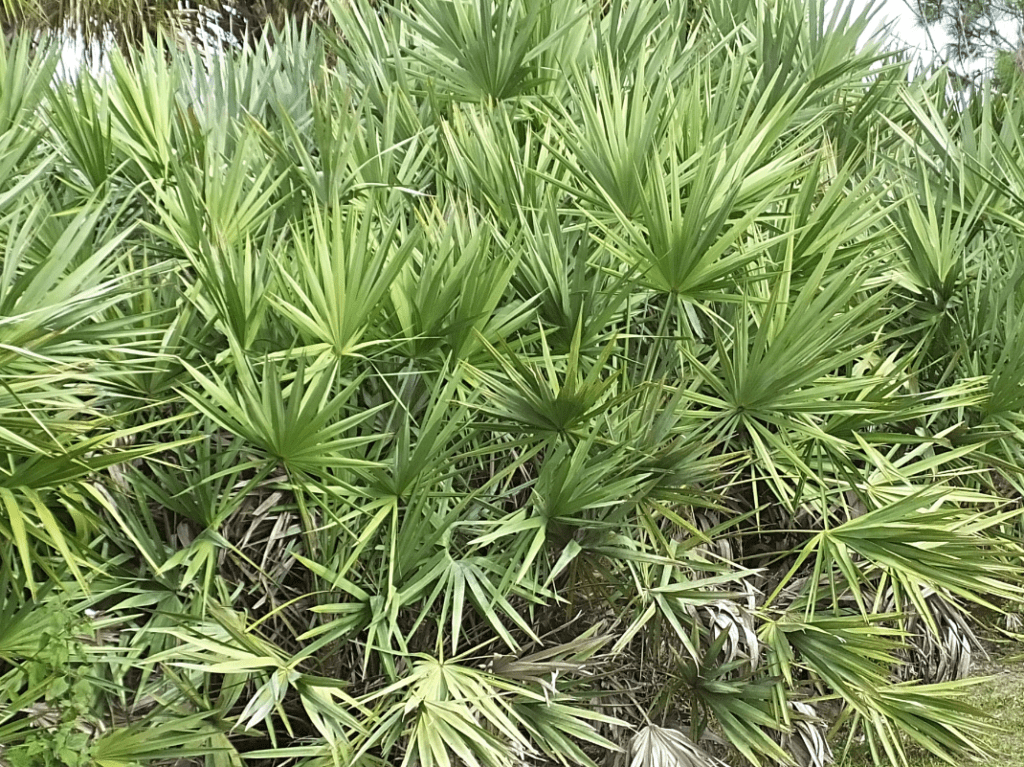
Saw palmetto plant (Serenoa repens)
What Is Pumpkin Seed Oil?
Pumpkin seed oil is derived from the seeds of Cucurbita pepo, a type of pumpkin. Nutritionally, pumpkin seeds are a source of fatty acids, antioxidants, and plant sterols, which has led to interest in their role in prostate and urinary health.
Pumpkin seed oil has a long history of traditional use, particularly for bladder and urinary comfort. In supplements, it is often included as part of multi-ingredient prostate formulas rather than used alone.
While there is growing research interest in pumpkin seed oil, the body of evidence is smaller and less consistent compared to saw palmetto.
The Science Behind Saw Palmetto
Saw palmetto is one of the most extensively studied botanical ingredients for prostate-related urinary symptoms. Research has explored its effects on urinary flow measures, symptom scores, and overall quality of life.
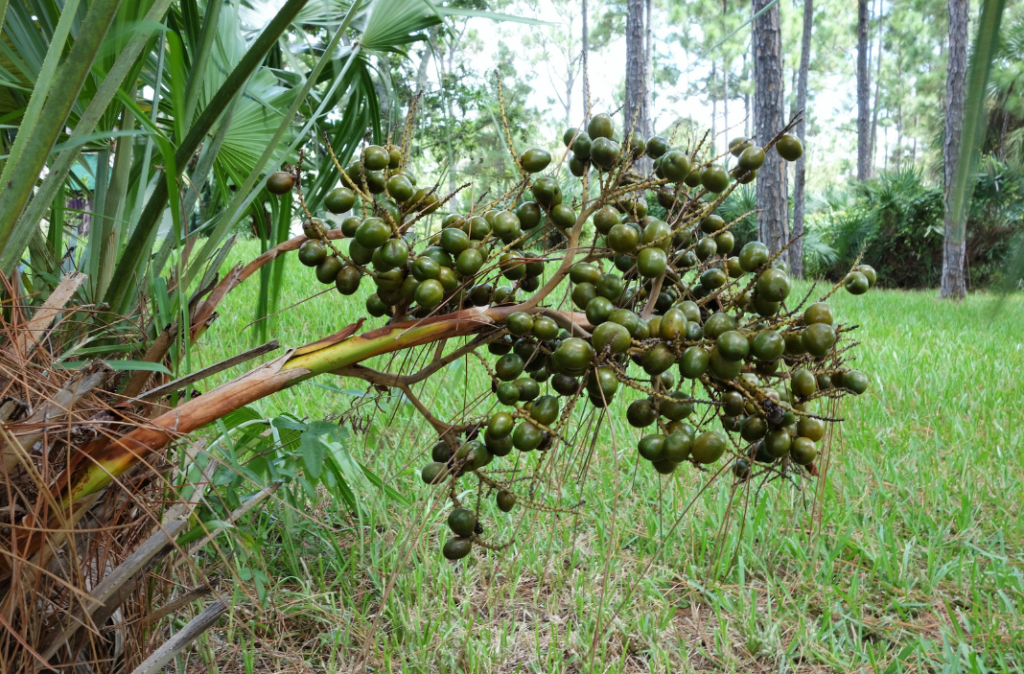
Saw palmetto berries – the part of the Serenoa repens plant used to produce the standardised extracts studied for prostate and urinary health.
Saw Palmetto vs Tamsulosin: Can a Natural Ingredient Perform as Well as Prescription Prostate Medications?
One of the most robust recent studies was published in Scientific Reports in 2021. This randomised clinical trial compared a hexanic extract of saw palmetto (Serenoa repens) with tamsulosin, a commonly prescribed pharmaceutical used to manage urinary symptoms associated with prostate enlargement, in men with moderate to severe symptoms (1).
Remarkably, the results showed that the saw palmetto extract delivered comparable improvements in symptom scores to the prescription drug. Importantly, the saw palmetto group demonstrated a more favourable tolerability profile, with fewer treatment-related side effects reported. This is particularly relevant given that medications like tamsulosin are well known to cause side effects such as dizziness, fatigue, and sexual dysfunction in some men.
For a natural, plant-derived extract to perform on par with a standard pharmaceutical treatment, while being better tolerated, is a key reason saw palmetto continues to attract scientific and clinical interest.
Clinical Studies on Saw Palmetto for Urinary and Prostate Health
While the 2021 head-to-head trial is particularly striking, it’s far from the only study exploring saw palmetto. Over the past few decades, multiple clinical trials and reviews have examined its role in supporting urinary function and prostate health, helping to build a clearer picture of where it may be most useful.
Earlier large-scale studies and long-term trials have also reported improvements in International Prostate Symptom Score (IPSS), night-time urination, and urinary flow measures in men using standardised saw palmetto extracts (2,3).
Systematic reviews have noted that while results can vary depending on extract quality and study design, saw palmetto remains one of the most researched natural options for prostate support (4). This variability highlights why formulation and dosage matter, rather than undermining the ingredient itself.
Simply put, saw palmetto isn’t just another trending ingredient. It’s one of the most researched natural options for prostate and urinary support, with evidence built up over many years.
The Evidence For Pumpkin Seed Oil
Pumpkin seed oil has also been studied for urinary and prostate-related symptoms, though the evidence base is more limited.
Several randomised trials suggest that pumpkin seed oil may help improve urinary symptom scores and quality of life in men with mild to moderate urinary symptoms (5,6). These benefits are thought to be linked to its fatty acid and phytosterol content.
However, when compared directly with pharmaceutical treatments, pumpkin seed oil has generally shown more modest effects (7). Many studies also use pumpkin seed extract rather than oil, or combine it with other ingredients, making it harder to isolate its individual impact.
Meta-analyses and reviews conclude that pumpkin seed preparations may offer supportive benefits, but the overall evidence is less consistent and less extensive than that available for saw palmetto.
Saw Palmetto vs Pumpkin Seed Oil: A Practical Comparison
When comparing the two ingredients side by side, several key differences stand out.
Saw palmetto has:
- A larger number of human clinical trials
- Studies using standardised extracts
- Direct comparisons with pharmaceutical treatments
- Long-term safety and tolerability data
Pumpkin seed oil offers:
- Some supportive clinical evidence
- Traditional use for urinary comfort
- A role in combination formulas
For men prioritising ingredients with the strongest scientific backing, saw palmetto currently stands out as the better-researched option.
Why Extract Quality and Dosage Matter
One of the most important takeaways from the research is that quality matters. Studies showing benefits from saw palmetto typically use standardised extracts with defined fatty acid content. Lower-dose products or whole berry powders may not deliver the same outcomes.
This is one reason research findings can appear inconsistent when looking at saw palmetto as a broad category. The ingredient itself is well studied, but not all supplements reflect the formulations used in clinical trials.
Choosing a product with clear labelling, transparent dosing, and a meaningful extract strength is essential for aligning supplementation with the evidence.
Supp’s Saw Palmetto
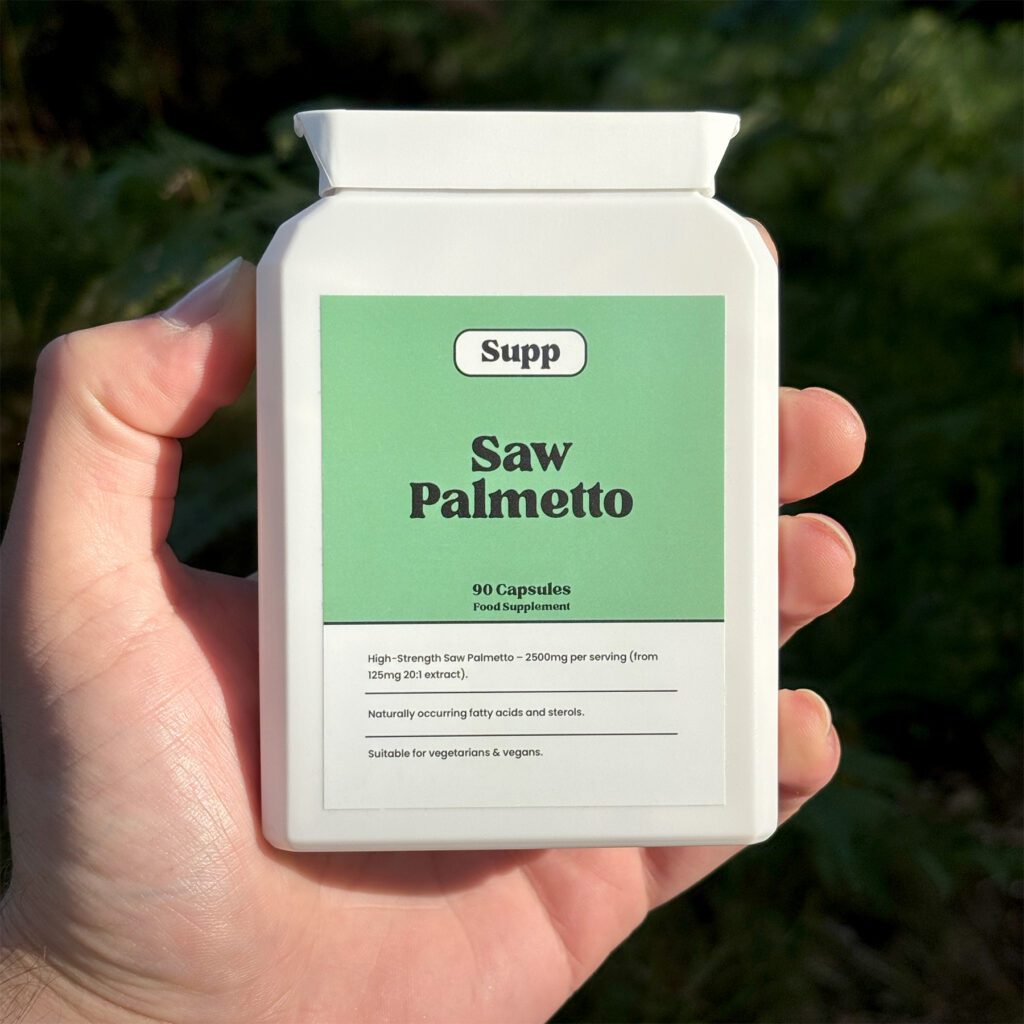
At Supp, our approach is simple: evidence first always. Our Saw Palmetto supplement provides a high-strength 2500 mg extract per serving, delivering naturally occurring fatty acids in a clear, transparent formula.
It is:
- UK-made in GMP-certified facilities
- Suitable for vegetarians and vegans
- Designed for consistent daily use
- Free from unnecessary fillers or additives
Rather than chasing trends, we focus on ingredients with real research behind them and formulations that reflect how they have been studied.
Final Thoughts
Both saw palmetto and pumpkin seed oil have a place in the conversation around prostate and urinary health. Pumpkin seed oil may offer gentle, supportive benefits, particularly as part of a broader formula.
However, when it comes to the strength and depth of scientific evidence, saw palmetto remains the most extensively researched natural option. For men looking to support prostate and urinary function with confidence, saw palmetto is often the more evidence-led choice.
As always, persistent or worsening symptoms should be discussed with a healthcare professional. Supplements are designed to support health, not replace medical advice.
References
- Alcaraz A, Rodríguez-Antolín A, Carballido-Rodríguez J, et al. 2021. Efficacy and tolerability of the hexanic extract of Serenoa repens compared to tamsulosin in moderate-severe LUTS-BPH patients. Scientific Reports. https://www.nature.com/articles/s41598-021-98586-5
- Carraro JC, Raynaud JP, Koch G, et al. 1996. Comparison of phytotherapy (Permixon®) with finasteride in the treatment of benign prostatic hyperplasia. Prostate. https://pubmed.ncbi.nlm.nih.gov/8876706/
- Braeckman J. 1994. The extract of Serenoa repens in the treatment of benign prostatic hyperplasia: A multicenter open study. Current Therapeutic Research. https://www.sciencedirect.com/science/article/abs/pii/S0011393X05807714
- Tacklind J, Macdonald R, Rutks I, Wilt TJ. 2012. Serenoa repens for benign prostatic hyperplasia. Cochrane Database of Systematic Reviews. https://pubmed.ncbi.nlm.nih.gov/23235581/
- Hong H, Kim CS, Maeng S. 2009. Effects of pumpkin seed oil on urinary disorders in men. Nutrition and Research Practice. https://pmc.ncbi.nlm.nih.gov/articles/PMC2809240/
- Vahlensieck W, Theurer C, Pftizer E, et al. 2015. Effects of pumpkin seed in men with lower urinary tract symptoms due to benign prostatic hyperplasia. Urologia Internationalis. https://pubmed.ncbi.nlm.nih.gov/25196580/
- Friederich M, Theurer C, Schiebel-Schlosser G. 2000. ProstaFink Forte capsules in the treatment of benign prostatic hyperplasia. Urologia Internationalis. https://pubmed.ncbi.nlm.nih.gov/11025395/
Disclaimer
This content is for informational purposes only and does not replace medical advice. Always consult a healthcare professional if you have persistent symptoms, a diagnosed condition, or are taking medication. Supplements should not be used as a substitute for a balanced diet or healthy lifestyle.