

What is African Mango?
African mango (Irvingia gabonensisis) is a tropical fruit native to West and Central Africa. While the fruit itself is enjoyed locally, it’s the seed, sometimes called the ‘dika nut’, that has attracted scientific interest.
These seeds are rich in fibre and have long been used in traditional practices to support digestive health. Only recently have they caught the attention of researchers for their potential role in weight management.
Does African Mango Help with Weight Management?
Early studies showed exciting results – people taking African mango extract lost more weight and body fat, saw a reduction in waist circumference, and even improved their cholesterol levels compared to those on a placebo, all within 8–10 weeks. (1)
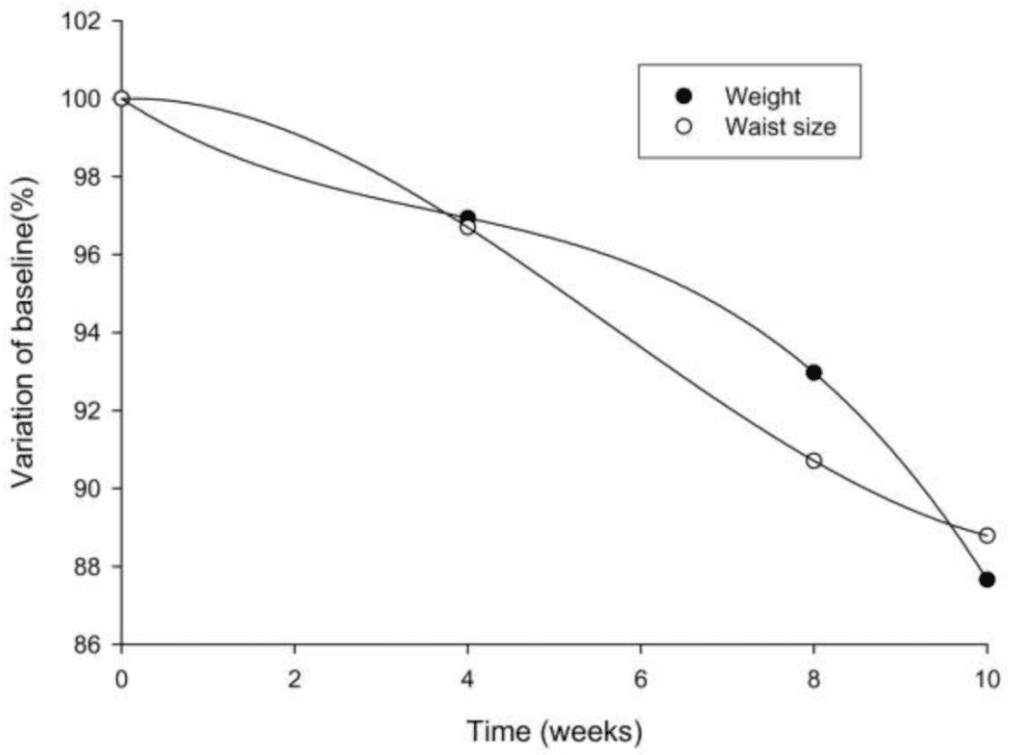
Figure: Decrease in body weight and waist circumference over 10 weeks in participants taking Irvingia gabonensis extract, expressed as a percentage of baseline.
Ngondi et al. (2009), Lipids in Health and Disease.
In 2013, a review of these studies said that while the results looked good, the studies were small and not always fully reliable – so we couldn’t yet say for sure that African mango worked for everyone (2).
Fast forward to 2020, and another review of clinical trials again found improvements in weight, belly fat, and waist size (3). That said, researchers still pointed out that more high-quality studies are needed – it wasn’t enough to give a firm green light yet.
The most recent research in 2022 found taking African Mango increased a hormone called adiponectin, which plays an important role in metabolism and fat regulation (4). That suggests African mango may still have untapped potential, and it’s exactly why scientists are continuing to explore its use in weight management.
Quick Takeaway: There’s growing evidence that African mango can help support weight management, especially when combined with a healthy diet and active lifestyle. Scientists still need bigger, longer studies before calling it a guaranteed weight-loss solution. Exciting things are still unfolding in this area of research.
How Might it Work?
Researchers believe African mango may support weight management in several key ways:
1. Helping you feel fuller, longer
The seed of African mango is rich in soluble fibre, which slows down how quickly your stomach empties and how fast your blood sugar rises after meals. That means you may feel satisfied for longer after eating, helping reduce unnecessary snacking. (5)
2. Regulating fat-cell hormones
Fat tissue isn’t just “storage” – it also releases hormones. In lab and human studies, African mango extract was found to:
- Reduce levels of leptin (a hormone that usually signals when you’re full, but can become ineffective in overweight people). (6)
- increase levels of adiponectin (a hormone linked to improved metabolism, better insulin sensitivity and lower inflammation). (3)(4)(6)
- These hormonal shifts can support balanced appetite signals and healthier metabolism.
3. Influencing fat storage and fat cell development
Some lab research shows that the extract may interfere with key fat-cell pathways. For example, it reduced the activity of PPAR-γ (a key gene in fat cell formation) and other enzymes involved in turning glucose into fat. (6)
4. Supporting healthy fats and blood sugar
Human trials have also shown (though in small numbers) improvements in waist size, cholesterol, triglycerides and blood glucose when African mango extract was taken regularly. (1)(3)
Quick Takeaway: African mango isn’t a stand-alone solution – but it can make it easier to stay on track by helping reduce cravings, supporting metabolism, and encouraging healthier fat use.
Thinking About Adding African Mango to Your Routine?
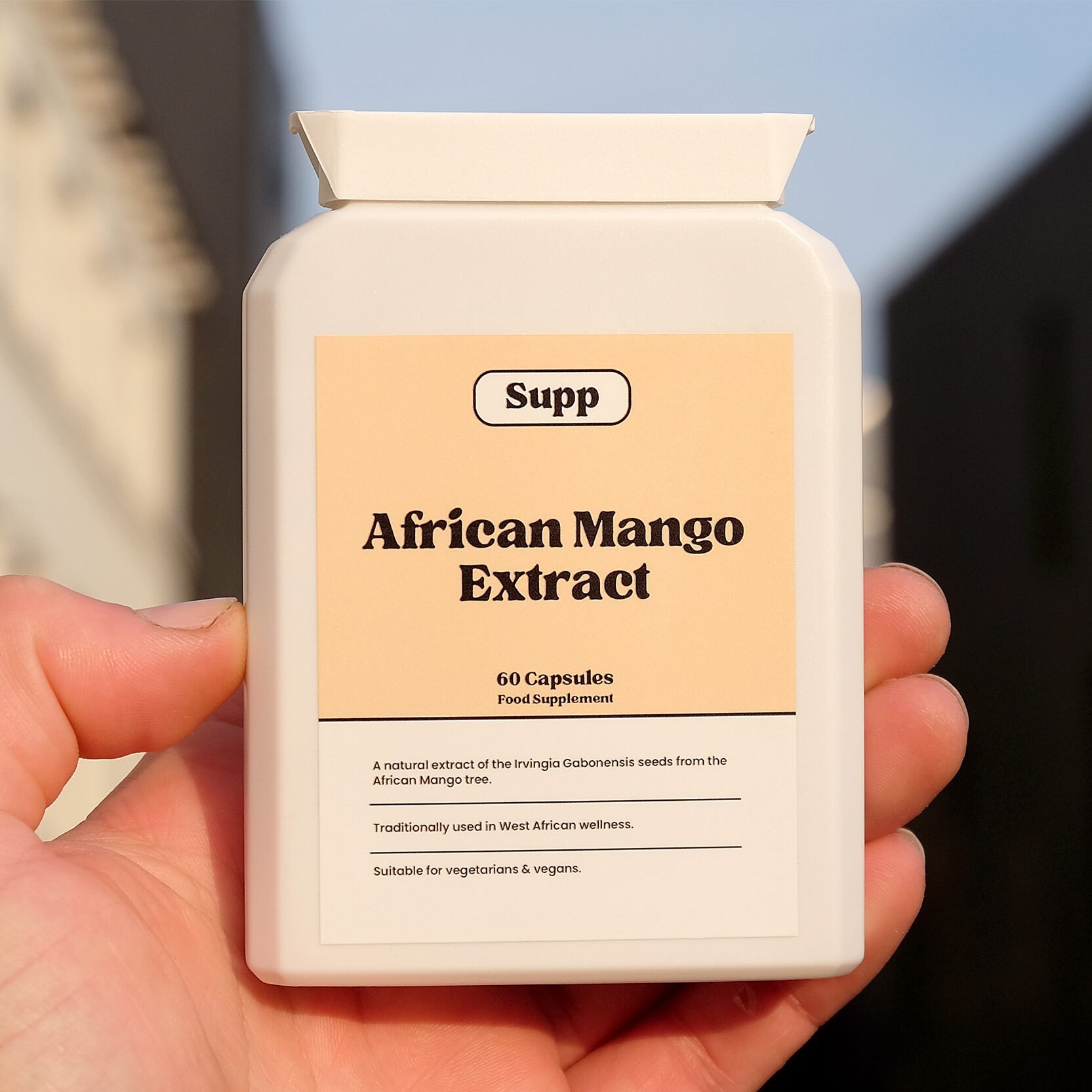
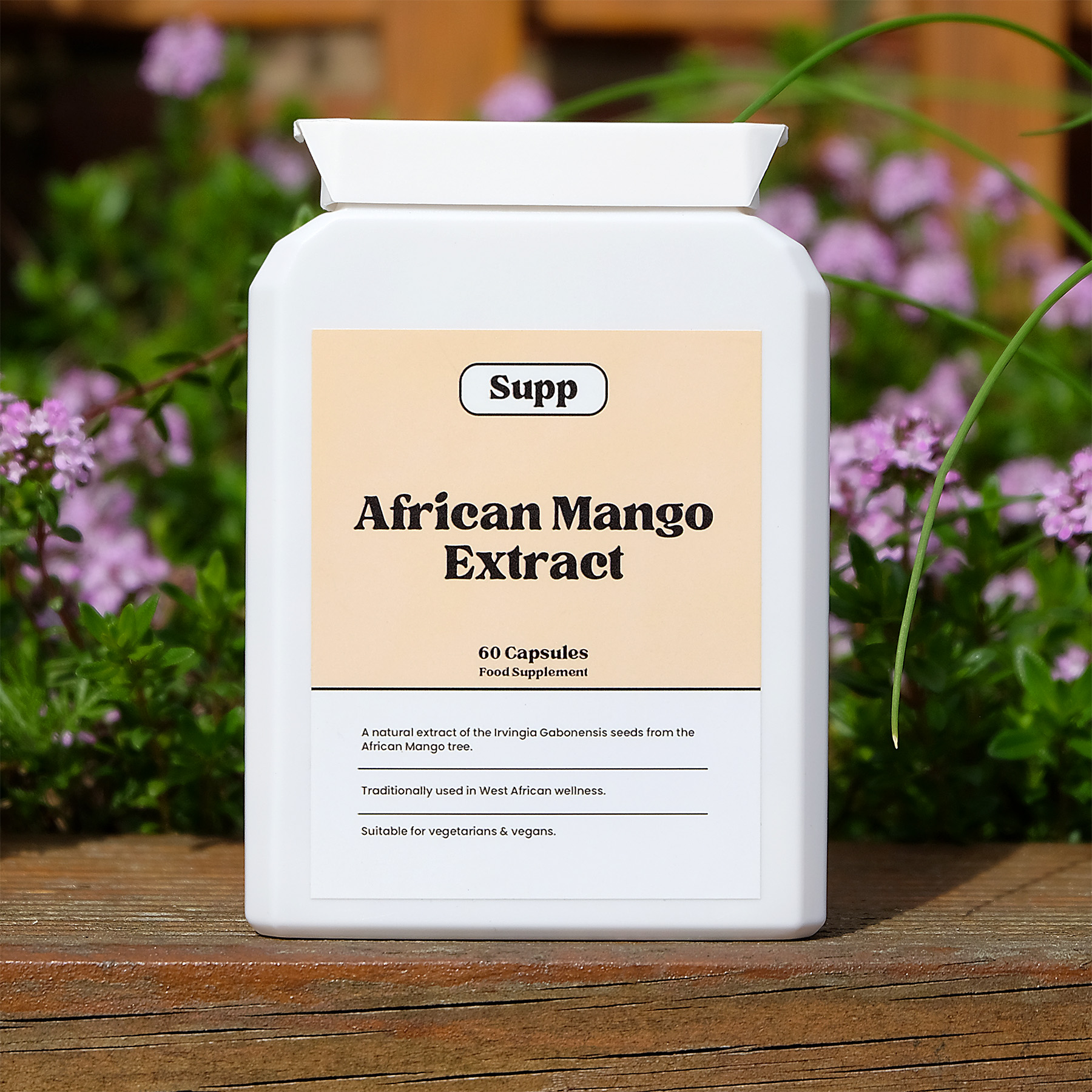
At Supp, we’ve taken the science seriously. Our African Mango Supplement is made using a high-strength 10:1 extract, providing the equivalent of 18,000 mg of whole African mango seed in just one capsule.
It’s formulated to match the safe levels used in several clinical studies, and can be taken once or twice daily before meals – making it easy to fit into a balanced lifestyle.
Every batch is made in GMP-certified facilities to ensure safety and potency.
If you’d like to try African mango or dig deeper into the science, explore:
Is It Safe?
African mango seed extract has been well tolerated in clinical studies, with few side effects reported. Some people experienced:
- Mild digestive symptoms (like gas or bloating)
- Headache
- Trouble sleeping
These effects were similar to those in the placebo groups (participants not taking African mango), which suggests the supplement itself wasn’t the likely cause.
Long-term safety data is still limited, so it’s sensible to check with a healthcare professional before using African mango if you are:
- Pregnant or breastfeeding
- Taking medication (especially for blood sugar or metabolism)
- Managing a medical condition
Who Might Consider It?
You might taking consider African Mango Extract if:
- You’re looking for extra support with managing appetite or cravings
- You’re already working on your nutrition and movement but want a science-backed tool to help you towards your weight goals
- You’re interested in supporting a healthier waistline and metabolic wellness, in a natural way
It’s not a replacement for lifestyle changes – but it can offer gentle, complementary support as part of a healthy plan.
As with any supplement, it works best when paired with nourishing food, enough sleep, and regular movement – the real long-term foundations of good health.
Looking for inspiration?
Explore our Recipes for healthy meal ideas or get moving with our Workout Plans. You might also like 3 Daily Habits for Better Movement and Faster Recovery to help you stay active and energised.
Final Thoughts
African mango isn’t a magic solution, but it is one of the more interesting plant-based options being explored for weight management. Early research shows promise for supporting appetite control, waist size, cholesterol and metabolic health. And with more large-scale research on the horizon, African mango could soon become a more standard part of weight-support routines.
References
- Ngondi JL, et al. (2009) IGOB131, a seed extract of Irvingia gabonensis, significantly reduces body weight and improves metabolic parameters in overweight humans; dose 150 mg twice daily before meals; adverse events similar to placebo. Lipids in Health and Disease. https://pmc.ncbi.nlm.nih.gov/articles/PMC2651880/
- Onakpoya I, Davies L, Posadzki P, Ernst E. (2013). The efficacy of Irvingia gabonensis supplementation in the management of overweight and obesity: a systematic review of randomised controlled trials. Journal of Dietary Supplements. https://pubmed.ncbi.nlm.nih.gov/23419021/
- Lee J, et al. (2020). The Effects of Irvingia gabonensis Seed Extract Supplementation on Anthropometric and Cardiovascular Outcomes: A Systematic Review and Meta-Analysis. Journal of the American College of Nutrition. https://pubmed.ncbi.nlm.nih.gov/31855111/
- Nonsa-ard R, et al. (2022). Effects of Irvingia gabonensis extract on metabolism, antioxidants, and adipocytokines in overweight/obese individuals: 12-week RCT. Nutrients. https://pubmed.ncbi.nlm.nih.gov/36364907/
- Hassan YR. (2024). Irvingia gabonensis baill. (African Mango): A comprehensive review of its ethnopharmacological significance, unveiling its long-standing history and therapeutic potential. Journal of Ethnopharmacology. https://pubmed.ncbi.nlm.nih.gov/38395180/
- Ngondi JL, et al. (2008). IGOB131 seed extract inhibits adipogenesis and expression of PPAR-γ, leptin, and adiponectin in 3T3-L1 adipocytes. Lipids in Health and Disease. https://pubmed.ncbi.nlm.nih.gov/19014517/
- Kothari SC, et al. (2012). Subchronic toxicity and mutagenicity/genotoxicity studies of Irvingia gabonensis extract in rats. Toxicology. https://pubmed.ncbi.nlm.nih.gov/22386809/
- Sirotkin AV. (2024). Positive effect of Irvingia gabonensis on health and weight loss. Annals of Public Health Research. https://www.jscimedcentral.com/11774
Disclaimer:
This article is for informational purposes only and is not a substitute for personalised medical advice. If you’re pregnant, breastfeeding, or taking medication, please consult your GP or a qualified healthcare professional before taking any supplement.