

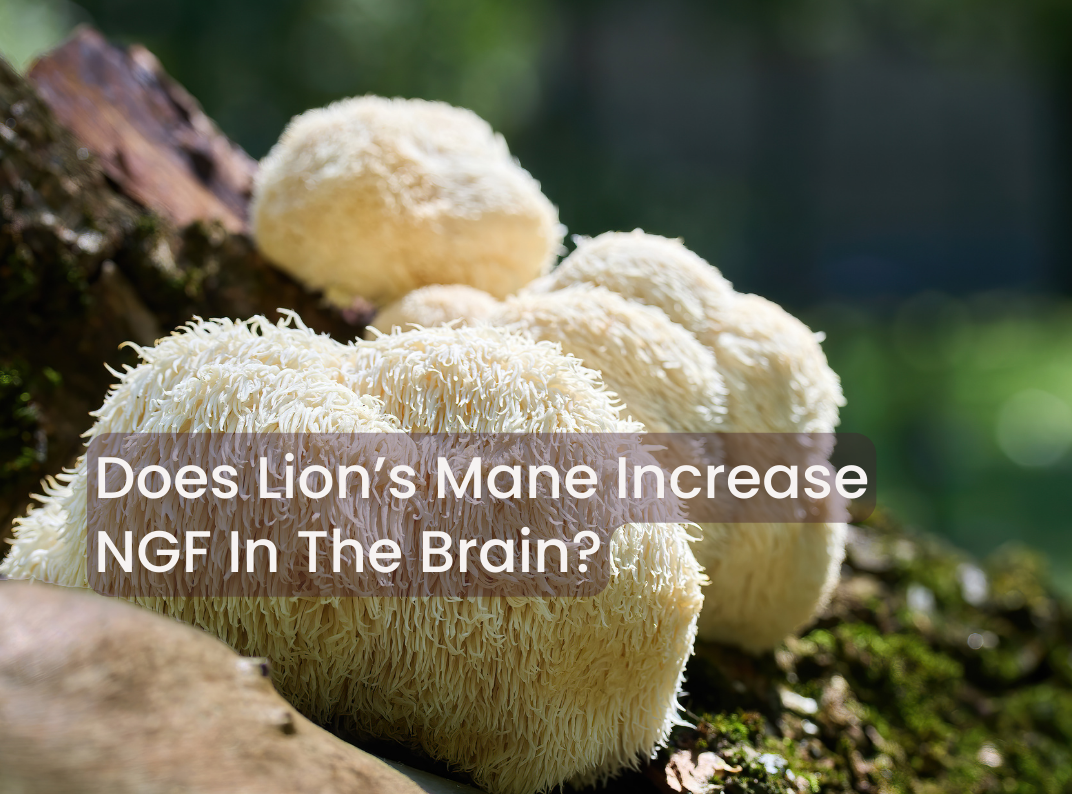
Lion’s Mane gets talked about a lot for “nerve growth factor” (NGF). It’s one of the main reasons people reach for it when they want sharper thinking, better memory support, and a clearer head day to day.
NGF is a well-studied part of brain biology, and Lion’s Mane is one of the few functional mushrooms with research that’s genuinely worth reading.
Where things get a bit blurred online is that human studies don’t usually measure NGF in the brain directly, so the best evidence tends to come from a mix of lab research and real-world human outcomes like cognitive test performance and subjective stress.
This guide breaks down what the studies actually show, so you can decide whether Lion’s Mane is right for you.
What is nerve growth factor (NGF), and why does it matter?
NGF (nerve growth factor) is a protein in your body that supports the growth, survival, and maintenance of certain neurons. It’s part of a family called neurotrophins, which act like “support signals” for nerve cells.
In adults, NGF is particularly linked to the health and function of specific neurons involved in areas like attention and memory.
NGF is not a “brain booster switch”. Instead, your nervous system uses NGF as part of a bigger network. Sleep, stress, movement, nutrition, and overall brain health all influence how your brain works.
Lion’s Mane is interesting because it can nudge some of these pathways in a helpful direction.
Why Lion’s Mane is linked to NGF
Lion’s Mane (Hericium erinaceus) contains a mix of bioactive compounds. Two groups show up again and again in the research:
- Hericenones, found mainly in the fruiting body
- Erinacines, found mainly in the mycelium
These compounds have been studied for their ability to influence NGF-related processes (and other pathways linked to brain and nerve health).
Fruiting body vs mycelium
A lot of people assume “Lion’s Mane is Lion’s Mane”. In research terms, that’s not always true.
Different parts of the mushroom can contain different levels and types of actives, and different extracts can behave differently. Reviews and compound-focused papers make this distinction clear.
Practical takeaway: when you see mixed experiences online, product composition is one reason.
Does Lion’s Mane Increase NGF?
Lion’s Mane has strong mechanistic research suggesting it can stimulate or support NGF-related activity in lab and animal models. In humans, the evidence is more about cognitive and mood outcomes than direct NGF measurements.
Let’s break down the research…
1) Lab Studies – NGF activity can increase in a dish
One well known study looked at mushroom extracts in human astrocytoma cells (a tumour-derived cell line commonly used in research). It found Lion’s Mane (and not the other mushrooms tested) increased NGF gene expression and NGF secretion, with stronger effects at higher concentrations. [1]
This supports the idea that Lion’s Mane contains compounds that can stimulate NGF-related activity under controlled lab conditions.
This single study does not prove the same thing happens in your brain after eating gummies or capsules. Lab studies are a starting point, not the finish line.
2) Animal Research – NGF-related effects seen in living systems
After the first lab findings, researchers tested Lion’s Mane compounds in animals to see whether NGF-related effects show up in a whole, living system, not just in isolated cells.
One widely cited rat study gave erinacine A (a compound found in Lion’s Mane mycelium) over several weeks and reported higher NGF levels in specific brain regions, including the hippocampus and locus coeruleus, alongside changes in catecholamines that are involved in NGF regulation. [2]
This type of work helps bridge the gap between “it can happen in a dish” and “it might happen in biology that’s far closer to real life”, while still recognising the limits: rats are not humans, and results can vary depending on the exact extract, dose, and study design.
That’s why, once a plausible mechanism and basic safety profile are established, well-designed human trials are the next step for confirming whether those benefits translate into measurable changes in cognition, mood, or daily function.
3) Human Studies – Improved cognitive scores while taking Lion’s Mane
Most human trials on Lion’s Mane look at things we can measure easily and safely, like cognitive scores, daily function, mood scales, and wellbeing markers.
Mild cognitive impairment: improved scores while taking Lion’s Mane
In one trial in adults aged 50 to 80 with mild cognitive impairment, participants taking Lion’s Mane showed improved cognitive scores during the study period. When they stopped taking it, scores drifted back towards baseline. [3]
We can’t generalise this single study to everyone. But, we can conclude in people where cognition is already under strain, Lion’s Mane can offer measurable support while it’s being used.
Mild Alzheimer’s disease: improved cognitive function with Lion’s Mane
A separate trial in people with mild Alzheimer’s disease used an erinacine A-enriched Lion’s Mane mycelium preparation for 49 weeks. Compared with placebo, the group taking Lion’s Mane saw better outcomes across several measures of cognition and day-to-day function.
This is encouraging, with an important caveat: it was a pilot study, using a very specific extract, in a clinical population. So we shouldn’t treat it as a universal guarantee. But it is a strong signal that Lion’s Mane could have real potential for people experiencing cognitive decline, and it’s exactly the kind of result that justifies larger, follow-up human studies.
Health young adults: effects outside of clinical impairment
A more recent study in healthy adults, tests Lion’s Mane outside of clinical impairment. In this trial 41 adults aged 18 to 45 took 1.8 g Lion’s Mane and completed cognitive and mood testing 60 minutes after a single dose and again after 28 days of daily use.
After the single dose, the Lion’s Mane group completed the Stroop task faster. The Stroop task is a quick test of attention and inhibitory control. After 28 days, the researchers also observed a trend towards lower subjective stress.
The key takeaway here is that in healthy people, Lion’s Mane can improve speed of performance and reduce subjective stress.
The effects appear more subtle and task-specific, rather than dramatic like in the cognitive impairment studies. That’s exactly what you’d expect when you’re starting from a good baseline, and it reinforces why bigger studies are needed to pin down who benefits most, the best dose, and how different extracts compare.
Mood & stress studies: improvements relating to anxiety and depression
Lion’s Mane isn’t only studied for cognition. There’s also research looking at mood and stress-related outcomes.
In a small randomised, placebo-controlled study, 30 women consumed Lion’s Mane-containing cookies daily for four weeks. After the intervention, the Lion’s Mane group showed lower scores on a depression scale (CES-D) compared with their own baseline, and also improved on an “indefinite complaints” measure, with some sub-scores (including things like palpitations and reduced motivation) improving more than placebo. [4].
It’s a promising signal that Lion’s Mane can support aspects of mood and stress in some people.
How Does NGF Fit In To This Research?
NGF is best thought of as one credible mechanism behind Lion’s Mane’s popularity.
The research supports a few key ideas:
- Lab research shows NGF-related activity can increase under controlled conditions.
- Human studies do not typically measure NGF directly. So the human evidence is indirect: it’s observed outcomes that could be consistent with NGF-related support, among other pathways.
- Lion’s Mane likely works through more than one route. Reviews discuss neurotrophic support alongside inflammation and oxidative stress pathways.
What you can expect if you’re taking Lion’s Mane
Following the research, here’s what you can expect when taking Lion’s Mane:
You May Notice:
- A steadier sense of mental clarity or “less foggy” thinking
- Easier recall on memory based tasks
- Less mental friction during focused tasks
- A subtle uplift in mood or resilience to stress (not a stimulant buzz)
You should not expect:
- A caffeine-like “hit”
- Instant transformation in a day or two
- The same effect from every product (extracts vary)
Consistency matters more than “megadoses”, because many trials run for weeks and measure gradual changes.
For a deeper timeline guide, check out: How Long Does Lion’s Mane Take To Work?
How To Chose A Lion’s Mane Product
If you care about the NGF mechanism, your checklist is simple:
1) Know what part is used – Fruiting body and mycelium are not identical, and key compounds are associated with each. It’s important the brand is transparent about what part they’re using.
2) Look for clear extraction info – “Lion’s Mane” on the front label tells you very little on its own. Extract ratio, standardisation, and whether it’s fruiting body only are the bits that make products comparable.
3) Avoid magical claims – If a product promises to “regrow nerves” or “treat” a condition, treat that as a red flag. Supplement claims must stay within regulations, and credible brands keep language responsible.
FAQ’s
Does Lion’s Mane directly increase NGF in humans?
Human trials typically do not measure NGF changes in the brain directly. The strongest NGF evidence is mechanistic (lab and animal). Human trials focus on improvements to measurable outcomes like cognition and daily function.
What compounds in Lion’s Mane are linked to NGF?
Hericenones and erinacines are the two groups most often discussed in relation to NGF-related activity.
How long does it take to notice effects?
Most people who feel benefits describe them as gradual over a few weeks, not immediate. Your full guide is here:
How Long Does Lion’s Mane Take To Work
Is Lion’s Mane safe?
Studies generally report good tolerability, but any supplement can cause side effects in some people. If you have a mushroom allergy, are pregnant or breastfeeding, have a medical condition, or take medication, check with a healthcare professional first.
Final Takeaway
Lion’s Mane is one of the more scientifically interesting mushrooms because we have:
- a plausible mechanism (NGF-related activity shown in lab research)
- human trials showing measurable benefits in certain groups
- and a growing body of research exploring how different extracts and compounds can influence brain and nerve health
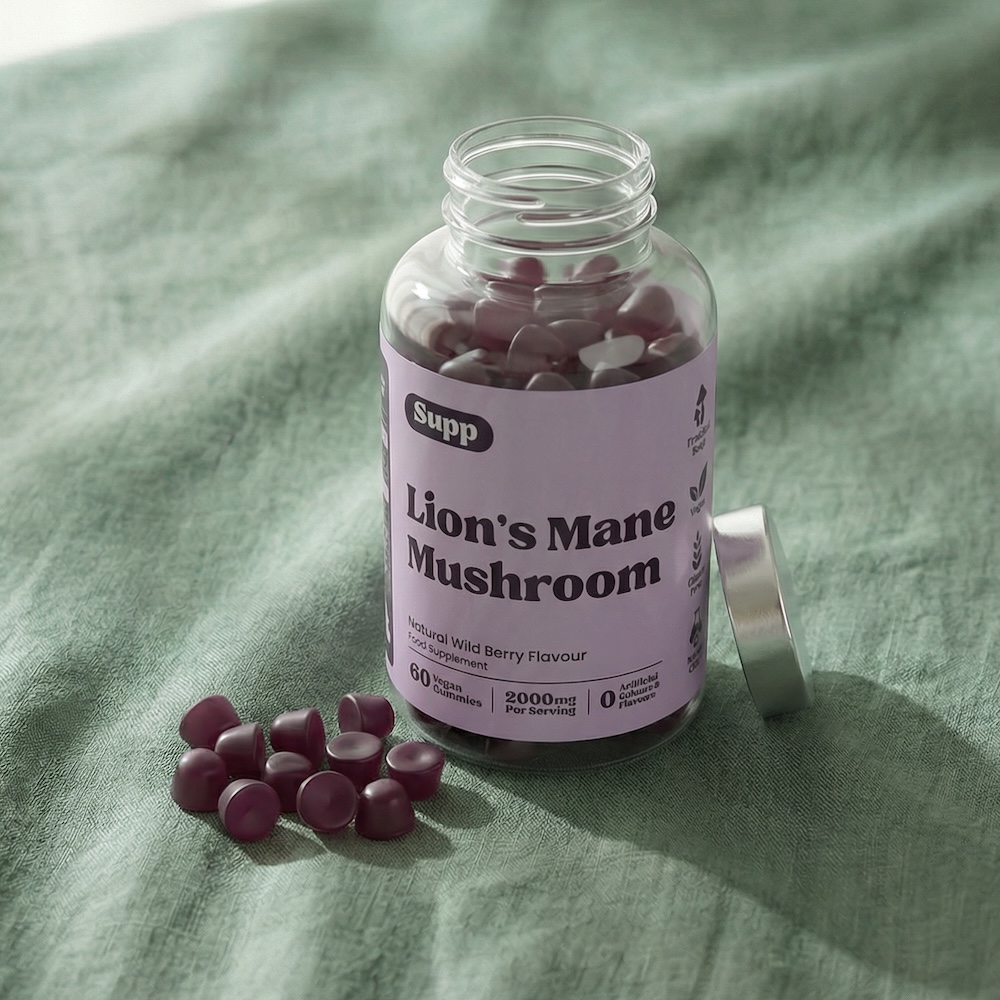
If you’re looking for an evidence-led way to support focus and cognitive performance day to day, you can try our Lion’s Mane Mushroom Gummies.
References
- Mori K, Obara Y, Hirota M, et al. 2008. Nerve growth factor-inducing activity of Hericium erinaceus in 1321N1 human astrocytoma cells. Biological and Pharmeceutical Bulletin. https://pubmed.ncbi.nlm.nih.gov/18758067/
- Shimbo M, Kawagishi H, Yokogoshi H. 2005. Erinacine A increases catecholamine and nerve growth factor content in the central nervous system of rats. Nutrition Research https://www.sciencedirect.com/science/article/abs/pii/S0271531705001041
- Mori K, Inatomi S, Ouchi K, et al. 2009. Improving effects of the mushroom Yamabushitake (Hericium erinaceus) on mild cognitive impairment. Phytotherapy Research. https://pubmed.ncbi.nlm.nih.gov/18844328/
- Nagano M, Shimizu K, Kondo R, et al. 2010. Reduction of depression and anxiety by 4 weeks Hericium erinaceus intake. Biomedical Journal of Scientific & Technical Research. https://pubmed.ncbi.nlm.nih.gov/20834180/
Disclaimer:
This article is for educational purposes only and isn’t medical advice. Supplements aren’t intended to diagnose, treat, cure, or prevent any disease. If you’re pregnant or breastfeeding, have a medical condition, or take any medication, speak to a healthcare professional before use.
0 Comments