

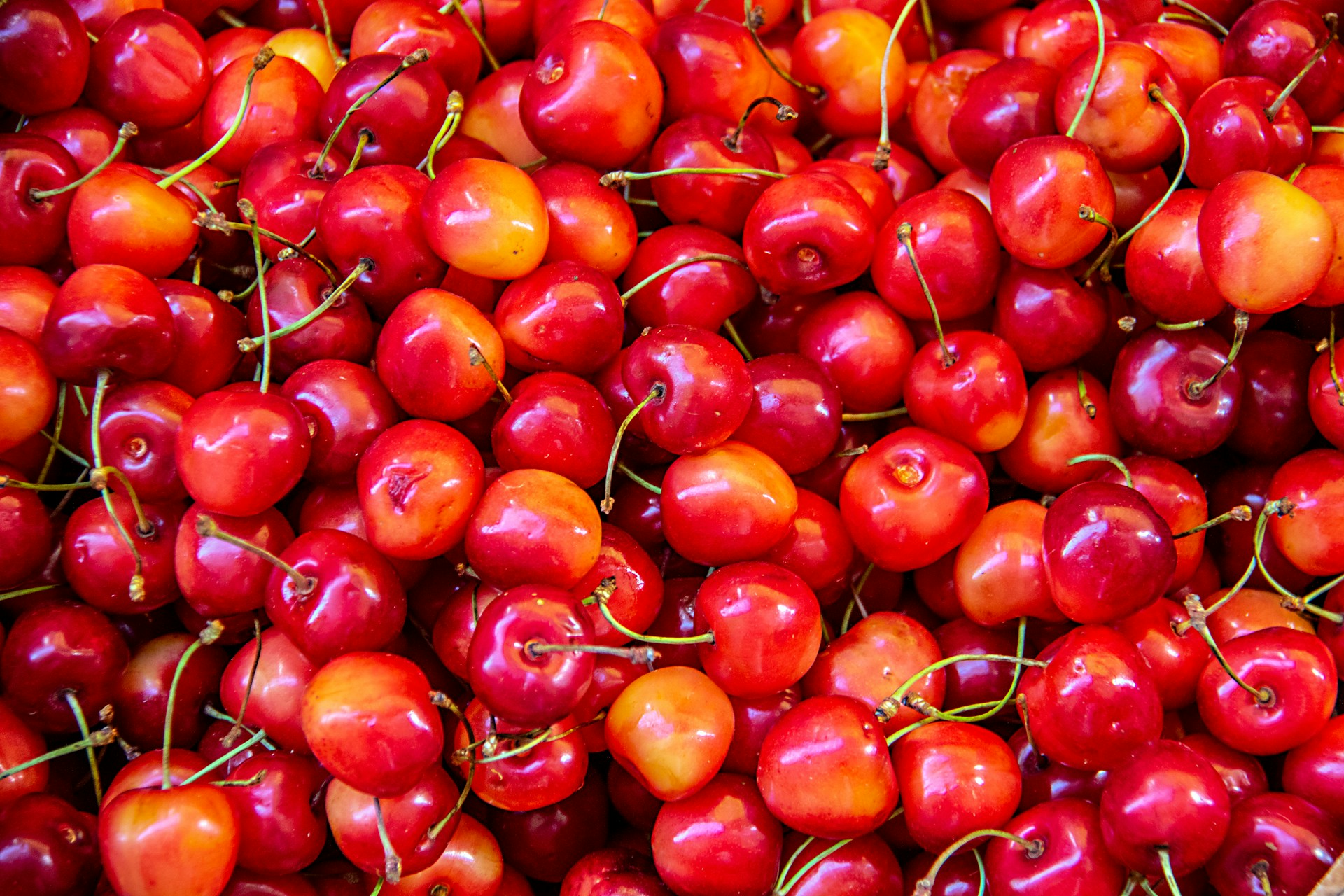
Montmorency Tart Cherries (Prunus cerasus), sometimes called sour cherries, have become a fixture in sports‑nutrition shakes and sleep‑support supplements. Rich in powerful antioxidants and natural compounds, they’re drawing increasing attention for their potential to support everything from joint health to heart function.
Is Montmorency cherry the same as tart cherry? Yes – Montmorency is the dominant cultivated variety of tart cherry, prized for its bright red skin, tangy flavour and unusually high levels of health‑promoting phytochemicals.
Below, we unpack what Montmorency cherry does, why scientists are excited about it, and how you can use it safely.
Table of Contents
Nutrient snapshot
| Nutrient | Per 100 g fresh weight (typical) |
|---|---|
| Energy | ~50 kcal |
| Carbohydrate | 12 g (mostly natural sugars) |
| Fibre | 1.6 g |
| Vitamin C | 10 mg |
| Potassium | 173 mg |
| Anthocyanins (e.g. cyanidin‑3‑glucosyl‑rutinoside) | 45–109 mg CGE |
| Polyphenols (total) | 250‑750 mg |
| Quercetin | ≈8 mg L‑¹ in juice |
| Melatonin | 2–13 ng g‑¹ (varies by harvest) |
Those vivid anthocyanins give Montmorency its colour and much of its antioxidant power. Quercetin, chlorogenic acid and natural melatonin round out the phytochemical profile.
Sleep & circadian rhythm support
Montmorency tart cherries are one of the few foods that naturally supply melatonin alongside tryptophan. In a 2022 randomised trial, elite female hockey players who drank 60 mL of Montmorency concentrate twice daily for five days saw a significant rise in circulating melatonin and slept ~34 minutes longer than placebo – despite intense training. PubMed
A separate 2024 cross‑over study using powdered Montmorency tart cherry (480 mg extract, 14 days) confirmed improvements in both objective (actigraphy) and subjective sleep quality indices in adults with mild insomnia. PMC
What is Montmorency cherry good for? – Better sleep latency, fewer night‑time awakenings and higher next‑day alertness.
Joint health, osteoarthritis & gout
Twelve‑week supplementation with 240 mL/day tart cherry juice in adults aged 50‑70 reduced C‑reactive protein by 25 % and oxidised LDL by 11 %, markers tied to cartilage degeneration. PMC
A 2019 systematic review found consistent reductions in serum uric acid (0.3–1.2 mg dL‑¹) and fewer gout flares among regular cherry consumers. PMC
In a large case‑cross‑over study of 633 gout patients, cherry intake was linked to a 35 % lower risk of an acute attack over 48 hours. PMC
What are Montmorency cherry capsules good for? – They deliver clinically relevant anthocyanin and polyphenol doses without the sugar load of juice, making them a handy option for joint comfort and uric‑acid management.
Heart & vascular health
Longer‑term (12 weeks) juice intake has also been associated with drops in LDL‑cholesterol and markers of oxidative stress, supporting cardiovascular resilience. EurekAlert!
Emerging work hints at parallel benefits for cognitive performance via improved cerebral blood flow, although data remain preliminary. MDPI
Exercise performance & recovery
Montmorency’s anthocyanins quench exercise‑induced oxidative stress and may modulate inflammatory cascades (IL‑6, CRP).
Muscle function – A 2024 meta‑analysis found that tart cherry juice/powder mitigated strength loss by 8–15 % during the first 48 h after strenuous exercise. PMC
Delayed‑Onset Muscle Soreness (DOMS) – Recreational marathoners drinking 480 mL tart cherry juice for seven days pre‑race reported 23 % less pain versus placebo. PMC
Team‑sport athletes – Eight‑day supplementation with 1,000 mg tart cherry extract accelerated recovery of vertical‑jump power in female footballers. PMC
Montmorency Cherry forms, dosages & safety
Juice concentrate is the form most often used in exercise‑recovery studies. A typical research serving is 60 millilitres, taken twice a day, which delivers roughly 480 milligrams of polyphenols per dose. Because the nutrients are already in liquid form, they’re absorbed quickly, making concentrate ideal for loading in the days immediately before a race or heavy training block. The trade‑off is sugar: each 60 millilitre shot contains about 30 grams of naturally occurring sugars, so anyone monitoring carbohydrate intake may want to account for that or choose an alternative.
If you prefer something you can sip, 100% tart‑cherry juice is widely available. Studies generally use around 240 millilitres once or twice daily. You receive all the polyphenols and electrolytes of the fruit, but you also take in even more sugar than the concentrate provides. Diluting the juice with still or sparkling water is an easy way to cut the sugar load while keeping the flavour.
For the most convenient and lowest‑sugar option, freeze‑dried powder or capsules deliver the same bio‑actives in a compact form. Research studies commonly give between 480 milligrams and 1,500 milligrams of a 10:1 extract each day (equivalent to 4 · 8–15 grams of fresh fruit). Capsules travel well, cause no tooth staining, contain no sugar and ensure a consistent dose batch to batch. Do check the extract ratio and country of origin to be sure you’re getting genuine Montmorency fruit.
Learn more here – Tart Cherry Capsules vs Juice
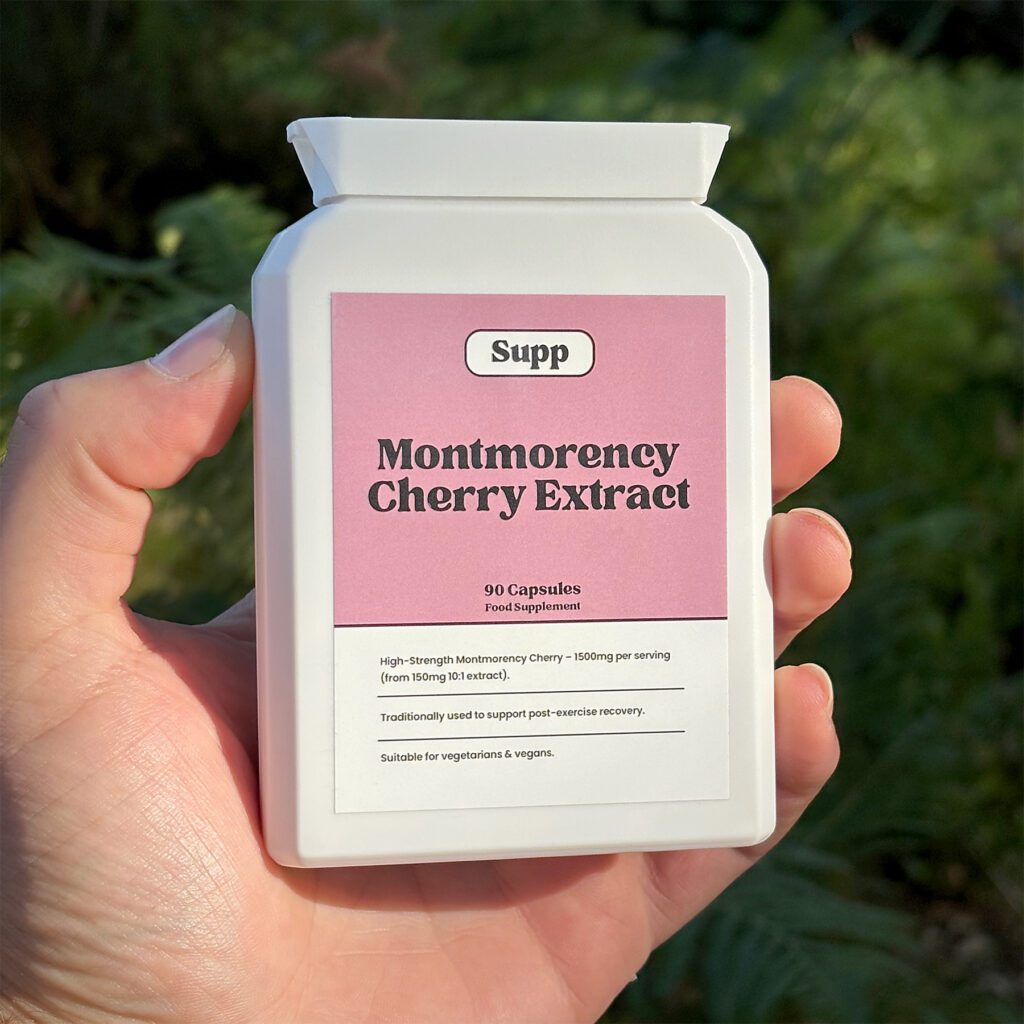
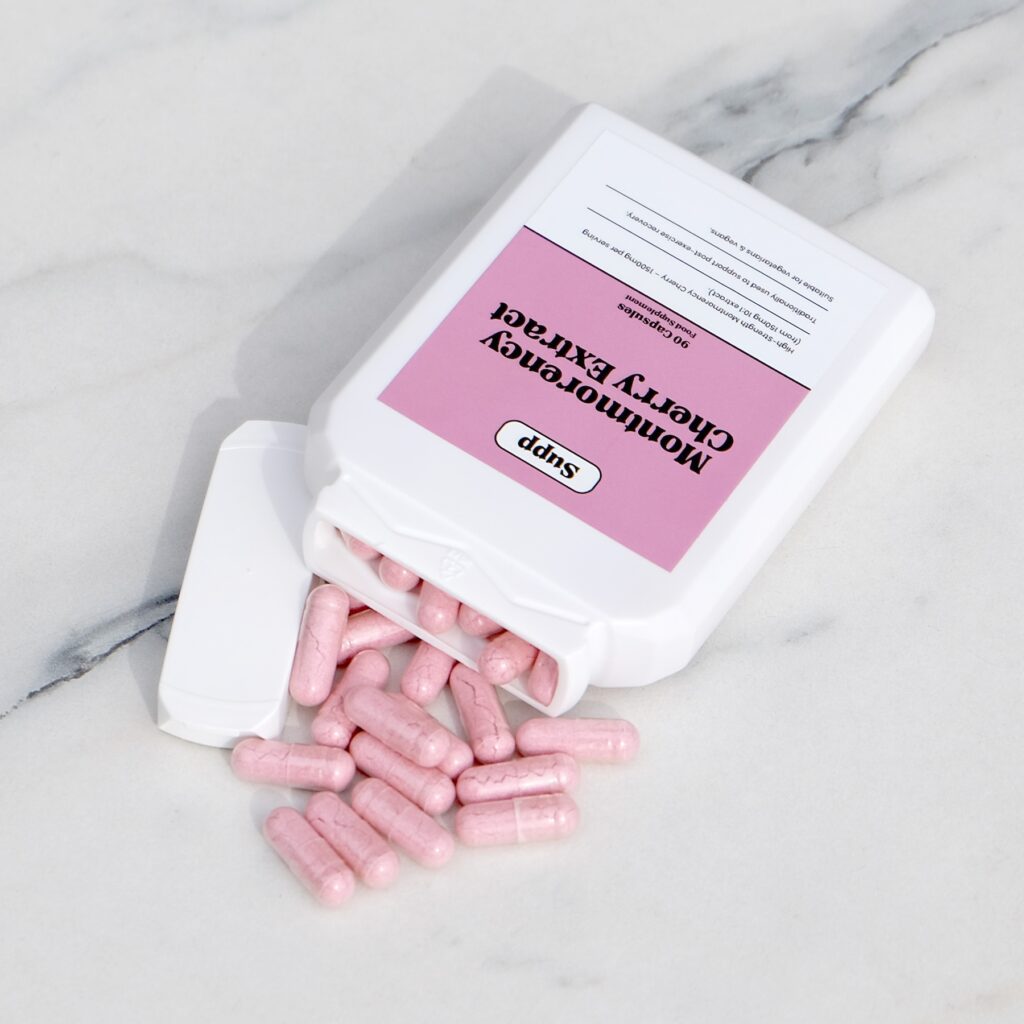
Supp Montmorency Cherry Extract Capsules provide 1,500 milligrams of a 10:1 extract per capsule – about the same anthocyanin load you would obtain from 15 grams of whole cherries – squarely within the ranges used in clinical trials. Take your capsule with food and water for best absorption.
Who should exercise caution?
Pregnant or breastfeeding women and children should consult a healthcare professional first, as robust safety data are still limited.
Anyone taking anticoagulants, antiplatelet drugs or blood‑pressure medication ought to discuss cherry supplements with their doctor, because the fruit’s quercetin content and its relatively high potassium level can influence drug action.
People with diabetes can still benefit, but capsules or well‑diluted juice are the wiser choice to keep free sugars in check.
Finally, because tart cherries may have a mild blood‑thinning effect, it’s sensible to stop supplementation about a week before any scheduled surgery.
Key Takeaways
What does Montmorency cherry do? In short, it helps you sleep, move and recover better.
- Montmorency cherry = tart cherry – the terms are interchangeable.
- Rich in anthocyanins, quercetin and natural melatonin, Montmorency cherries provide antioxidant, anti‑inflammatory and circadian benefits.
- Evidence supports roles in sleep quality, joint comfort (including gout), vascular health and exercise recovery.
- Juice, concentrate and capsule formats all work; select the one that fits your lifestyle and sugar tolerance.
- Follow science‑backed doses and the safety guidance above, and consult a healthcare professional if you have any pre‑existing conditions.
Ready to try it? Discover our high‑strength, UK‑made Montmorency Cherry Extract and experience the difference for yourself.
References & Further Reading
- Kim J et al. Effects of Short‑Term Intake of Montmorency Tart Cherry Juice on Melatonin and Sleep Quality in Elite Female Hockey Players. Int J Environ Res Public Health (2022).
- Sloan A et al. Montmorency Tart Cherry Powder Improves Subjective and Objective Sleep in Adults with Insomnia. Nutrients (2024).
- Chai SC et al. Tart Cherry Juice Lowers Blood Pressure and LDL in Older Adults. Food & Function (2018).
- Zhang Y et al. Cherry Consumption and Risk of Recurrent Gout Attacks. Arthritis Rheum (2012).
- Mohammad A et al. Cherries and Serum Uric Acid: A Systematic Review. Nutrients (2019).
- Connolly DA et al. Efficacy of a Tart Cherry Juice Blend in Reducing Muscle Pain During Running. J Int Soc Sports Nutr (2024).
- Hayes LD et al. Tart Cherry Extract Accelerates Recovery from EIMD in Females. Eur J Appl Physiol (2023).
- Bell PG et al. Review: Montmorency Cherries and Exercise Recovery. Sports Med‑Open (2024).
- Ferretti G et al. Antioxidant Properties of Sour Cherries. Molecules (2020).
- Kirakosyan A et al. Anthocyanin Variability in USDA Tart Cherry Collection. J Agric Food Chem (2020).
- Healthline. Tart Cherry Juice Benefits & Precautions. (2024).
(Article intended for informational purposes only and should not replace personalised medical guidance.)