




“B vitamins” are not one single vitamin. They’re a family of nutrients that your body uses every day for jobs like releasing energy from food, supporting the nervous system, and helping your body make healthy red blood cells. Because most B vitamins are water-soluble, you need a steady intake rather than relying on long-term storage.
You’ll often see them sold as a “B-complex”, but each B vitamin has its own role, food sources, and situations where it might be harder to get enough. We’ll take a look at what B vitamins are, with practical food examples and a clear view on when supplements can be helpful.
What Are B Vitamins?
Although the numbering runs up to B12, there are only 8 essential B vitamins. Numbers B4, B8, B10 and B11 were once used for compounds that were later found not to meet the definition of a vitamin, so they’re no longer classed as true B vitamins.
So when we talk about “B vitamins”, we’re usually referring to these 8:
- B1 – Thiamin
- B2 – Riboflavin
- B3 – Niacin
- B5 – Pantothenic acid
- B6 – Pyridoxine
- B7 – Biotin
- B9 – Folate/folic acid
- B12 – Cobalamin
These 8 water-soluble nutrients are the spark plugs of the human body. They don’t provide energy themselves, but they are the essential keys that unlock energy from the food you eat.
They work together like a team, but “taking more” is not automatically better. For most people, the goal is getting enough, consistently.
What Do B Vitamins Do In The Body?
They all have slightly different roles in the body, collectively helping the following processes:
1) Energy release and metabolism
Many B vitamins help your body convert carbohydrates, fats, and protein into usable energy. This is why B vitamins are often linked with “energy”. It’s less about feeling instantly energised, and more about supporting the processes that keep your body running smoothly. Many B vitamins are scientifically proven to help reduce tiredness and fatigue.
2) Nervous system and brain function
Several B vitamins (especially B1, B6 and B12) support normal nervous system function. This enables your brain and nerves to send signals efficiently, helping with things like sensation, coordination, reflexes, and day-to-day mental performance.
When those pathways aren’t working as smoothly, people can notice symptoms like pins and needles, numbness, weakness, poor balance, brain fog, low mood, or changes in memory and concentration. The tricky part is these symptoms can also be caused by lots of other factors, which is why it’s always worth checking properly with a pharmacist or GP if you’re concerned.
3) Blood health and oxygen delivery
B12 and folate (B9) help your body make red blood cells, which you need to constantly replace because they only live for around 120 days before your body breaks them down and makes new ones. If you’re low in B9 or B12, you can develop deficiency anaemia, with symptoms such as extreme tiredness, lack of energy and pins and needles.
4) Skin, hair and tissue maintenance
Some B vitamins support the everyday renewal of skin and other tissues, and biotin (B7) is the one most commonly linked with hair and nails. But biotin doesn’t work in isolation: nutrients like zinc, vitamin C, vitamin D, vitamin E, and iodine also play supporting roles in maintaining healthy skin and normal tissue function, which is why overall nutrition matters.
Why Your Body Needs B Vitamins Every Day
Most B vitamins are water-soluble, which means your body uses what it needs and generally clears the rest through urine, rather than storing large amounts for later. That’s why intake matters day to day, not just occasionally. A varied diet usually covers the basics, but if your intake is inconsistent (or your needs are higher), it can be easy to fall short. This is where topping up with supplements may be necessary.
What Each B Vitamin Does In The Body
B vitamins often get lumped together, but each one has its own job. Here’s a brief look what each B vitamin does in the body:
- B1 (Thiamin): helps release energy from food and supports normal nerve function.
- B2 (Riboflavin): supports energy release and helps protect cells from oxidative stress.
- B3 (Niacin): supports energy metabolism and nervous system function.
- B5 (Pantothenic acid): supports energy-yielding metabolism and helps your body make and use certain hormones and neurotransmitters.
- B6: involved in protein metabolism and supports nervous system function.
- B7 (Biotin): involved in metabolism of fats, carbs and proteins, and contributes to maintenance of normal hair and skin.
- B9 (Folate / folic acid): essential for normal cell division and blood formation.
- B12: supports normal red blood cell formation and nervous system function.
For a full detailed breakdown of each B vitamin, check out our Ingredients Library.
What “Forms” Your Body Likes and Why
You’ll often see questions like “What form of B vitamins is best?” The truth is: it depends on the vitamin and the person. But there are two common areas worth understanding.
Folate vs folic acid
- Folate is the natural form found in foods (like leafy greens and beans).
- Folic acid is a stable form used in supplements and in some fortified foods.
They both relate to vitamin B9, but they’re not identical. For most people, this is simply a “food vs supplement format” detail rather than something to obsess over.
Vitamin B12 Formats
You may see different supplemental forms of B12 on labels. Common forms include cyanocobalamin and methylcobalamin. Most people do well with either; what matters more is dose, consistency, and whether you’re actually at risk of low intake.
Rather than focusing on “which is best”, a more practical approach is:
- Choose a reputable product.
- Take it consistently if you need it.
- Make sure it fits your diet (B12 is a big one for plant-based diets).
Vitamin B3 (Niacin) formats
You may see nicotinic acid or nicotinamide (niacinamide) on labels. Both count as vitamin B3, but nicotinic acid can cause flushing (a temporary warm, red, tingling feeling in the face) at higher doses, while niacinamide is typically better tolerated.
Food Sources of B Vitamins
A balanced, varied diet is always the best place to start, because it delivers B vitamins alongside the protein, healthy fats, minerals, and fibre that help your body use nutrients properly. Here are some of the most common food sources of the essential B vitamins:
- B1: wholegrains, beans, pork
- B2: milk, yoghurt, eggs, fortified cereals
- B3: chicken, turkey, fish, peanuts
- B5: mushrooms, avocado, chicken (widely found across foods)
- B6: poultry, fish, potatoes, chickpeas
- Biotin (B7): eggs, nuts, seeds
- Folate (B9): leafy greens, beans, lentils, citrus
- B12: meat, fish, dairy, eggs; also fortified foods for plant-based diets

When Might Supplementing B Vitamins Be Necessary?
Even with the best intentions, life happens. Here are a few common reasons a high-quality supplement can be a helpful addition to your routine:
- Dietary Choices: If you’re vegan or mostly plant-based, vitamin B12 is the key one to think about. It’s naturally found in animal products, so it can be harder to get enough without fortified foods or a supplement.
- Low Dietary Variety: If your diet is restricted, inconsistent, or you’re often skipping meals, it becomes easier to fall short on a range of B vitamins over time.
- Absorption and Gut Health: Some health conditions and medications can affect how well nutrients are absorbed. If you suspect this might apply to you, it’s best to speak with a pharmacist or GP and consider testing rather than guessing.
- Busy Lifestyles: High stress, poor sleep, and physical activity can make nutrition harder to stay on top of as well as increase the body’s demand for B vitamins to support the nervous system and energy metabolism.
- Ageing: As we get older, B12 absorption can become less efficient for some people.
- Pregnancy Planning: Folate (or folic acid) is especially important when trying to conceive and during early pregnancy. For personalised advice, please speak with your midwife, pharmacist, or GP.
Supp Tip: symptoms like tiredness, low mood, and brain fog can have lots of causes, so if something feels off, it’s always best to check properly with a GP or pharmacist. A quick conversation can help rule out obvious causes and decide whether testing is appropriate.
When Supplements Can Help You
Supplements can be helpful if you’re plant-based, often skipping meals, eating a limited range of foods, or you simply want a dependable way to cover the basics when life gets busy.
Biotin & Beauty
Biotin (vitamin B7) is often the headline ingredient in “hair, skin and nails” products. That’s not marketing, it’s science. Biotin contributes to the maintenance of normal hair and skin, and it plays a role in how your body processes fats, carbohydrates and protein.
For a full breakdown of Biotin and it’s benefits, check out our article – Best Vitamins for Hair, Skin and Nails: Is Biotin Enough?
The key thing is context. If someone is genuinely low in biotin (or has factors affecting hair and nail health), supplementing can help. If someone already gets enough, the results are usually subtler, and hair changes still depend on the bigger picture (diet quality, iron status, thyroid health, stress, styling, and genetics).
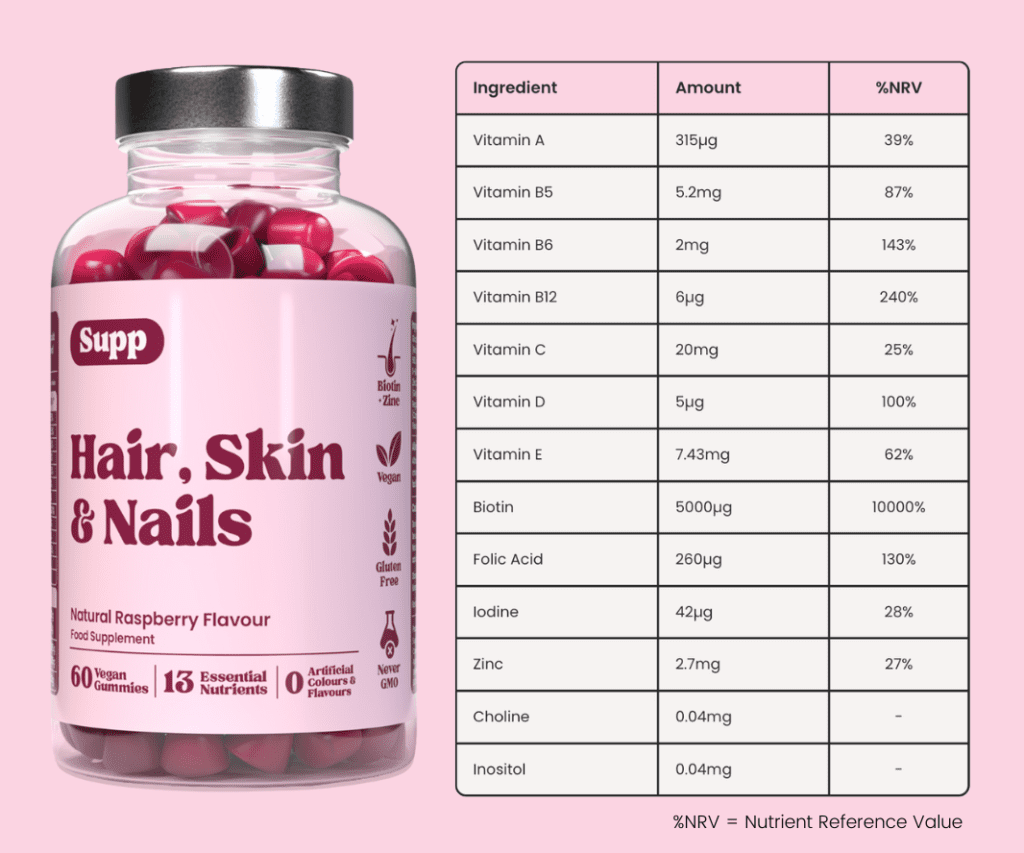
Hair, Skin & Nails Gummies – Beauty-led Support
Hair, skin and nails are made from proteins and constantly renewed tissues, which rely on a wider nutrient “support team” than just biotin. That’s why many people prefer a formula that pairs biotin with other vitamins and minerals that support normal skin and tissue maintenance, rather than betting everything on one ingredient.
Our Hair, Skin & Nails Gummies are designed with that in mind. They focus on the B vitamins most commonly associated with beauty routines, including:
- Biotin (B7): 5,000 µg (10,000% NRV)
- Vitamin B5: 5.2 mg (87% NRV)
- Vitamin B6: 2 mg (143% NRV)
- Folic Acid (B9): 260 µg (130% NRV)
- Vitamin B12: 6 µg (240% NRV)
- Alongside the B vitamins, the formula also includes supportive nutrients many people overlook, such as zinc, vitamins C, D and E, and iodine, which all play roles in normal skin and wider tissue function.
It’s a targeted beauty option that still supports the broader B-vitamin pathways involved in metabolism and everyday maintenance.
Vegans and vegetarians: the B vitamin to watch
If you eat little or no animal produce, vitamin B12 is the main B vitamin that needs extra attention. It’s naturally found in animal foods, so plant-based diets usually rely on fortified foods and/or supplementation to consistently meet intake. It doesn’t mean a vegan diet is “missing” nutrients by default, but it does mean you need a deliberate plan for B12, and often for a few other micronutrients too.
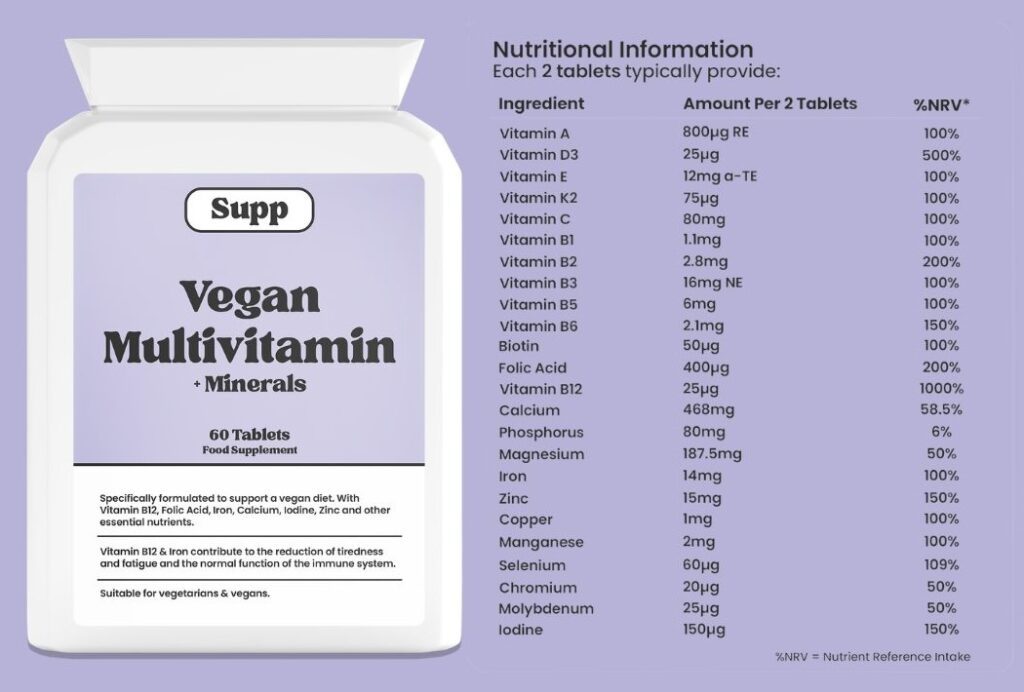
Vegan Multivitamin – Broad Daily Coverage
If you’d rather cover the full B vitamin family in one simple daily option, our Vegan Multivitamin includes all 8 essential B vitamins:
- B1: 1.1 mg (100% NRV)
- B2: 2.8 mg (200% NRV)
- B3: 16 mg NE (100% NRV)
- B5: 6 mg (100% NRV)
- B6: 2.1 mg (150% NRV)
- Biotin (B7): 50 µg (100% NRV)
- Folic Acid (B9): 400 µg (200% NRV)
- B12: 25 µg (1000% NRV)
*%NRV per 2 tablets (daily serving)
It’s designed as a wider nutritional back-up, particularly useful if you’re plant-based and want dependable B12 support, alongside other essentials that can be harder to consistently hit from food alone, including iron, iodine, zinc, selenium, and vitamin D3.
One tablet, 24 vitamins and minerals in total, making it a simple all-in-one option for broader daily nutritional cover.
FAQs
What are B vitamins used for?
B vitamins support day-to-day processes like energy release from food, nervous system function, and red blood cell formation (especially B12 and folate). They don’t “give” you energy like caffeine, but they help the body access and use the energy in the food you eat.
What are the symptoms of low B12 or folate?
Symptoms can vary and overlap with lots of other issues, but may include tiredness, low energy, pins and needles, a sore tongue, and sometimes memory or concentration changes. If you’re concerned, it’s best to speak to a pharmacist or GP and consider testing rather than guessing.
Do vegans need a B12 supplement?
Many vegans choose a supplement (or rely on fortified foods) because B12 is naturally found in animal products. If you’re plant-based and unsure, it’s worth discussing a plan with a pharmacist or GP, especially if you’ve had symptoms or your diet is inconsistent.
Are B vitamins water-soluble?
Yes, most B vitamins are water-soluble, meaning your body generally uses what it needs and clears the rest, rather than storing large amounts for later. That’s why consistent intake through food (and supplements when appropriate) matters.
Should I take B vitamins in the morning or at night?
B vitamins are usually best taken in the morning, ideally with breakfast, as taking them with food can help prevent stomach upset.
How long does it take to notice a difference from B vitamins?
If you were genuinely low in a specific B vitamin, you might notice changes in energy or focus within a few days to a couple of weeks, but it can take 4–8 weeks for levels (and symptoms like fatigue) to properly improve. If you weren’t low to begin with, the difference is often more subtle.
Can B vitamins cause bright yellow urine?
Yes. B vitamins (especially riboflavin, B2) can make your urine look bright yellow shortly after taking them. It’s harmless and simply means your body is excreting excess.
Which foods are highest in B vitamins?
It depends on the vitamin. For example:
- B1: wholegrains, beans
- B6: chickpeas, potatoes, fish
- Folate: leafy greens, lentils
- B12: meat, fish, dairy and eggs (or fortified foods for plant-based diets)
Quick recap
- B vitamins are a family of 8 essential, mostly water-soluble nutrients your body uses every day.
- They support energy metabolism, nervous system function, and healthy red blood cell production (especially B12 and folate).
- A varied diet is the best foundation, but supplements can help if your diet is restricted, inconsistent, or plant-based (where B12 needs special attention).
- For beauty routines, biotin can be useful, but it works alongside other vitamins and minerals, not as a single “magic” ingredient.
Disclaimer:
This article is for general information only and isn’t a substitute for medical advice. If you have ongoing symptoms, a medical condition, are pregnant or breastfeeding, or you take any medications, speak with a pharmacist or GP before starting new supplements.
0 Comments