

Saw Palmetto one of the most researched plant extracts in men’s health, with decades of studies behind it and a clear biological rationale for how it works. That’s exactly the kind of ingredient we build products around at Supp.
So what does saw palmetto actually do? We’ll break down the research in this guide.
What Is Saw Palmetto?
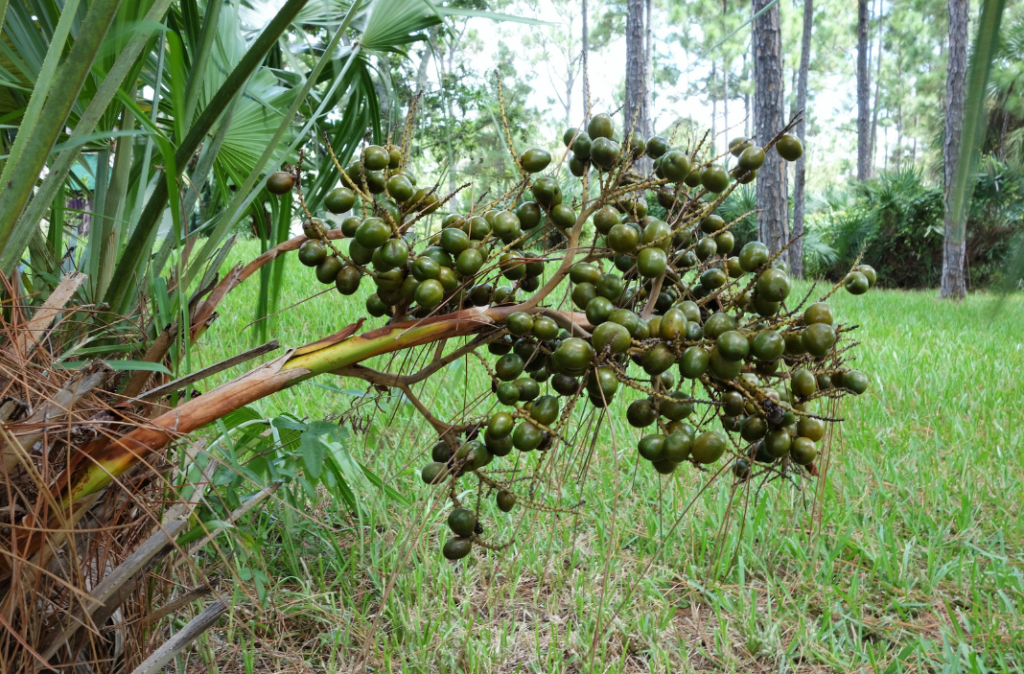
Saw palmetto (Serenoa repens) is a small palm plant native to the southeastern United States. It produces dark berries that have been used medicinally for centuries, originally by Indigenous communities for urinary and reproductive health.
Today, it’s one of the most widely taken herbal supplements for men’s health in Europe and North America. Its extract is typically standardised to contain a specific concentration of fatty acids and phytosterols, which are the compounds thought to be responsible for its effects.
The extract works primarily by influencing an enzyme in the body called 5-alpha-reductase. This enzyme converts testosterone into a more potent form called dihydrotestosterone, or DHT. Elevated DHT is linked to a number of common concerns in men, including prostate enlargement and certain types of hair thinning. Saw palmetto is thought to help moderate this conversion [1].
Saw Palmetto and Prostate Health
The most well-established area of research for saw palmetto is prostate health, specifically in the context of benign prostatic hyperplasia (BPH), which is a non-cancerous enlargement of the prostate gland. In plain terms, it’s when the prostate gradually grows larger over time, which becomes increasingly common as men age.
By their 50s, more than half of men are affected to some degree, and by their 80s, that figure rises to around 90% [2]. Symptoms can include a frequent or urgent need to urinate, weak flow, or the feeling of not fully emptying the bladder.
In one widely cited piece of research examining multiple trials, saw palmetto was associated with improvements in urinary symptom scores and flow compared to placebo [3].
More recent research has been more mixed, and it’s worth being honest about that. Some larger trials haven’t found significant differences over placebo. However, studies using higher-quality, standardised extracts tend to show more consistent results, which is why extraction method and standardisation really matters when choosing a supplement [4].
It won’t treat or cure any medical condition. But for men looking for a science-backed natural option to support their prostate health as part of a wider healthy lifestyle, the evidence base is credible.
If you have concerns about your prostate, always speak to your GP.
Saw Palmetto and DHT
To understand why saw palmetto keeps appearing in conversations about both prostate health and hair loss, you need to understand DHT.
DHT is a hormone derived from testosterone. It’s produced when the enzyme 5-alpha-reductase acts on testosterone in various tissues, including the scalp and the prostate.
In the prostate, excess DHT can contribute to tissue growth over time. On the scalp, DHT binds to receptors in hair follicles, which can contribute to a process called follicle miniaturisation, where follicles gradually shrink and produce finer, shorter hairs. This is the underlying mechanism in the most common form of male pattern hair thinning.
Saw palmetto’s primary mechanism of action is thought to be the inhibition of 5-alpha-reductase. By moderating DHT production, it can support healthier hormonal balance in both tissues [1].
This is the same pathway targeted by some pharmaceutical treatments for BPH and hair loss, but saw palmetto is a much gentler option and works through a natural, plant-derived route.
Saw Palmetto and Hair Health
Interest in saw palmetto as a natural option for hair health has grown significantly over the last decade.
In one study looking at men taking saw palmetto extract, researchers observed a meaningful improvement in hair count and density over 24 weeks compared to those taking a placebo [5]. Another piece of research reviewing multiple studies on the same topic concluded that saw palmetto showed promising results for improving hair density and slowing hair loss progression in men [6].
These aren’t dramatic, overnight transformations. But for a plant-derived supplement with a well-understood mechanism and a strong safety profile, the results are genuinely encouraging.
Hair health is also something that requires consistency over time. Most researchers suggest at least three to six months of regular use before drawing any conclusions.
Saw Palmetto and Hormonal Balance
Beyond DHT, some research suggests saw palmetto can also influence testosterone levels more broadly by reducing its conversion to DHT and thereby preserving circulating testosterone.
In one study, men taking saw palmetto showed a modest increase in free testosterone levels compared to baseline [1]. This is an area that needs more research, but it points to a potentially interesting role for saw palmetto in supporting overall hormonal balance in men.
It’s not a testosterone booster in the conventional, overhyped sense. But supporting healthy hormone metabolism is a legitimate and meaningful goal, particularly for men over 40 where natural hormonal shifts become more pronounced.
Is Saw Palmetto Safe?
Saw palmetto has a well-established safety record and is generally well-tolerated.
The most commonly reported side effects in studies are mild and tend to be digestive in nature, such as nausea or stomach discomfort, which can often be reduced by taking it with food. Serious adverse effects are rare [3].
It’s always worth checking with your GP before starting any new supplement, particularly if you’re taking medication or managing an existing health condition.
How to Take Saw Palmetto
Most studies have used doses of between 160mg and 320mg of standardised saw palmetto extract per day, typically split across two doses or taken as a single daily dose.
Consistency matters. Because saw palmetto works gradually and through hormonal mechanisms, it’s not a supplement you’ll feel on day one. Most of the research looking at meaningful outcomes runs over 12 to 24 weeks, so sticking with it over the long term is key.
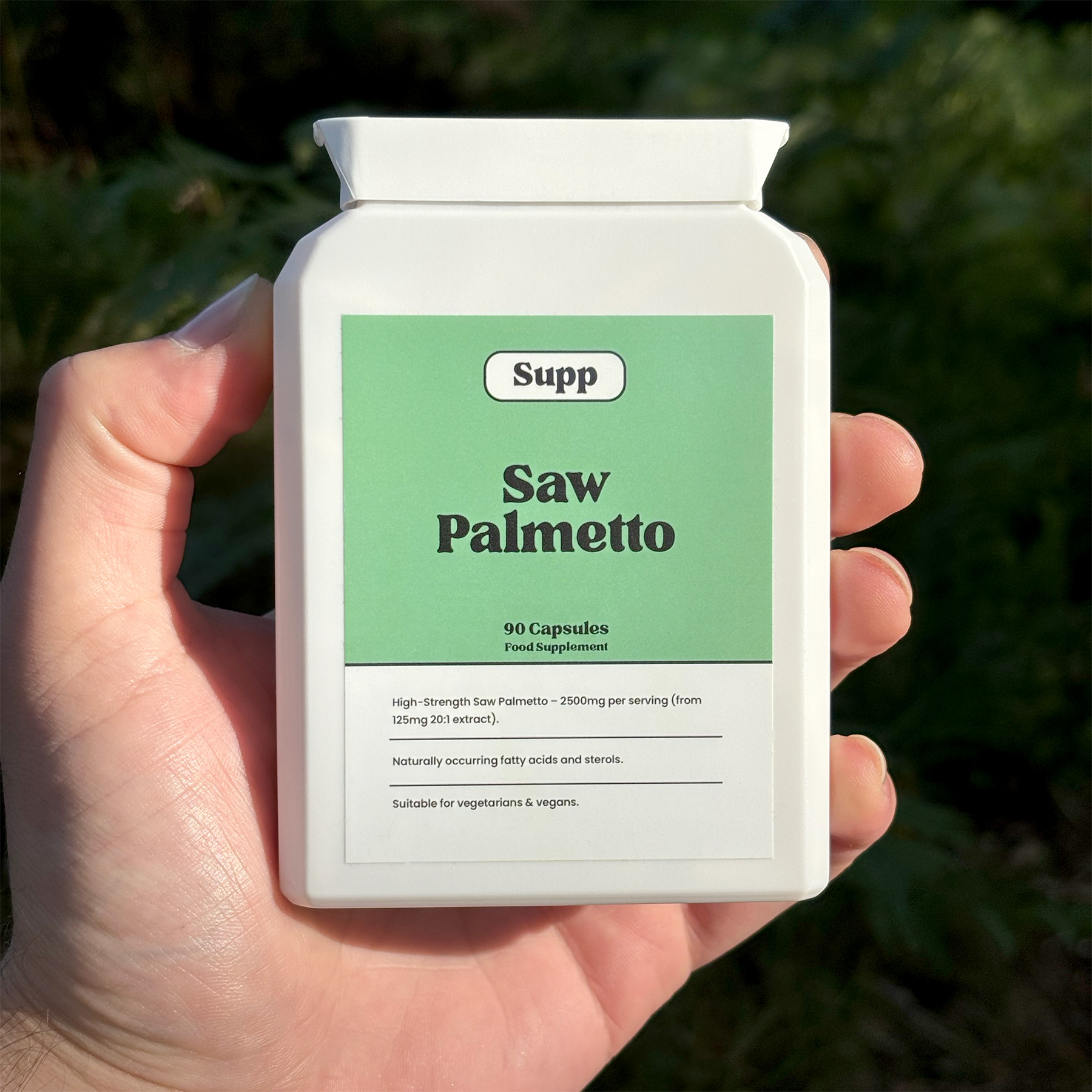
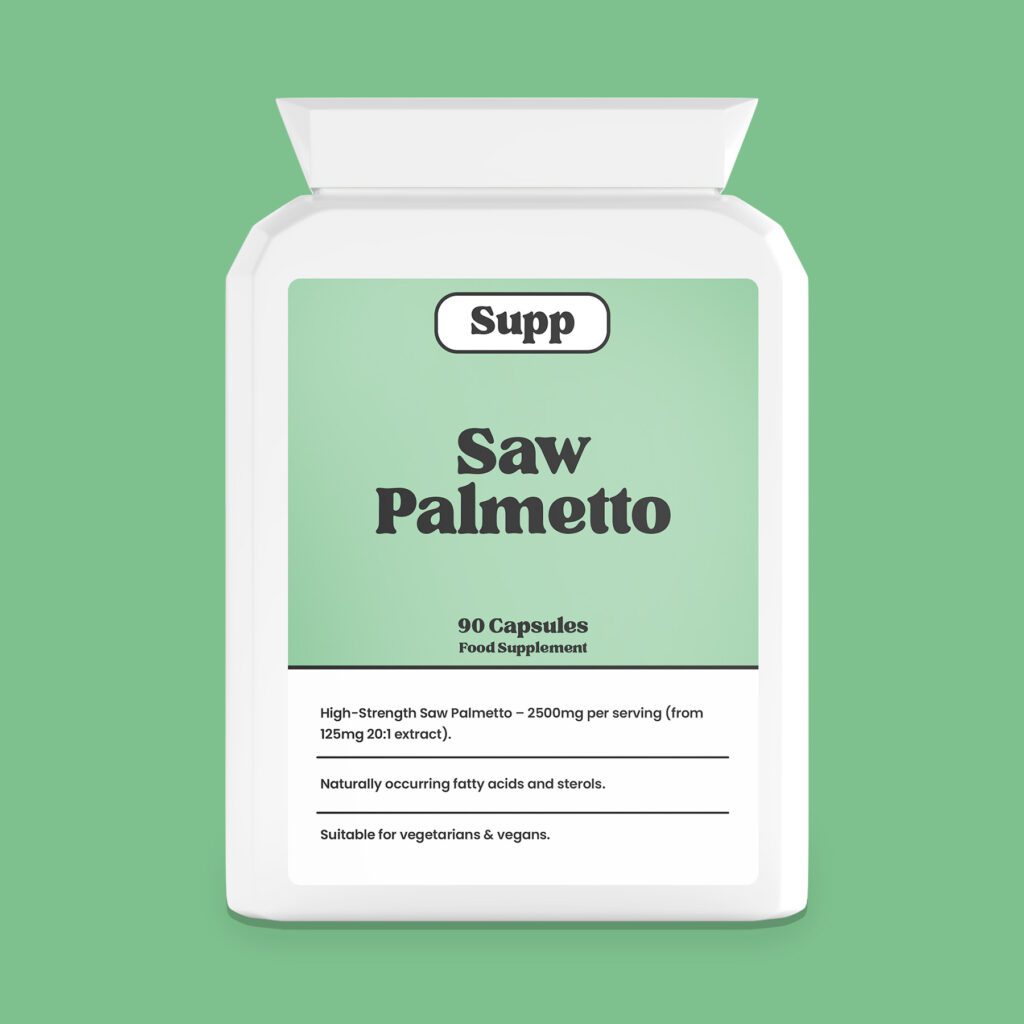
Our Saw Palmetto capsules deliver 2500mg of extract from a concentrated 20:1 source, providing 56.25mg of naturally occurring fatty acids per capsule. The studies referenced above typically used standardised extracts in the 160mg to 320mg range, and our formula sits nicely within that bracket.
One capsule a day with food, and each bottle is a full 90-day supply. No hidden blends, no unnecessary fillers. Just the ingredient, at a dose that reflects the research.
Why Saw Palmetto?
If you’re a man in your 30s, 40s, or beyond thinking about your long-term health, saw palmetto is one of the more credible natural tools available.
It’s not a magic fix. Nothing worth taking is. But if you’re looking for natural support for prostate comfort, a plant-derived approach to hormonal health, or an evidence-backed option for hair thinning, then saw palmetto has a legitimate, well-researched case for being part of your routine.
You might also find our article comparing Saw Palmetto vs Pumpkin Seed Oil useful if you’re weighing up options for prostate and hormonal support.
References
- Marks LS, Hess DL, Dorey FJ, et al. 2001. Tissue effects of saw palmetto and finasteride: use of biopsy cores for in situ quantification of prostatic androgens. Urology. https://pubmed.ncbi.nlm.nih.gov/11337315/
- Verhamme KM, Dieleman JP, Bleumink GS, et al. 2002. Incidence and prevalence of lower urinary tract symptoms suggestive of benign prostatic hyperplasia in primary care. European Urology. https://pubmed.ncbi.nlm.nih.gov/12361895/
- Wilt T, Ishani A, Mac Donald R. 2002. Serenoa repens for benign prostatic hyperplasia. Cochrane Database of Systematic Reviews. https://pubmed.ncbi.nlm.nih.gov/12137626/
- Barry MJ, Meleth S, Lee JY, et al. 2011. Effect of increasing doses of saw palmetto extract on lower urinary tract symptoms. JAMA. https://pubmed.ncbi.nlm.nih.gov/21954478/
- Rossi A, Mari E, Scarno M, et al. 2012. Comparative effectiveness of finasteride vs Serenoa repens in male androgenetic alopecia. A two-year study. International Journal of Immunopathology and Pharmacology. https://pubmed.ncbi.nlm.nih.gov/23298508/
- Evron E, Juhasz M, Babadjouni A, Mesinkovska NA. 2020. Natural hair supplement: friend or foe? Saw palmetto, a systematic review in alopecia. Skin Appendage Disorders. https://pubmed.ncbi.nlm.nih.gov/33313047/
0 Comments