



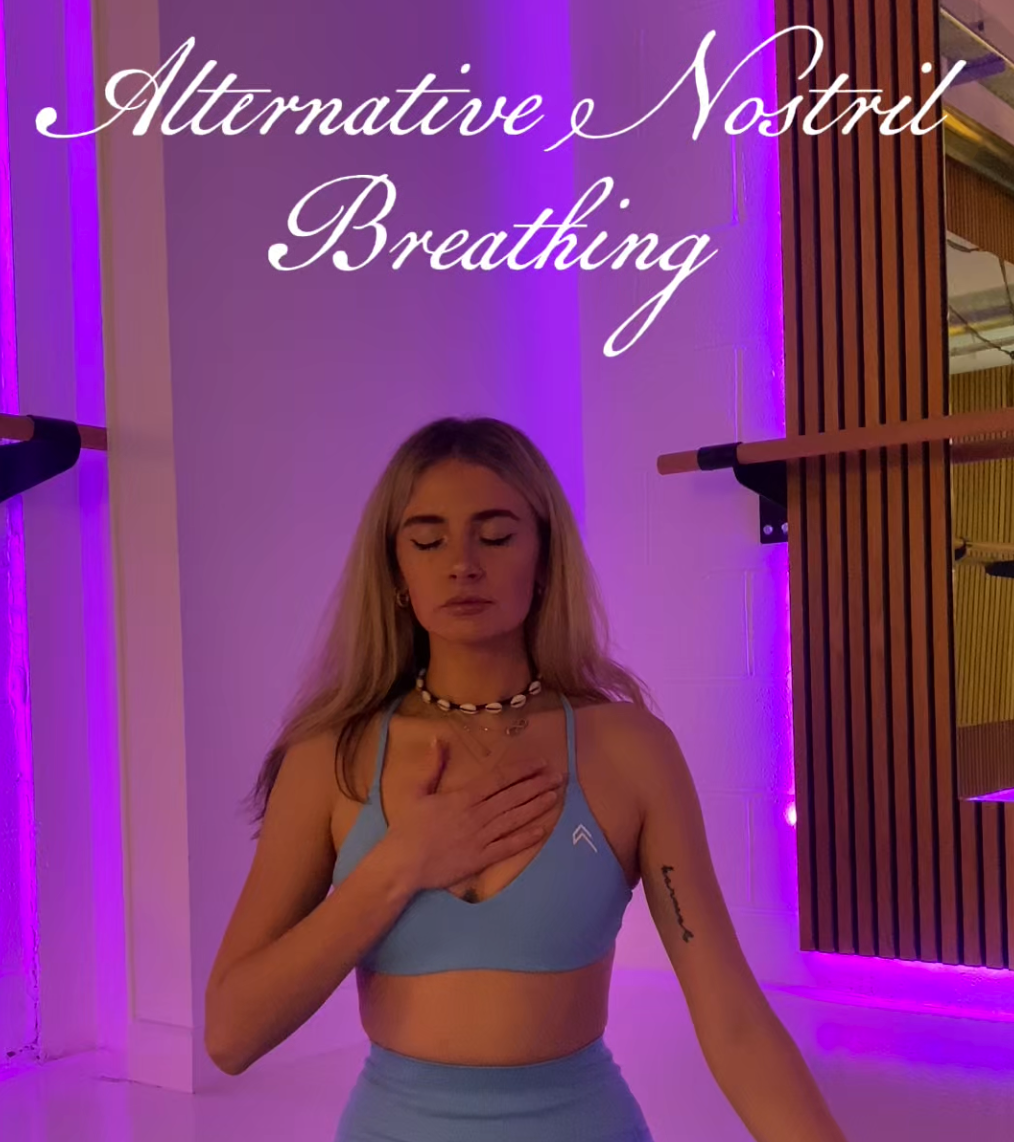
Alternative nostril breathing, also known as Nadi Shodhana, is a gentle breathing technique where you inhale and exhale through one nostril at a time, using your fingers to alternate the flow of breath.
In yoga, this practice is believed to balance the left and right sides of the nervous system, helping to steady both mental and emotional energy. Many people find it especially helpful during times of stress, anxiety, mental fatigue, or before meditation.
Benefits of Alternative Nostril Breathing
Regular practice may help to:
- Calm the nervous system
- Reduce stress and anxiety
- Improve focus and mental clarity
- Support emotional balance
- Prepare the body and mind for meditation or rest
Even one or two minutes can create a subtle but powerful shift.
How To Practice Alternative Nostril Breathing
1) Find a quiet space
Choose a calm, comfortable place where you won’t be disturbed. Sit upright, either on a chair or on the floor, with your spine tall and shoulders relaxed.
Take a moment to settle before you begin.
2) Position your hand
Bring your right hand towards your face.
Use your thumb to close your right nostril and your ring finger to close your left nostril. Your index and middle fingers can rest lightly on your forehead or fold towards your palm.
3) Begin the breath
- Gently close your right nostril with your thumb
- Inhale slowly through the left nostril
- Close the left nostril
- Exhale through the right nostril
4) Switch sides
- Inhale through the right nostril
- Close the right nostril
- Exhale through the left nostril
This completes 1 round.
5) Continue for 10 rounds
Continue alternating sides for 10 rounds, moving slowly and smoothly. There is no need to force the breath – let it remain soft, steady, and natural.
Tips for a Safe and Effective Practice
- Breathe through the nose only
- Keep your breath relaxed rather than deep or strained
- If you feel lightheaded, return to normal breathing
- Practice on an empty or light stomach if possible
- Consistency matters more than length – a short daily practice is often more effective than occasional longer sessions.
When to Practice
Alternative nostril breathing is particularly beneficial:
- At the start or end of the day
- Before meditation or yoga practice
- During moments of stress or overwhelm
- When transitioning between busy activities
It’s a wonderful way to pause, reset, and reconnect with yourself.
Alternative nostril breathing is a beautifully simple yet deeply grounding practice. With just a few minutes of intentional breath, you can create space, clarity, and calm – no equipment or experience required.
Return to this practice whenever you need to rebalance and come back to centre.
0 Comments