

Core work in yoga isn’t about forcing strength or pushing harder. It’s about building a relationship with your centre – learning how the core supports movement, stability, and ease throughout the body.
This core connection flow moves gradually from spinal mobility into deep, functional core engagement, before opening the front body to finish. Below, you’ll find a breakdown of each pose, including how to enter, what to focus on, and common mistakes to avoid.
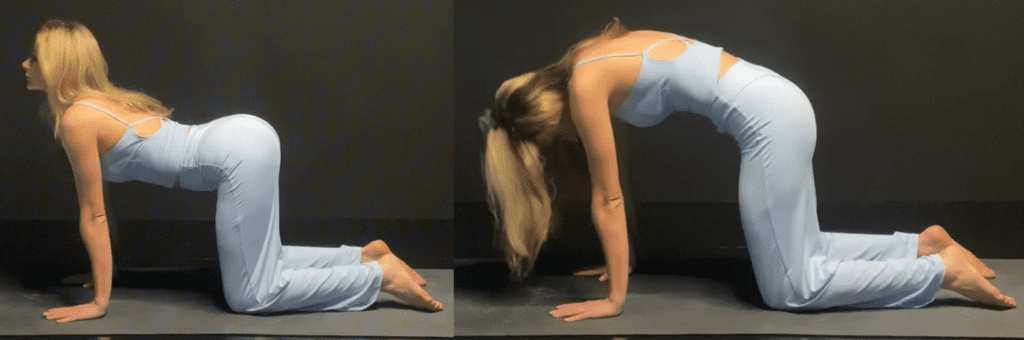
Cat / Cow (Spinal Flexion & Extension)
Purpose:
To mobilise the spine, connect breath to movement, and gently awaken the deep core.
How to practice:
- Begin on all fours, shoulders stacked over wrists and hips over knees.
- Inhale into Cow Pose:
- Drop the belly
- Lift the chest and tailbone
- Gaze slightly forward or up
- Exhale into Cat Pose:
- Round through the spine
- Draw the navel gently in and up
- Tuck the chin toward the chest
- Move slowly, letting the breath guide the rhythm.
Key focus:
- Initiate movement from the pelvis, not just the shoulders or neck.
- Feel the abdominal wall respond naturally – soft on the inhale, supportive on the exhale.
Common mistakes:
- Moving too quickly
- Collapsing into the lower back in cow
- Over-gripping the belly in cat
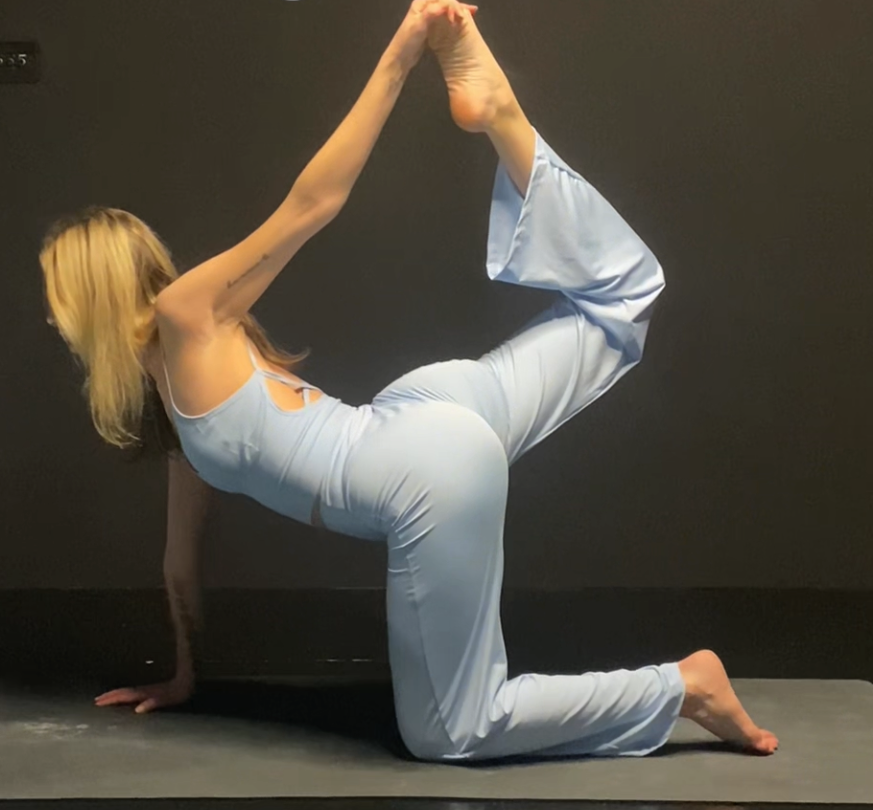
Tiger Pose (Core Stability & Balance)
Purpose:
To build cross-body strength and stability while maintaining spinal neutrality.
How to practice:
- From tabletop, extend your right leg straight back.
- Option to extend the left arm forward.
- Keep hips level and spine long.
- Gaze down to keep the neck neutral.
- Hold for several breaths, then switch sides.
Key focus:
- Draw the lower belly gently in toward the spine.
- Imagine length through fingertips and toes, rather than lifting high.
- Press the standing hand and knee firmly into the mat.
Common mistakes:
- Letting the lower back arch
- Opening the hips
- Holding the breath
Wide-Leg Boat Pose (Functional Core Strength)
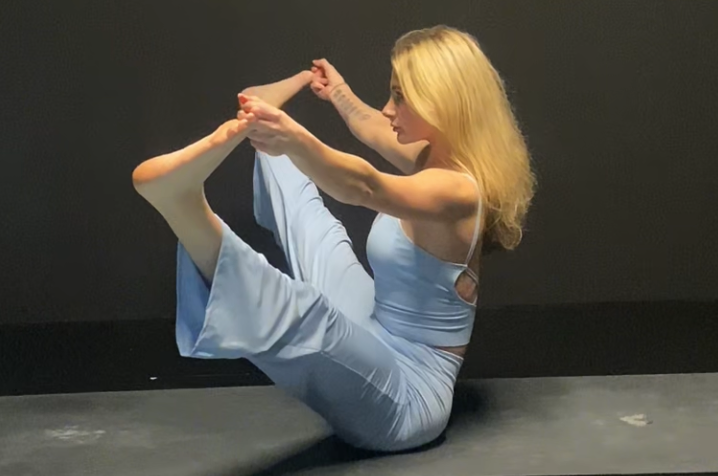
Purpose:
To strengthen the deep core while encouraging openness and stability in the hips.
How to practice:
- Sit tall with legs extended.
- Bend knees and lift feet off the mat.
- Open the legs wide, toes lightly pointed or flexed.
- Hold behind the thighs or extend arms forward.
- Lift the chest and lengthen through the spine.
Key focus:
- Balance on the sit bones, not the tailbone.
- Keep the heart lifted even as the core works.
- Use the breath to stay steady.
Common mistakes:
- Collapsing through the chest
- Rounding the lower back
- Locking the jaw or shoulders
High Boat to Low Boat (Controlled Core Engagement)
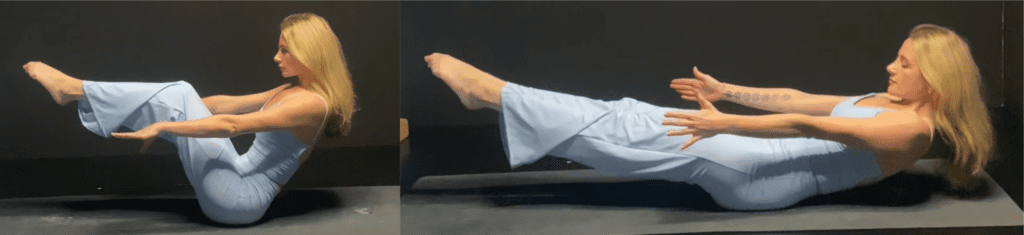
Purpose:
To build strength with control and awareness rather than momentum.
How to practice:
- From boat pose, straighten the legs if accessible (High Boat).
- On an exhale, lower the legs and upper body slightly (Low Boat), keeping the chest open.
- Inhale to return to high boat.
- Repeat slowly for several rounds.
Key focus:
- Move only as far as you can maintain connection and ease.
- Keep the collarbones broad and the neck relaxed.
- Let the breath pace the movement.
Common mistakes:
- Dropping too low too fast
- Straining the neck
- Holding the breath
Bound Boat Pose (Integration & Challenge)
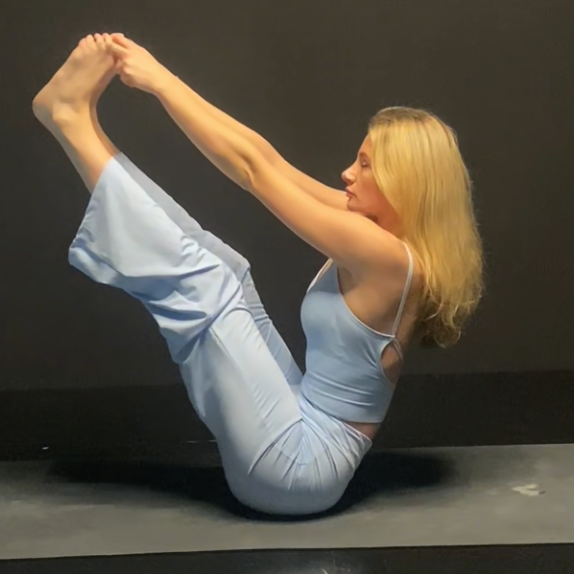
Purpose:
To integrate strength, flexibility, and focus.
How to practice:
- From boat pose, bend the knees and bring the feet closer.
- Reach for the outer edges of the feet or ankles.
- Press feet gently into hands and lift the chest.
- Stay for a few steady breaths.
Key focus:
- Balance effort with softness.
- Keep the spine long rather than pulling yourself forward.
- Maintain a calm, steady breath.
Common mistakes:
- Forcing the bind
- Rounding the spine
- Tensing the face
Plank Pose (Total Body Integration)
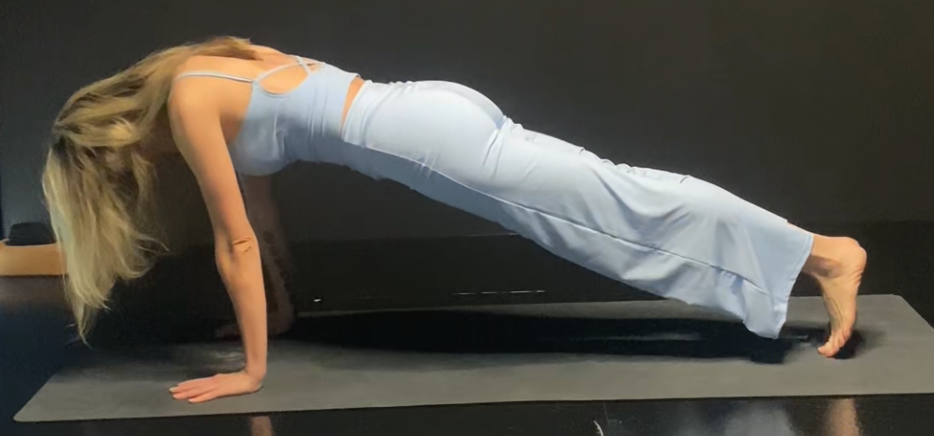
Purpose:
To connect core strength with shoulder stability and leg engagement.
How to practice:
- Step back into plank from all fours.
- Stack shoulders over wrists.
- Press the floor away with the hands.
- Engage thighs and gently draw the belly in.
Key focus:
- Create one long line from heels to crown.
- Keep the neck in line with the spine.
- Feel the support coming from the whole body, not just the arms.
Common mistakes:
- Dropping the hips
- Lifting the hips too high
- Collapsing into the shoulders
Upward-Facing Dog (Heart Opening & Release)
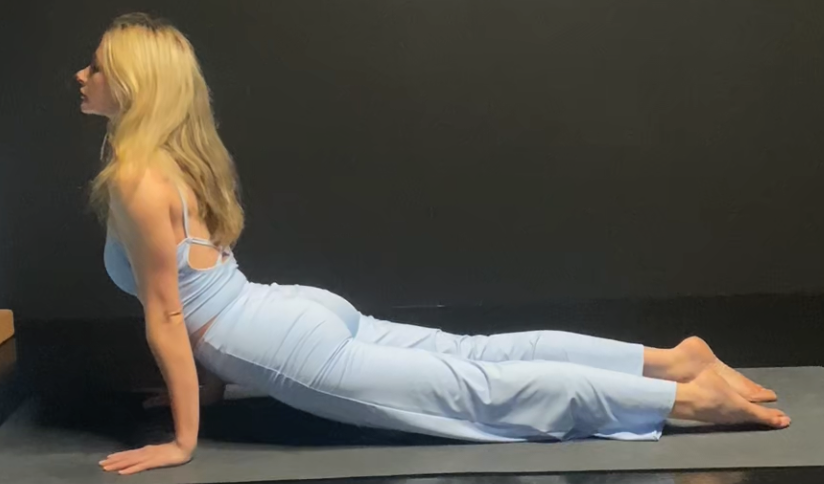
Purpose:
To counterbalance core work with a strong yet spacious backbend.
How to practice:
- From plank, lower through chaturanga or knees-chest-chin.
- Press into the hands to lift the chest.
- Straighten the arms.
- Let the thighs lift off the mat if accessible.
- Broaden across the collarbones and gaze forward or slightly up.
Key focus:
- Length through the front of the body, not compression in the lower back.
- Engage the legs and glutes lightly for support.
- Keep the shoulders drawing back and down.
Common mistakes:
- Dumping weight into the lower back
- Shrugging the shoulders
- Locking the elbows
Core as Connection
This flow isn’t about achieving the “strongest” version of each pose – it’s about moving with awareness, cultivating support from the inside out, and finishing feeling energised rather than depleted.
Return to this sequence whenever you want to feel steady, centred, and open-hearted
Watch the full Core Connection Flow with Hanna here:
0 Comments