
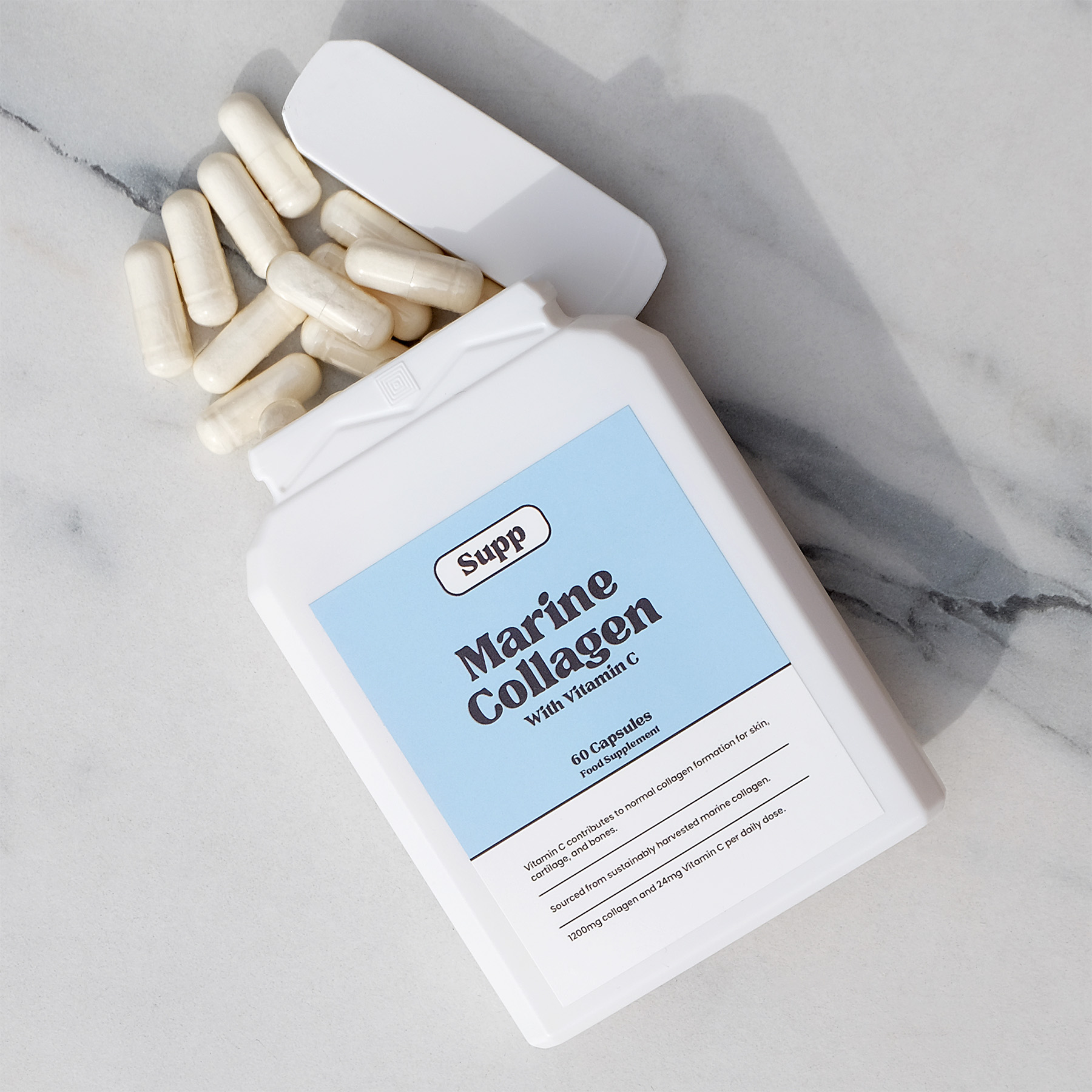



Collagen is everywhere in beauty right now, and nearly every cream, serum, powder, and capsule seems to claim it’s the “best”. If you’re choosing between a collagen skincare product, an oral collagen supplement, or doing both, the real question is simple: what will each option actually do for your skin?
Collagen creams can help your skin feel smoother and more hydrated, but they do not typically rebuild collagen in the deeper layers of skin where firmness and elasticity are made. Oral collagen (usually “collagen peptides” or “hydrolysed collagen”) is absorbed differently and has stronger clinical evidence for improving skin hydration and elasticity over time in research trials.
In this guide, we’ll break down what topical collagen can and cannot do, how oral collagen works, what to look for on labels, and how to build a simple routine that works for you.
What Collagen Actually Does In Your Skin
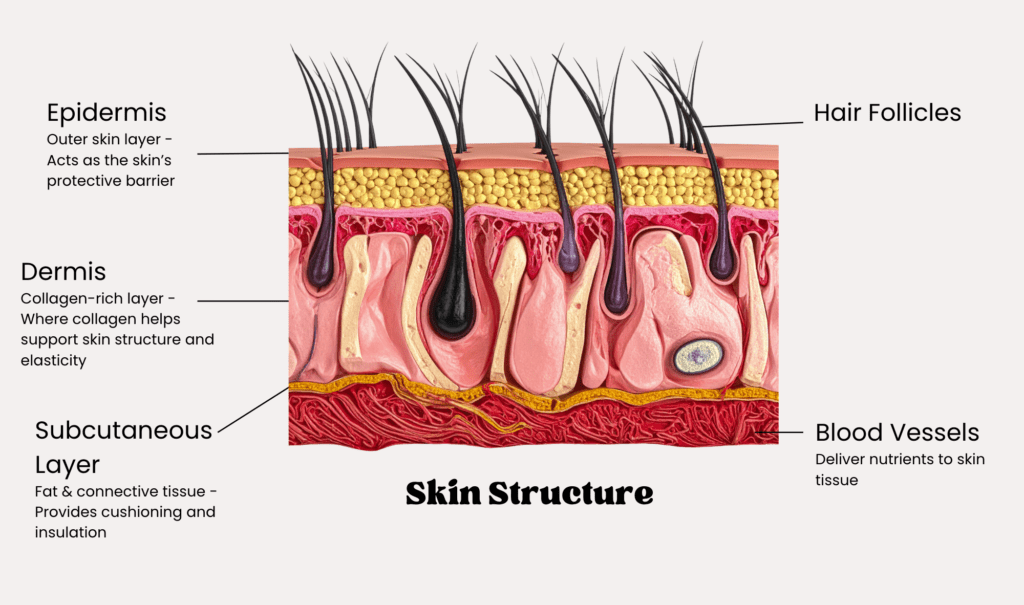
Collagen is a structural protein. In your skin, it’s a key part of the dermis (the layer under the surface), and it helps give skin its “bounce”, resilience, and support. Collagen does not work alone, though. Elastin, hyaluronic acid, and other components also matter for how skin looks and feels.
When people talk about “collagen loss”, they are usually talking about gradual changes to the dermal matrix, which can show up as reduced firmness, elasticity, and the appearance of fine lines. Collagen production typically starts to slow from your mid 20’s, with levels declining by roughly 1% per year from that point.
UV exposure is also a major factor in collagen breakdown, which is why daily sun protection is such a big deal in any skin routine.
Many skincare products see benefits only at the surface level (hydration and barrier support), while the collagen structure sits deeper.
Do Collagen Creams Absorb Through The Skin?
Collagen in a cream does not meaningfully penetrate to the dermis to “replace” or “rebuild” your skin’s collagen.
Why?
Collagen is a large protein. Large molecules tend not to pass through the outer layer of skin easily. That is one reason why many dermatology-focused explainers say topical collagen is more about hydration and the feel of the skin rather than deep wrinkle repair or rebuilding dermal collagen.
But What About “Collagen Peptides” In Topical Skincare?
You will often see “hydrolysed collagen” or “collagen peptides” on skincare ingredient lists.
Hydrolysed just means the collagen has been broken down into smaller fragments. Smaller fragments can behave differently in a formula, and may be used for film forming, moisturising, or to support the feel of the product.
There is also emerging research looking at specific collagen-based topical technologies and penetration, but this is very formulation dependent and not a guarantee for the average “collagen cream” on the shelf.
Most collagen creams are best viewed as hydrating skincare products that use collagen as one of several moisturising or conditioning ingredients, not as a direct “collagen replacement” treatment.
If you want a deeper dive into collagen types and why “hydrolysed” matters, this is a useful foundation:
Supp explainer: What Is Marine Collagen? Benefits, Uses & Absorption Explained
What Topical Collagen Does Well (And Why People Feel It “Works”)
Even if topical collagen does not rebuild dermal collagen, that doesn’t mean it is pointless. Collagen creams can still be a decent part of a routine if you understand the benefits properly.
1) Hydration and a smoother feel
Many collagen containing products help skin feel softer and more hydrated. Hydrated skin often looks healthier because it reflects light more evenly, and fine lines can look less noticeable when the surface is well moisturised.
2) Temporary “plumping” of fine lines
This is usually a hydration and barrier effect rather than deep structural change. You might notice a short term improvement in how makeup sits or how your skin texture looks.
3) Comfort and barrier support, depending on the formula
The best collagen creams are often the ones that also include barrier supporting ingredients (for example, ceramides, glycerin, or other humectants and emollients). In practice, the overall formulation matters more than one buzzword ingredient.
So yes, a collagen cream can “work”, but typically in the sense of hydration and cosmetic feel rather than rebuilding collagen scaffolding under the skin.
Collagen Cream vs Collagen Supplements: What Changes When You Take Collagen Orally?
Oral collagen is usually sold as collagen peptides (hydrolysed collagen). Instead of trying to push collagen through the skin barrier, you are consuming it, digesting it, and absorbing the resulting amino acids and peptides.
This matters because there is a growing body of clinical research on hydrolysed collagen supplementation and skin outcomes, particularly hydration and elasticity measures.
In one controlled trial, it was found that supplementing with specific collagen peptides improved measures of skin elasticity in women, suggesting oral collagen can support skin firmness over time. [1]
Similarly, another study reported a significant increase in skin hydration after 8 weeks of collagen peptide intake, alongside changes consistent with improved dermal collagen structure in their assessments. [2]
In a more recent study using fish derived (marine) hydrolysed collagen, improvements in skin hydration, elasticity and wrinkle related measures were observed after consistent daily use. [3]
These clinical studies show how oral collagen can be a helpful part of a skin routine, especially when it’s used consistently, but it tends to work best alongside the fundamentals – daily SPF, a sensible skincare routine, good sleep, and adequate protein intake.
So Which Should You Choose: Topical Collagen, Oral Collagen, Or Both?
Your routine should be based around what benefits you’re hoping to achieve.
Choose a collagen cream if you want
- Quick, reliable hydration that makes skin feel softer, smoother, and more comfortable day to day
- A short term cosmetic “plumping” effect, especially in dry skin
- A simple add on that slots into your existing skincare routine without changing anything else
Choose oral collagen peptides if you want
- Support at a deeper level than topical skincare can reach
- A daily routine that can help skin look more supple and resilient, which can soften the appearance of fine lines
- Support for skin hydration and elasticity below the surface, with studies commonly measuring improvements over time
- A daily habit that doesn’t rely on skincare steps or remembering multiple products
- An option that’s backed by human clinical trials on collagen peptides and skin outcomes
- Something that pairs naturally with a balanced diet and adequate protein intake for overall skin and connective tissue support
Consider both if
- You enjoy skincare and want the comfort and glow you get from a good moisturiser (including that day to day hydration boost)
- You also want a longer term approach that supports skin hydration and elasticity below the surface, which is what oral collagen peptide studies tend to see with consistent daily use.
Vitamin C: The Part That Get’s Overlooked
In the UK and EU, vitamin C has an authorised health claim:
Vitamin C contributes to normal collagen formation for the normal function of skin.
This is not a marketing slogan, it is a formally approved claim that brands can use when the product meets the rules for making that claim.
Why this is important
It gives you a claim safe, evidence aligned reason why vitamin C is a sensible addition in a skin focused collagen routine. It is also a useful reminder that collagen support is not just about collagen itself.
Why collagen itself does not have the same type of approved claim
Collagen is not generally permitted to carry the same kind of authorised “skin collagen formation” claim in UK and EU frameworks in the way vitamin C can. Claims are authorised when regulators are satisfied there is strong evidence for a clear, specific cause and effect relationship at realistic intakes.
That’s why vitamin C is a good example. It has a long established essential role in human physiology, including collagen synthesis. Clinically, we also know that severe vitamin C deficiency leads to scurvy, in large part because collagen synthesis is impaired, which underlines why vitamin C is considered essential.
Collagen peptides are different. Collagen is a dietary protein source, not an essential nutrient in the same way, and you can maintain health without taking extra collagen specifically.
That does not mean collagen “does nothing”. It means brands have to be careful about what they promise, and you should be wary of any product claiming it will “rebuild your skin collagen” or “reverse ageing” as a guaranteed outcome.
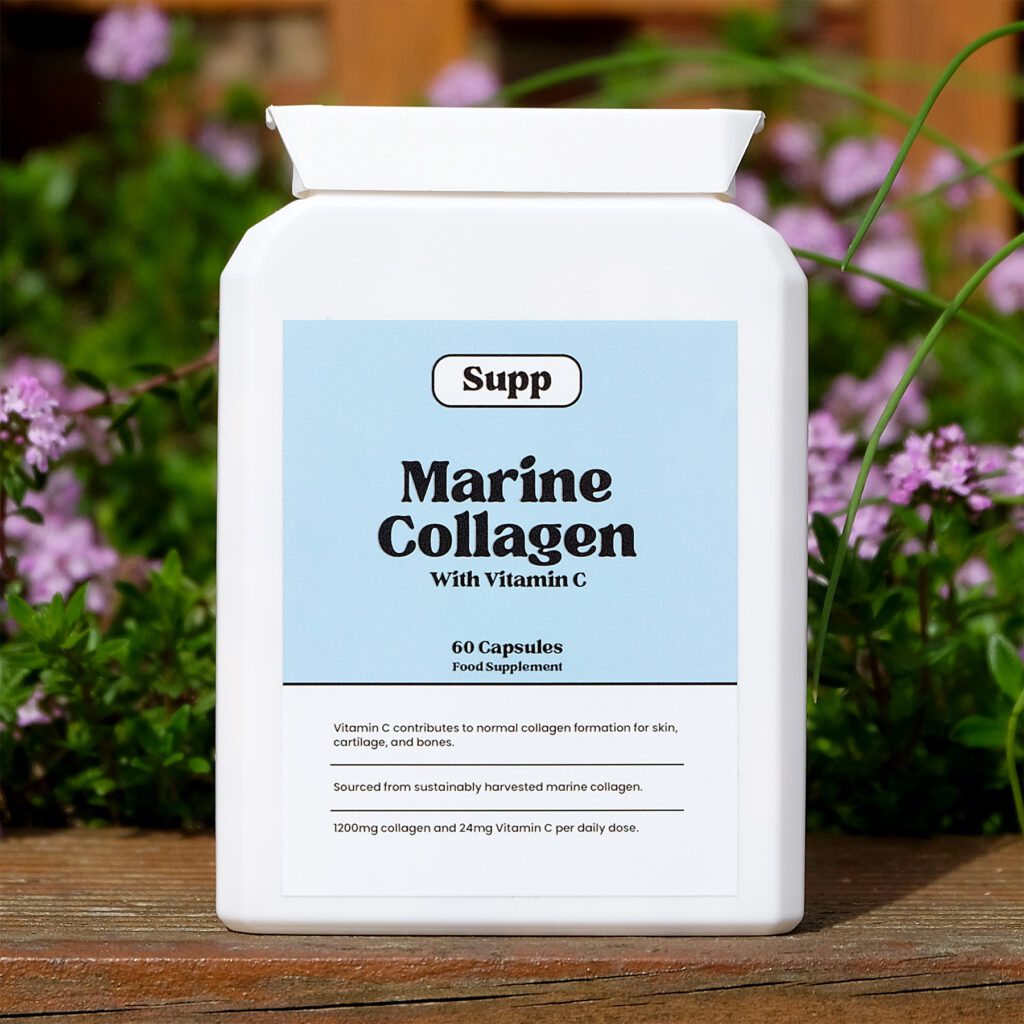
At Supp, we like to keep things grounded in science. Our Marine Collagen plus Vitamin C Supplement includes:
- Vitamin C – for it’s role in normal collagen formation
- Marine collagen peptides – as a protein based collagen supplement, with human trial evidence focusing on measures like hydration and elasticity
What To Look For On Labels: Topical Collagen Products:
If you are shopping for a collagen cream, focus on what you can actually expect it to do.
Look for:
- A moisturising base with proven hydration ingredients (often glycerin and similar humectants)
- Barrier friendly ingredients if your skin is dry or sensitive
- “Hydrolysed collagen” on the ingredient list if you are specifically looking for collagen derived components, but treat it as a texture and hydration ingredient, not a dermal rebuild promise
Be cautious with
- Overblown anti ageing promises
- Fragrance heavy formulas if you are sensitive
- Products that use “collagen” as the headline but have no clear supporting routine around UV protection and barrier care
If your goal is long term skin ageing prevention, daily SPF is non negotiable.
What To Look For On Labels: Oral Collagen Products:
If you are buying collagen for skin, the biggest issues are often quality, clarity, and hidden extras.
Look for:
- Hydrolysed collagen peptides (often called collagen peptides)
- Clear serving size information
- Straightforward formulas without unnecessary “beauty blend” padding
- Transparent allergen labelling, especially for fish sourced collagen
If you are comparing sources, our guide “Marine vs Bovine Collagen: What’s Best for Skin, Hair and Joints?” could help.
Be cautious with:
- Sugary collagen drinks or “beauty powders” that add calories and fillers
- Products that promise dramatic wrinkle removal or guaranteed anti ageing results
- Tiny doses hidden behind long ingredient lists
A Simple Collagen Routine For Maximum Benefits
If you want the most practical, low effort approach:
- Oral collagen peptides as your consistent support below the surface step
- Vitamin C in diet or supplement form to support normal collagen formation
- Daily SPF – the single biggest habit for protecting skin collagen
- A moisturiser that you enjoy using consistently – collagen cream is fine here if it suits your skin
- Adequate protein and a balanced diet
FAQ’s
Does topical collagen tighten skin?
Topical collagen can make skin feel smoother and look more hydrated, which can create a temporary “plumper” appearance. That is different from tightening skin by changing deeper dermal collagen structure.
Are collagen peptides in topical skincare better than collagen?
They may be used because they are smaller fragments, but in most products the main benefit is still surface hydration and cosmetic feel. Think moisturising support, not deep collagen rebuilding.
Is oral collagen better than collagen cream for wrinkles?
Research on oral hydrolysed collagen tends to focus on measures like skin hydration and elasticity over time, which can influence the look of fine lines. Collagen cream is primarily a surface hydrator. Neither replaces fundamentals like sun protection.
How long does oral collagen take to work?
Trials often run for weeks, not days. If you are trying it, think in terms of consistent daily use for at least 8 to 12 weeks as a realistic test window, while keeping expectations sensible.
Do I need vitamin C with collagen?
Vitamin C has an authorised role in normal collagen formation for skin, so it is a sensible part of a collagen focused routine. That is why you will often see collagen products paired with vitamin C, and why diet matters too.
Can I take marine collagen if I have a fish allergy?
If you have a fish allergy, marine collagen is not be appropriate as it is derived from fish. Always check allergen statements and speak to a healthcare professional if you are unsure.
Final Takeaways
Collagen creams can absolutely be useful, mainly for hydration and how your skin feels day to day. But they are not usually the tool for rebuilding collagen deeper in the skin.
If your goal is skin support from within, oral collagen peptides have stronger clinical evidence for improving measures like hydration and elasticity over time, and pairing that with vitamin C is one of the most evidence aligned choices you can make.
If you want a straightforward daily support option, check out our Marine Collagen + Vitamin C Oral Supplement.
References:
- Proksch E, Segger E, Degwert J, et al. 2014. Oral supplementation of specific collagen peptides has beneficial effects on human skin physiology. Skin Pharmacology and Physiology. https://pubmed.ncbi.nlm.nih.gov/23949208/
- Asserin J, Lati E, Shioya T, Prawitt J. 2015. The effect of oral collagen peptide supplementation on skin moisture and the dermal collagen network. Journal of Cosmetic Dermatology. https://pubmed.ncbi.nlm.nih.gov/26362110/
- Evans M, Lewis E D, Zakaria N, et al. 2020. A randomized, triple‐blind, placebo‐controlled, parallel study to evaluate the efficacy of a freshwater marine collagen on skin wrinkles and elasticity. Journal of Cosmetic Dermatology. https://pmc.ncbi.nlm.nih.gov/articles/PMC8176521/
- European Commission. EU Register of nutrition and health claims: Vitamin C contributes to normal collagen formation for the normal function of skin (POL-HC-6508). https://ec.europa.eu/food/food-feed-portal/screen/health-claims/eu-register/details/POL-HC-6508
Disclaimer:
This article is for general information and educational purposes only and does not constitute medical advice. Supplements and skincare products are not intended to diagnose, treat, cure, or prevent any disease. Individual results vary. If you are pregnant or breastfeeding, have a medical condition, take medication, or have allergies (including fish/seafood allergies), please speak to a healthcare professional before using collagen products. Stop use and seek medical advice if you experience an adverse reaction.
0 Comments