

Vitamin D is one of those nutrients almost everyone has heard of, but few people feel confident choosing. Part of the confusion comes from the label: vitamin D2 and vitamin D3 look similar, but they’re not identical.
This guide breaks down the difference, what the research suggests, and how to choose the right option for your lifestyle.
What Is Vitamin D?
Vitamin D is a fat-soluble vitamin that your body converts into an active form that affects several systems, working a bit like a hormone.
When people talk about a vitamin D “blood test”, they’re usually referring to 25-hydroxyvitamin D, written as 25(OH)D. That’s the main marker used to estimate your vitamin D status.
Once you get vitamin D from sunlight, food, or supplements, your liver converts it into 25(OH)D. Your kidneys (and some other tissues) then convert it into the active form, which helps your body:
- absorb calcium and phosphorus from food
- maintain normal blood calcium levels
- support normal bone and tooth mineralisation
- support normal muscle function
- contribute to normal immune function
That’s why vitamin D status matters, and why the D2 vs D3 choice is mainly about which form does a better job of raising 25(OH)D.
What Is Vitamin D2?
Vitamin D2 is also called ergocalciferol.
It is commonly made from fungi or yeast (often produced by UV exposure of compounds naturally found in these sources). That’s one reasons D2 shows up frequently in vegan supplements and fortified foods.
You can check out our ingredient page: Vitamin D2 (ergocalciferol).
What Is Vitamin D3
Vitamin D3 is also called cholecalciferol.
It is the form your skin produces when exposed to UVB sunlight, and it is also found in some animal-derived foods and many supplements.
Most standard D3 supplements are traditionally made using lanolin (a waxy substance derived from sheep’s wool), but vegan D3 (lichen-derived) is now common, so if you follow a plant-based diet, you do not have to default to D2.
Check out our Ingredient page: Vitamin D3 (cholecalciferol)
Vitamin D2 vs D3 – What’s The Main Differences?
When comparing Vitamin D2 vs D3 we need to look at some key factors:
1)Source
- D2: usually fungi or yeast-derived (commonly vegan).
- D3: often animal-derived, but vegan D3 exists (lichen).
2) How well they raise your blood marker – 25(OH)D
This is the big one.
A large body of evidence suggests D3 tends to raise total 25(OH)D more effectively than D2. [1] [4]
3) How well they maintain levels over time
Some studies suggest D3 is not just better at increasing levels, but also at maintaining them. [2]
What this means for you
If you’re choosing between the two and you do not have a strict dietary requirement, the research generally nudges you towards D3 for the most reliable increase and maintenance of 25(OH)D. [1] [2] [4]
25(OH)D is the main marker of your vitamin D status. Higher vitamin D status can be linked with feeling better day to day (especially in winter), because vitamin D supports normal muscle function and immune function. Low levels are commonly associated with fatigue and low mood.
If you are vegan, you can still aim for D3 by choosing a label that explicitly states vegan D3.
What Does The Research Say?
Across multiple comparative trials and reviews, vitamin D3 is usually superior to vitamin D2 at raising total 25(OH)D.
Here’s what studies have found:
- A well-cited meta-analysis concluded that D3 is more efficacious than D2 at raising serum 25(OH)D. [1]
- A controlled human study found D3 was substantially more potent for raising and maintaining 25(OH)D compared with an equimolar dose of D2. [2]
- A 12-week trial in winter found differences between D2 and D3 in how they affected vitamin D status across groups. [3]
- A more recent systematic review (daily-dose studies included) again found D3 produced a greater increase in total 25(OH)D than D2. [4]
Why results can vary
Results can vary depending on:
- baseline vitamin D status
- dose and duration
- body size and BMI
- whether people are taking it daily or as less frequent higher doses
- season and sunlight exposure
So, the “D3 is better” conclusion is not just hype. It’s a pattern in the evidence. But your personal context still matters.
So Which Should You Choose?
Here’s how to choose what’s right for you:
Choose D3 if:
- you want the option most consistently linked with better increases of vitamin D in your body
- you are looking for a straightforward daily supplement routine
- you are buying a product specifically for vitamin D support (rather than relying on fortified food)
Choose vegan D3 (lichen) if:
- you are vegan or prefer not to use animal-derived ingredients
- you still want the form that tends to raise levels more effectively
Choose D2 if:
- you are vegan and cannot access vegan D3 easily
- you are using a fortified food product that uses D2 (this is common)
- you have been advised specifically to take D2 by a clinician
How Much Vitamin D Do You Need In The UK?
UK guidance is often expressed in micrograms, but supplement labels also use IU (international units).
Useful conversion:
- 1 microgram (mcg or µg) = 40 IU
- 10 micrograms = 400 IU
Many UK sources (e.g the NHS) advise adults to consider a daily supplement of 10 micrograms (400 IU), particularly when sunlight exposure is low (commonly autumn and winter). Some people may be advised to consider it year-round.
Why might you take more than 400IU?
You may choose a higher daily dose when:
- a blood test shows your vitamin D status is low and you are trying to raise it back up (ideally with clinician guidance)
- you have consistently low sun exposure
- you cover up most of your skin when outdoors (for cultural reasons, medical reasons, or consistent high-SPF use), which limits UVB exposure
- you have a higher body weight, as vitamin D can be stored in body fat, which may reduce how much is available in the blood
- you have other risk factors that make it harder to maintain healthy vitamin D levels
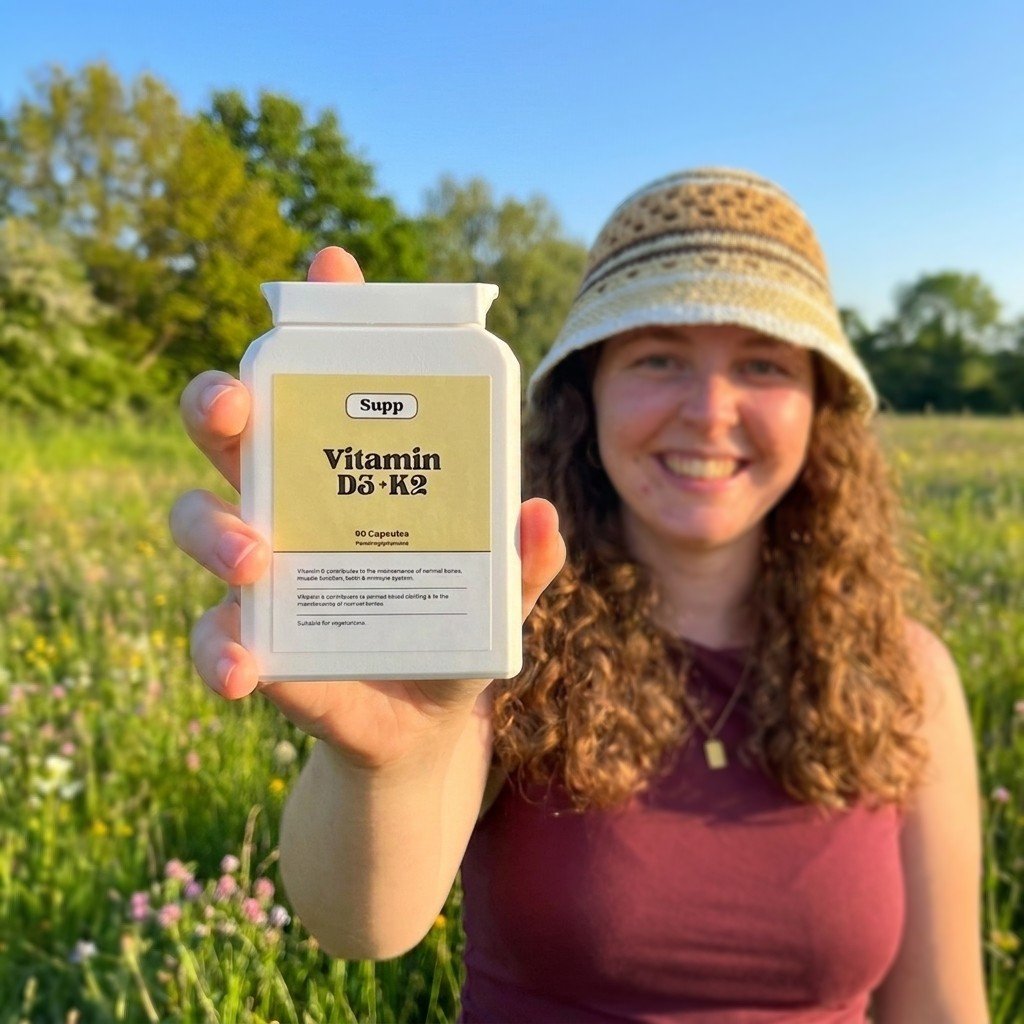
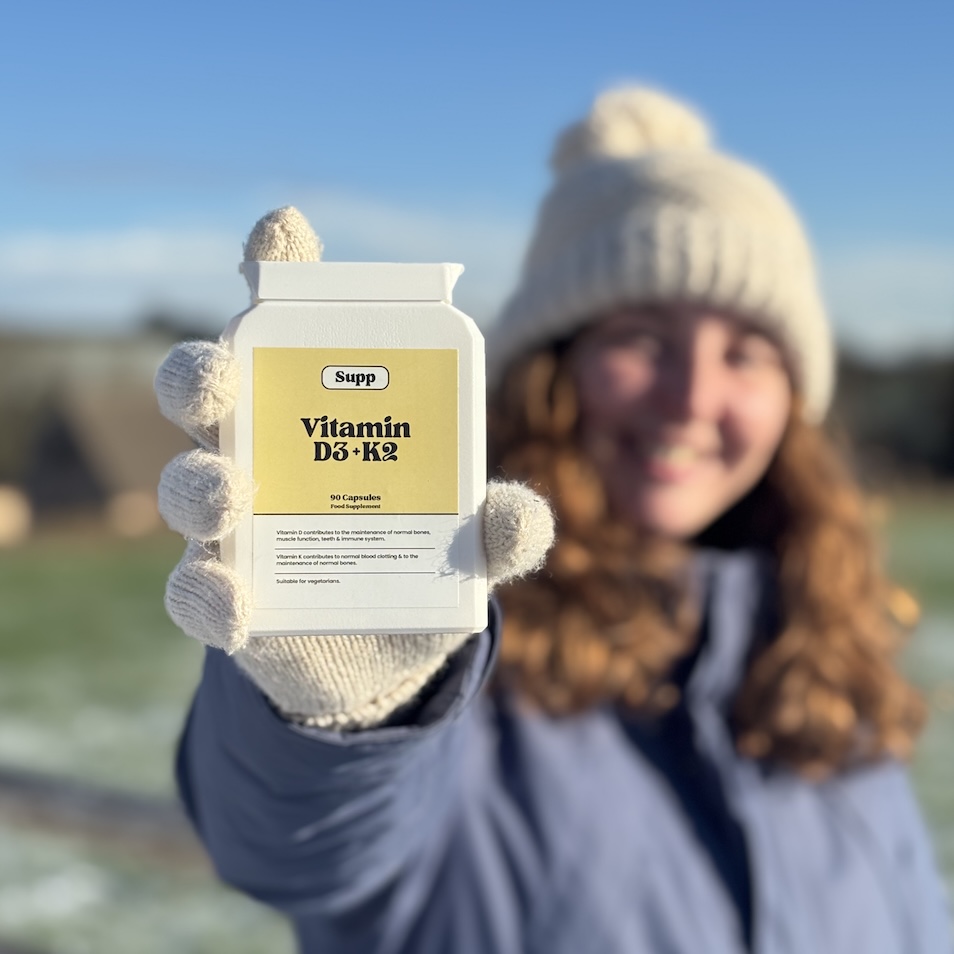
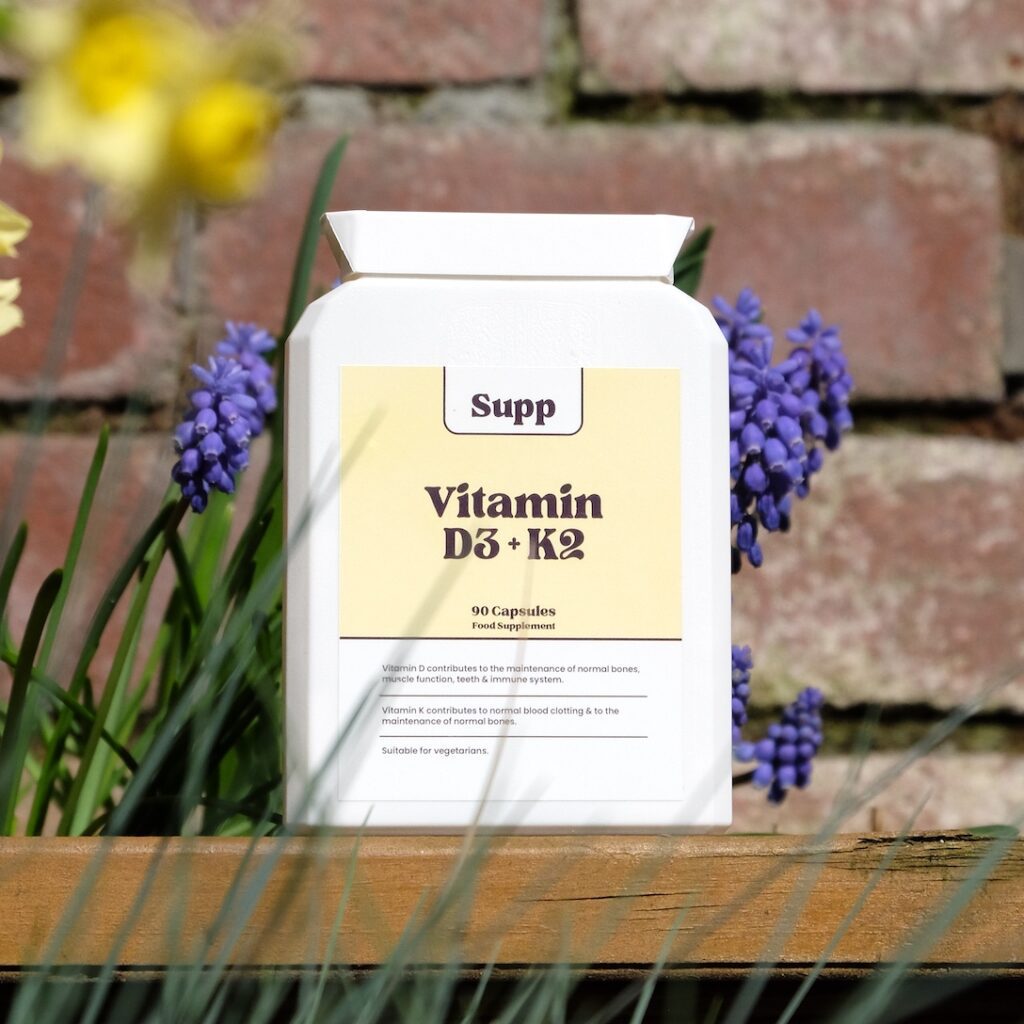
For example, our Vitamin D3 + K2 provides 3000 IU (75 µg) per daily serving, which is a higher-strength option people often choose in winter or when they want a more robust daily baseline.
How much is too much?
More is not always better.
The NHS advises not taking more than 100 micrograms (4,000 IU) per day unless a clinician has told you to, because exccesively high intakes can be harmful over time.
If you are already taking a multivitamin or other supplements, remember vitamin D can stack up. Keep your total daily intake in mind.
If you are pregnant, breastfeeding, taking medication, or have a health condition, it’s sensible to check with a pharmacist or GP before using higher-strength vitamin D.
Why Is Vitamin D3 Often Paired With Vitamin K2?
Vitamin D3 and K2 are often paired because they support calcium handling in complementary ways. Vitamin D3 helps your body absorb calcium from your diet and maintain normal blood calcium levels, while vitamin K2 contributes to normal blood clotting and helps activate proteins involved in moving calcium into the right places, such as bones, rather than leaving it circulating.
Put simply: D3 helps bring calcium in, and K2 helps your body use it appropriately, which is why the combo is popular for people thinking about long-term bone support.
You can read the full explanation here: Vitamin D3 + K2: Why They Work Better Together for Bone & Heart Health
Tips To Get More From Your Vitamin D Supplement
A few simple habits make a difference:
- Be consistent: Vitamin D status changes over weeks, not hours.
- Take it with a meal: Vitamin D is fat-soluble, and absorption is improved when taken with some dietary fat.
- Read the label carefully: focus on dose and form (D3 vs D2), then check it fits your diet (vegan or not).
FAQ’s
Here’s some of the most commonly asked questions about Vitamin D:
Is vitamin D2 as good as D3?
Both can increase vitamin D levels, but research generally shows D3 raises total 25(OH)D more effectively. [1] [2] [4]
Is vitamin D3 always non-vegan?
No. Many D3 supplements are lanolin-based, but vegan D3 (lichen-derived) is widely available now.
Can you take D2 and D3 together?
Some products and protocols do combine forms, but for most people the practical choice is simply one form at an appropriate daily dose. If you are using high doses or treating a diagnosed deficiency, follow clinician guidance.
Should I test my vitamin D level?
If you suspect deficiency, have risk factors (limited sun exposure, darker skin, certain diets), or you are considering high-dose supplements, testing can be useful. This is best discussed with a clinician who can interpret your result in context.
What’s the difference between IU and micrograms?
IU? μg? mcg? It looks confusing at first, but it’s simple once you know what you’re looking at.
µg and mcg are the same thing. They both mean micrograms (a tiny unit of weight). For scale, 1 gram = 1,000,000 micrograms.
IU stands for International Units. It’s used for some vitamins (including vitamin D) because it reflects the vitamin’s biological activity (potency), not just its weight. Different forms can have different potencies, so IU makes it easier to compare doses on labels.
For vitamin D, the conversion is:
- 1 microgram (µg/mcg) = 40 IU
- So 10 µg = 400 IU
To Conclude
If you’re choosing between vitamin D3 vs D2, the evidence consistently leans towards D3 as the more effective option for raising and maintaining vitamin D status.
If you are vegan, you can still choose D3 by looking for vegan D3 on the label.
If you want a higher-strength daily option, take a look at our Vitamin D3 + K2 supplement.
References:
- Tripkovic L, Lambert H, Hart K, et al. 2012. Comparison of vitamin D2 and vitamin D3 supplementation in raising serum 25-hydroxyvitamin D status: a systematic review and meta-analysis. https://pubmed.ncbi.nlm.nih.gov/22552031/
- Heaney RP, Recker RR, Grote J, et al. 2011. Vitamin D3 is more potent than vitamin D2 in humans. https://pubmed.ncbi.nlm.nih.gov/21177785/
- Tripkovic L, Wilson LR, Hart K, et al. 2017. Daily supplementation with 15 µg vitamin D2 compared with vitamin D3 to increase wintertime 25-hydroxyvitamin D status: a 12-week randomised, placebo-controlled food-fortification trial. https://pubmed.ncbi.nlm.nih.gov/28679555/
- Van den Heuvel EGHM, et al. 2023. Comparison of the effect of daily vitamin D2 and vitamin D3 supplementation on serum 25-hydroxyvitamin D concentration: a systematic review and meta-analysis. https://pubmed.ncbi.nlm.nih.gov/37865222/
Disclaimer:
This article is for general information only and isn’t medical advice. Supplements aren’t a substitute for a balanced diet. If you’re pregnant, breastfeeding, have a medical condition, or take medication, speak to a pharmacist or GP before supplementing.